AI Content Performance Analysis: Ultimate Guide 2026
Last Updated: February 21, 2026
Key Takeaways
- AI automates performance analysis at scale, uncovering patterns humans miss in hours of manual work
- Four metric categories matter: engagement, conversion, efficiency, and quality indicators for AI content
- Citation rate and AI visibility now matter as much as traditional rankings in 2026 search landscape
- Benchmark AI content against human-written content and industry standards for accurate performance assessment
What is AI Content Performance Analysis?
AI content performance analysis is the process of using artificial intelligence to evaluate how your content performs across metrics, channels, and audiences. Instead of manually combing through spreadsheets for hours, AI systems process thousands of data points in minutes, identifying what works, what doesn't, and why.
Here's the critical part: manual content analysis doesn't scale. According to Vera Content, manual review of vast quantities of data is extremely time and resource-intensive. For most teams, this means insights arrive too late to act on them. By the time you've finished analyzing last month's performance, your competitors have already optimized for next month's trends.
The shift happening right now is fundamental. We're moving from gut-driven decisions ("this content feels good") to data-driven optimization strategies ("this content converts 34% better with these specific changes"). AI doesn't replace your judgment; it accelerates it. Research from WAIR confirms that manually analyzing and optimizing content performance simply isn't sustainable or effective at scale.

In 2026, AI content performance analysis isn't optional anymore. Digital marketers, SEO specialists, content creators, e-commerce businesses, and SMB owners who aren't leveraging it are essentially operating blind. Your competitors are measuring, learning, and iterating in real time. The question isn't whether you need this capability. It's how quickly you can implement it.
Why AI Content Performance Analysis Matters Now
Here's the reality: your traditional content metrics are lying to you.
Click-through rates, organic impressions, ranking positions—these numbers once told the complete story. They don't anymore. In 2026, the measurement gap isn't a minor inconvenience; it's a strategic blind spot that's costing you visibility and authority.
The shift started with AI answer engines. ChatGPT, Perplexity, Google AI Overviews, and similar tools now deliver answers directly to users without requiring them to click your website. Measuring content performance has become more complex as AI answer engines allow people to get answers through summaries rather than clicking links. Your best-performing content might be powering these summaries while driving zero traffic to your site. That's not a failure; it's invisible success that traditional analytics completely miss.
Here's what's changed: citations matter as much as clicks now. When an AI model cites your content in its response, you're building authority with machines that influence how billions of users discover information. Citations in AI platforms are the new backlinks; even without direct traffic, being cited establishes authority and influences AI model perception. Zero-click searches are becoming the norm, and if you're only measuring clicks, you're measuring a fraction of your actual impact.
Then there's query fan-out: the concept that AI models predict follow-up questions users will ask. If your content doesn't address these semantic connections, you're creating a gap. Users get their initial answer elsewhere, then search for the next question—and miss you entirely.
The content gap of 2026 is not a void to be filled with more words; it is a strategic deficit in Trust, Experience, and Utility. Keyword density and word count matter far less than whether your content answers the questions people actually ask, across all their touchpoints.
This is why AI content performance analysis isn't optional anymore. Your competitors are already measuring what matters. The question is: will you?
Key Metrics and KPIs for AI Content Performance
You can't improve what you don't measure. The challenge isn't finding metrics; it's tracking the ones that actually matter to your business.
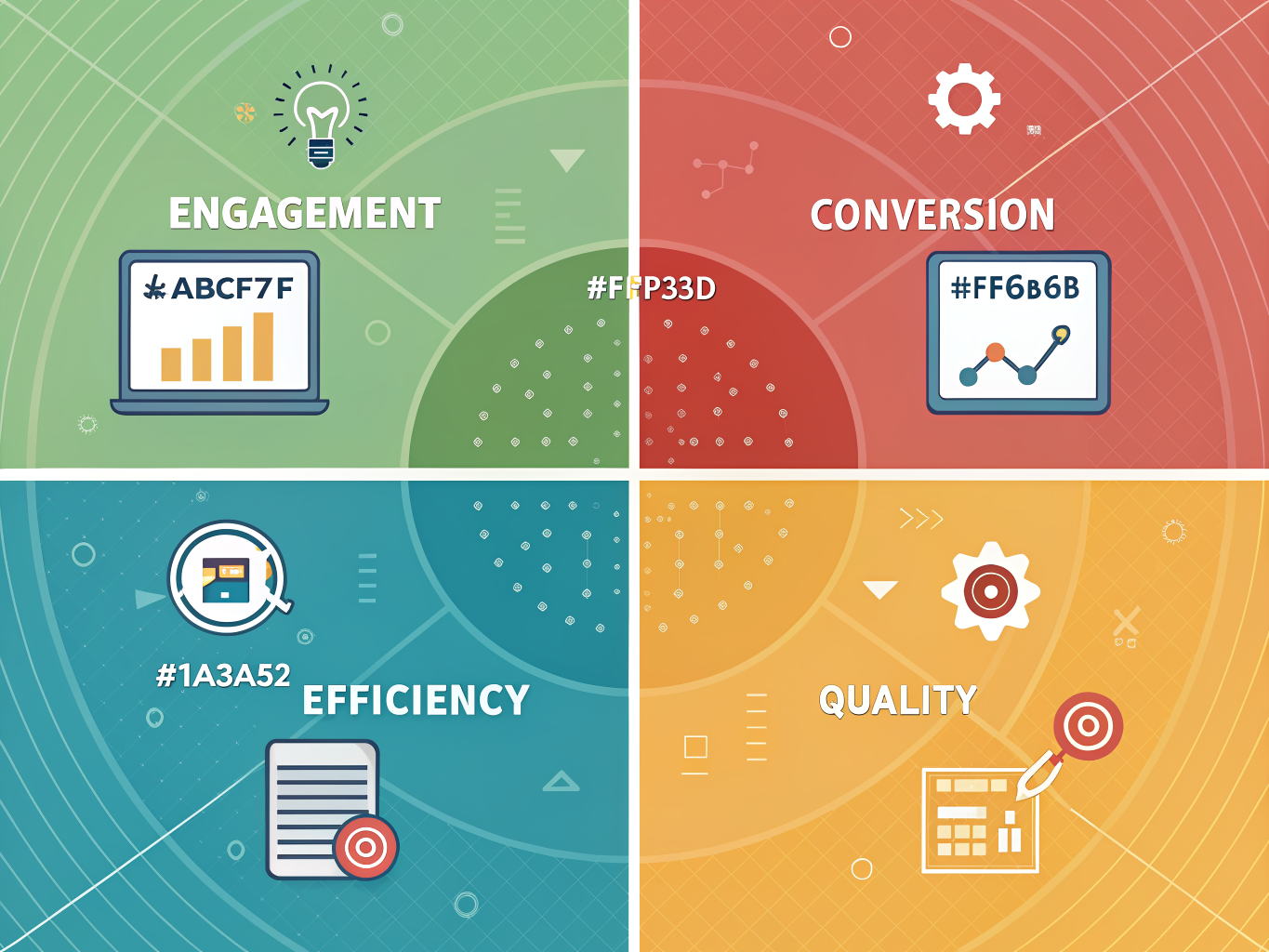
Engagement Metrics: Is Your Content Resonating?
Time on page and scroll depth reveal whether readers actually consume your content or abandon it after the headline. A 45-second average session with 30% scroll depth signals weak resonance; three minutes with 80% depth means you're hitting the mark. Bounce rate matters too, but context matters more. A 60% bounce rate on a FAQ page might be normal; the same rate on a pillar page warrants investigation. Social shares and comment rates indicate whether your audience finds content worthy of amplification and discussion.
Conversion Metrics: Does Content Drive Action?
Click-through rate (CTR) tracks whether your calls-to-action persuade readers to take the next step. Lead generation volume and product signups measure direct business impact. Customer acquisition cost (CAC) reveals whether your content strategy justifies its investment. If you're spending $5,000 monthly on content but acquiring customers at $2,000 CAC, that's working. If it's $8,000 CAC, you need to recalibrate.
Production Efficiency Metrics: Is Your Process Lean?
Cost per piece of content and time to publish show whether AI is genuinely accelerating your workflow or just adding overhead. Track content refresh cycles too. How often are you updating existing pieces versus creating new ones? Efficient operations favor strategic updates that keep evergreen content competitive.
Quality Indicators: Does Content Meet Standards?
Readability scores (Flesch-Kincaid, Gunning Fog) ensure accessibility. Sentiment analysis catches tonal mismatches. Factual accuracy checks prevent misinformation. Brand voice alignment ensures consistency across your content library. These aren't optional. Poor quality erodes trust faster than low traffic.
Emerging AI-Specific Metrics
Citation rate, the percentage of priority queries where your brand appears in AI responses, matters increasingly as users rely on AI summaries. Track AI referral conversion rate separately, as traffic from AI sources often converts differently than organic search traffic.
Start with these four categories. Measure ruthlessly. Adjust based on data, not intuition. That's how you move from guesswork to genuine performance intelligence.
How to Implement AI Content Performance Analysis
Getting started with AI content performance analysis doesn't require a massive budget or a data science degree. Here's a practical roadmap that works for teams of any size.
Step 1: Define What Success Looks Like
Before pulling any data, decide what matters most to your business. Are you tracking search rankings, engagement metrics, conversion rates, or brand authority? Your goals determine which metrics you'll monitor and which tools you'll prioritize.
Step 2: Consolidate Your Data Sources
Pull information from everywhere your content lives. Google Analytics shows traffic and user behavior; your CMS reveals publication dates and content structure; social platforms display engagement; and AI visibility tools track how your content ranks against competitors. The more sources you connect, the clearer your picture becomes.
Step 3: Establish Meaningful Benchmarks
Instead of guessing what good performance looks like, compare AI-generated content against both human-created content and industry standards. This reveals whether your AI-assisted approach actually outperforms your previous methods.
Step 4: Tag Everything Consistently
Create a simple tagging system that identifies which content was AI-assisted, fully AI-generated, or human-written. Apply these tags uniformly across your CMS and analytics platforms. This single step unlocks the ability to isolate performance by content type.
Step 5: Build Your Dashboard
Set up a dashboard focused exclusively on your priority metrics. Don't overwhelm yourself with vanity stats; keep it to 5-7 KPIs that directly connect to revenue or growth.
Step 6: Find Patterns and Iterate
Run this analysis monthly. Look for trends in what performs best. Maybe AI-generated product descriptions convert better, or human-written thought leadership drives more qualified traffic. Let the data guide your next content strategy.
Real proof: Omniscient Digital grew organic blog sessions by 810% and increased blog-attributed product signups by 400x using this type of AI-driven optimization approach. They didn't guess; they measured, analyzed, and adjusted.
Common Mistakes and How to Avoid Them
The road to effective AI content analysis is paved with well-intentioned mistakes. Understanding these pitfalls helps you skip the expensive learning curve.
Missing the full picture with outdated metrics. Traditional analytics miss how AI-driven discovery works. Zero-click searches, featured snippets, and algorithmic recommendations represent massive traffic channels that standard dashboards ignore. You need frameworks that capture these invisible conversions.
The AI-only comparison trap. Benchmarking AI-generated content exclusively against other AI pieces creates a distorted picture. Your real competition includes human-written content. Compare apples to apples: measure AI output against human-written pieces in your category to identify where AI truly adds value versus where it falls flat.
Chasing vanity over substance. Page views and word counts feel productive but mislead. AI-generated content might need human finesse to improve search rankings and avoid sounding too generic. Focus on engagement depth, conversion rates, and audience retention instead. These indicators reveal whether your content actually resonates.
Stale benchmarks. AI capabilities and search behavior shift constantly. Benchmarks from six months ago are obsolete. Refresh quarterly to stay aligned with current performance standards and evolving audience expectations.
Treating AI as autonomous. Human oversight is crucial for interpreting AI insights and ensuring responsible AI use. AI recommendations need expert validation. Your team's judgment about brand voice, audience nuance, and strategic goals can't be automated. Poorly implemented AI content risks appearing generic or tone-deaf, potentially reducing engagement and damaging brand perception.
Generic implementation. AI tools offer template recommendations, but your brand isn't a template. Customize every insight to your audience, voice, and business objectives. What works for competitors won't necessarily work for you.
The smartest teams view these mistakes as tuition in a valuable education. Each error caught early strengthens your analysis framework.

The Future of Content Performance Analysis
The measurement landscape for AI content is shifting faster than most teams can keep up with. Within the next 18 months, expect AI visibility metrics to become native features in mainstream analytics platforms like Google Search Console, eliminating the need for fragmented third-party tools. This integration will make tracking your presence in AI Overviews and LLM responses as routine as monitoring traditional rankings.
But here's what matters most: the metrics themselves are evolving. Citation rate and topical authority will carry equal weight to keyword rankings. Brands focusing solely on position tracking will find themselves outpaced by competitors measuring influence across AI systems. Query Fan-Out optimization, the practice of ensuring your content answers related questions and variations, will become essential for visibility in AI-generated responses.
The real competitive advantage, though, isn't automation. It's collaboration. Brands that establish strong measurement practices now will be best positioned to optimize their AI visibility as the channel matures. Teams combining human insight with AI-powered analysis will outperform those relying on either alone.
Quarterly benchmarking cycles will become standard practice. AI systems improve rapidly, so quarterly reassessment of benchmarks helps ensure your targets remain challenging yet achievable. Static annual goals won't cut it anymore.
The window to build these practices is now. Early adopters aren't just preparing for the future; they're already dominating it. Start measuring what matters, iterate continuously, and you'll lead when the channel fully matures.
Frequently Asked Questions
Q1: What's the difference between AI content analysis and traditional SEO audits?
Traditional SEO audits focus on technical issues, backlinks, and keyword rankings. AI content analysis goes deeper, examining how your actual content performs with real audiences. It analyzes engagement patterns, identifies gaps in your messaging, and recommends specific optimizations based on what's working across your entire content library, not just keyword metrics.
Q2: How long does it take to see results from AI content optimization?
Quick wins appear within 2-4 weeks for tactical changes like headline optimization or meta descriptions. Meaningful traffic improvements typically take 6-12 weeks as search engines re-index and your audience discovers the improved content. The timeline depends on your content volume and how aggressively you implement changes.
Q3: Can AI content analysis work for small teams with limited budgets?
Absolutely. Many AI tools offer free or freemium tiers that handle basic performance tracking and optimization suggestions. You don't need enterprise software to get started; focus on one metric (engagement rate or conversion rate) and scale as your budget grows.
Q4: How do I measure AI content performance if I don't have advanced analytics?
Start simple: track click-through rates, time on page, and bounce rates in Google Analytics. Pair this with basic engagement metrics from your CMS. AI content analysis can automate processes like A/B testing and SEO optimization, which gives you more time and energy to focus on strategy. You don't need sophisticated tools to establish a baseline.
Q5: Should I replace all human content creation with AI-assisted content?
No. AI excels at identifying what topics resonate and optimizing distribution, but human writers bring strategy, authenticity, and brand voice. The winning approach combines AI insights with human creativity.
Q6: What tools should I use to start AI content performance analysis?
Begin with platforms that integrate your existing data sources. Look for tools offering content recommendations, performance predictions, and competitive benchmarking. Your choice depends on your platform (WordPress, HubSpot, etc.), so evaluate what integrates seamlessly with your current stack.
Start Measuring Content Performance with AI Today
The data is clear: brands that measure content performance systematically outpace those operating on intuition. Content analysis is no longer a nice-to-have, it's a necessity for any organization that wants to succeed in the digital age. The winners in 2026 aren't publishing more content; they're publishing smarter, informed by real performance signals.
Here's what separates leaders from laggards: they've stopped guessing. They've replaced spreadsheet chaos with AI-powered insights that reveal what actually moves the needle. This isn't about complexity. It's about clarity.
Start today with this practical approach: pick one metric category that matters most to your business. If engagement drives your model, focus there first. If conversions matter, measure that. Build confidence with one area before expanding. Pair AI automation with your team's judgment; that combination beats either alone.
The technical barriers have evaporated. AI tools now make sophisticated analysis accessible to teams of any size. You don't need a data scientist to understand which content resonates, what topics underperform, or where optimization efforts yield the fastest returns.
Your next move is concrete: audit your current content using AI-powered analysis. Map what's working, identify gaps, and prioritize improvements. Tools designed for enterprise-scale analysis make this process faster than ever.
The competitive window is closing. Brands leveraging AI content performance analysis today will have months of advantage by year-end. Start measuring. Start winning. The data's waiting.
FirstSearch
FirstSearch.AI Team