AI SEO Agency: Choosing the Right Partner in 2025
Why AI SEO Agencies Matter Now More Than Ever
The search landscape shifted beneath your feet sometime in 2024, and most businesses haven't noticed yet.

By mid-2025, over 50% of search result pages featured AI-generated overviews, fundamentally rewriting how people discover information. AI-powered platforms like Google AI Overviews, ChatGPT, and Perplexity are increasingly becoming the go-to sources for answers. This isn't a future scenario; it's happening now.
Here's the problem: traditional SEO was built for a different era. Your keyword rankings, meta descriptions, and link-building strategies assumed users would click through to websites. That assumption is dead. Research shows 58.5% of Google searches result in zero clicks to websites. Users get answers directly from AI summaries without ever visiting your content.
The stakes are higher than visibility. They're about survival. Brands clinging to conventional SEO tactics while competitors adapt to AI-driven search are slowly becoming invisible. Your potential customers aren't searching the way you think they are anymore.
An AI SEO agency isn't a luxury upgrade. It's the difference between thriving in 2025 and fading into irrelevance. These agencies understand how to position your content for AI consumption, optimize for new ranking factors, and capture visibility in a world where the rules fundamentally changed. Traditional SEO expertise alone won't cut it anymore. You need partners who speak the language of large language models, understand semantic search at depth, and can navigate this transition strategically.
The window to adapt is open. It won't stay that way.
The Problem: Not All AI SEO Agencies Are Created Equal
The market is flooded with agencies claiming AI expertise, yet most are simply slapping "AI-powered" onto traditional SEO services. This distinction matters enormously for your results.
Many agencies are pushing unproven tactics like llms.txt files, FAQ schema restructuring, and rewriting headings as questions, analysis reveals. These feel modern but lack evidence of actual impact on AI model visibility or citation patterns. They're solutions searching for problems.
The real issue runs deeper. Traditional SEO agencies understand Google's ranking signals; they don't necessarily understand how LLMs select, evaluate, and cite sources. These are fundamentally different systems. A page ranking well in Google doesn't automatically appear in AI overviews or get cited by language models. The mechanics diverge significantly, yet most agencies treat AI visibility as a checkbox rather than a strategic priority.
What separates genuine AI optimization expertise from agencies repackaging existing services with AI buzzwords is understanding this core difference. Real AI SEO agencies build proprietary frameworks and tools tailored to how language models actually work. They test tactics rigorously. They don't just apply yesterday's playbook with new terminology.
Look for agencies that can articulate why their tactics matter for AI visibility, not just that they're AI-focused. Ask how they handle the gap between traditional SEO fundamentals and emerging AI requirements. Demand specificity around their methodology and tools.
The hype is real, but so are the opportunities. You just need to distinguish between agencies riding the trend and those genuinely solving it.
The Opportunity: Market Growth and Measurable Results
The numbers tell a compelling story. The AI SEO tools market is projected to expand from $1.2 billion in 2024 to $4.5 billion by 2033, signaling that organizations across industries recognize the strategic value here. This isn't hype; it's capital flowing toward measurable results.
More than half of marketers are already integrating generative AI into their SEO strategies, which means waiting on the sidelines is becoming a competitive liability. The performance gains speak for themselves: data shows that AI-driven SEO campaigns can deliver a 45% increase in organic traffic and a 38% increase in conversion rates. For most businesses, those numbers translate directly to revenue.
What's particularly noteworthy is that 83% of large organizations report measurable gains from AI integration across their operations. This isn't confined to tech companies or startups experimenting with new tools. Enterprise teams across finance, healthcare, retail, and B2B services are seeing concrete results.
Agencies leveraging genuine AI SEO capabilities are reporting even sharper returns for clients: 200-340% increases in AI citations and qualified leads. That's the difference between incremental improvement and transformative growth.
The opportunity isn't speculative. Your competitors are already moving. The question isn't whether to invest in AI SEO, but whether you'll partner with an agency that truly understands how to execute it. The cost of inaction is steeper than the investment required to get it right.
Understanding the New Search Landscape
The search results page you knew five years ago is gone. Google's AI Overviews now appear at the top of most informational queries, fundamentally changing how traffic flows and how visibility matters.
Here's what's actually happening: Google's AI Overviews reduced organic CTR by an estimated 20-40%, meaning fewer people click through to websites from traditional search results. But there's a counterintuitive twist. Homepage traffic increased by 10.7% thanks to AI Overviews and LLMs, which means the websites that win are capturing traffic differently than before.
Zero-click searches now dominate informational queries. Users get their answers directly from AI summaries without ever visiting your site. This forces a seismic shift in how agencies should think about SEO. Traditional ranking metrics like position one, two, or three no longer tell the complete story.
What actually matters now is citation in AI responses. When an LLM generates an answer, it needs to cite your content as a source. This requires a different approach to content structure. LLMs prioritize entity-rich, well-structured information differently than Google's traditional algorithm. They want clear definitions, organized data, and authoritative sources they can reference by name.
An AI-powered SEO agency understands this distinction. They're not just optimizing for keyword rankings; they're optimizing for citation and entity recognition. They structure content to be pulled into AI summaries, not just clicked from SERPs.
The agencies still operating on 2019 SEO playbooks are missing this entirely. They're measuring success by metrics that no longer capture reality. If your current agency hasn't explicitly discussed AI Overviews, citation mechanics, or entity optimization in the last three months, that's your first red flag.
The shift is real, measurable, and already impacting traffic patterns across nearly every industry.
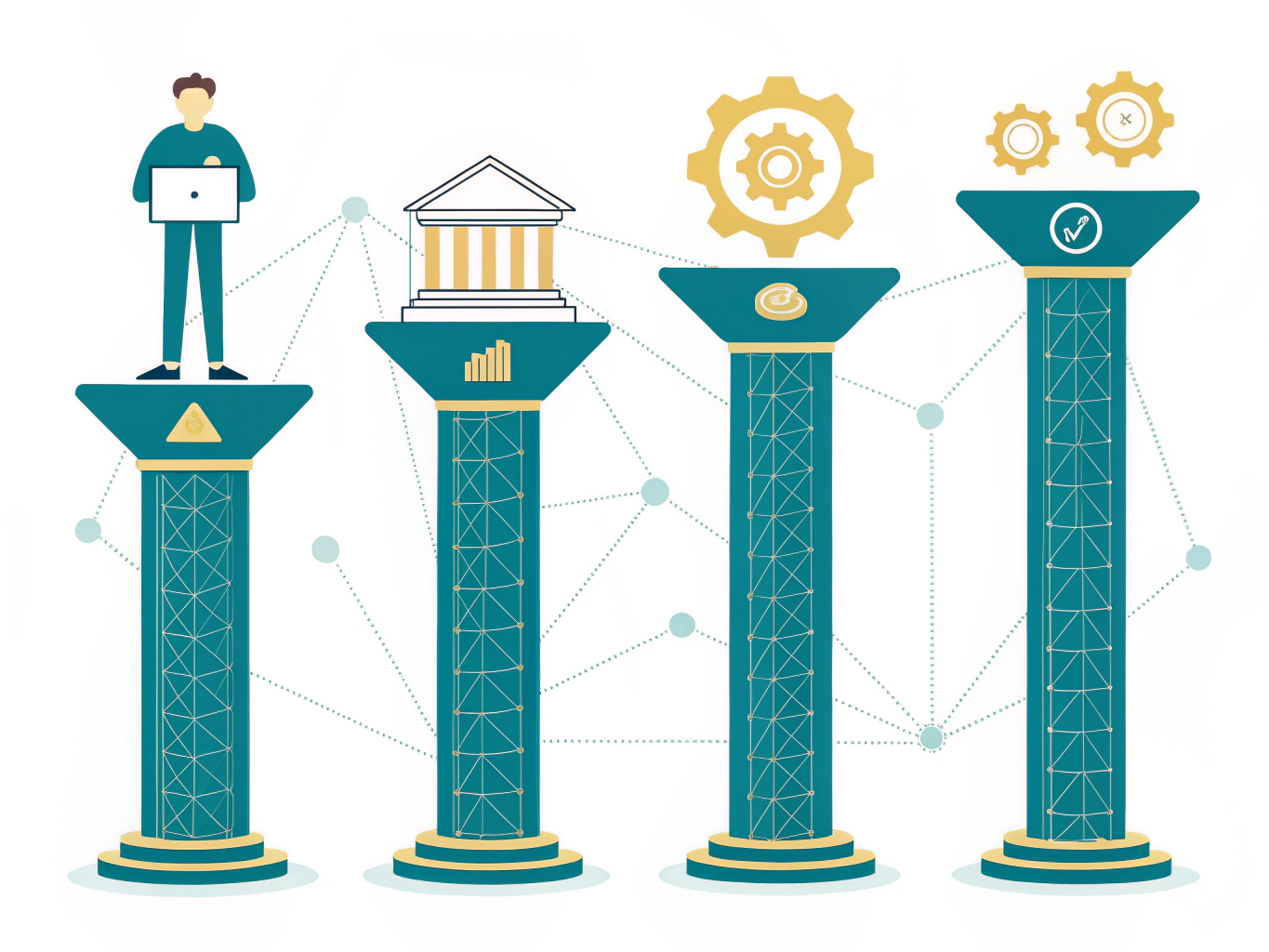
The Four Critical Evaluation Factors for AI SEO Agencies
Not all AI SEO agencies are created equal. The difference between a partner who transforms your visibility and one who wastes your budget comes down to four specific evaluation factors.
1. They understand the SEO-to-AI connection. Experts stress that understanding the connection between traditional SEO and AI visibility is the most important factor. This means they don't abandon what worked before; they translate it. They know how keyword research, site structure, and authority still matter, but they also grasp how LLMs like ChatGPT operate differently. These systems don't rely primarily on domain authority or backlinks. Instead, they choose content that is entity-rich, explicitly scoped, and well-structured. An agency that can explain this difference is thinking clearly about your actual search environment.
2. They prioritize bottom-of-funnel content. Research shows that top-of-funnel visitors usually aren't looking to buy, while bottom-of-funnel content drives conversions. Many agencies still chase volume with generic guides and listicles. The right partner focuses on what actually converts: product comparisons, pricing pages, implementation guides, and problem-solving content for people ready to buy.
3. Their process is human-led, not AI-led. Watch how they describe their workflow. Do they use AI as a tool within a strategic framework, or does AI run the show? Red flag: agencies that generate bulk content with minimal human review. Green flag: teams that use AI for research, outlining, and drafting, but maintain human judgment on strategy, angle, and quality.
4. They have proprietary tools and proven frameworks. Ask what systems they've built. Do they have their own content audit tools, competitive analysis frameworks, or optimization processes? Request specific case studies with measurable results. Also listen for what they deliberately don't do and why. Agencies that explain their boundaries show they've thought through their approach.
Red Flags: What to Avoid When Evaluating Agencies
Not all agencies claiming AI expertise actually understand how it works. Here's what should concern you.
Run away from agencies that throw around "AI-powered" without explaining the mechanics. Can they articulate how large language models select and cite sources? Do they understand the difference between retrieval-augmented generation and hallucination risks? If they can't discuss these fundamentals, they're likely just slapping AI labels on old tactics.
Vague case studies are another major red flag. Real results come with specifics: which keywords improved, by how much, in what timeframe, and for which industries. Generic before-and-after screenshots mean nothing. You need transparency about what actually changed in their strategy and why it worked for your vertical.
Be skeptical of agencies obsessed with vanity metrics. Traffic spikes look impressive in a deck, but they don't pay your bills. The agencies that matter discuss conversion optimization, bottom-of-funnel strategy, and how AI helps target high-intent users. They talk about what they deliberately don't do, acknowledging that not every tactic fits every business.
Finally, watch for over-reliance on off-the-shelf tools without human strategy. AI is powerful, but it's a lever, not a replacement for thinking. Top agencies combine human wisdom with AI technology and provide customized tactics. If an agency can't articulate their proprietary framework or methodology, they're probably just running standard playbooks.
The best partners can defend their approach and explain why it matters for your specific situation.
Questions to Ask Potential AI SEO Agencies
When you're evaluating an AI SEO agency, skip the generic pitch and dig into specifics. Here's what to ask:
On their tools and methodology: "What AI visibility tracking platform do you use, and can you show me real data from it?" Don't accept vague answers. You need agencies that can monitor performance across both traditional search and AI-generated results, not just one or the other. Ask specifically how they approach LLM optimization differently than standard SEO. If they say it's the same thing, that's a red flag.
On results: "Can you share case studies showing measurable increases in AI citations, not just organic traffic?" Numbers matter. Request concrete examples from similar industries with documented outcomes.
On content strategy: "Walk me through your content creation process. What percentage is AI-generated versus human-written, and how do you decide between them?" This reveals whether they're actually leveraging AI or just using it as a shortcut. Also ask how they balance top-of-funnel awareness content with bottom-of-funnel conversion content. The answer shows strategic thinking.
On differentiation: "Do you have proprietary frameworks or tools we'd be using?" Agencies should offer tool transparency and actual AI usage details. This isn't about having a fancy tool; it's about having a documented, repeatable process.
On measurement: "How do you track success beyond traditional rankings?" They should explain dashboards, reporting cadence, and how they monitor both AI and conventional search performance.
These questions separate agencies that understand the shift from those just adding "AI" to their marketing.
Top AI SEO Agencies Leading the Space in 2026
Several agencies are setting the standard for what modern AI SEO looks like, and they share some common traits worth understanding.
Omnius stands out for building proprietary technology into their service model. Their AtomicAGI platform tracks brand visibility across AI platforms in real-time, giving clients visibility into where they appear in LLM outputs and AI search results, not just traditional Google rankings. This matters because the search landscape is fragmenting faster than most realize.
Agencies like Growthner specialize in the conversion side of AI optimization. Rather than chasing vanity metrics, they focus on bottom-of-funnel content that actually drives qualified leads. Their clients see measurable results, with top performers reporting 200-340% increases in AI citations and qualified leads, though pricing typically ranges from $2,500 to $20,000+ monthly depending on scope.
What separates strong AI SEO agencies from mediocre ones isn't just having AI tools, it's how they combine them with foundational SEO expertise. The best agencies still respect on-page optimization, link strategy, and technical fundamentals while layering in LLM optimization and semantic search preparation.
Industry specialization matters too. Some agencies have built deep expertise in SaaS or e-commerce, understanding the unique challenges those sectors face with AI-powered search. Others focus on local businesses navigating AI-driven discovery.
The key takeaway: look for agencies with verifiable proprietary tools, clear case studies showing conversion improvements (not just traffic spikes), and honest conversations about what AI SEO can and cannot do right now. The market is still young enough that differentiation comes from genuine innovation, not marketing spin. Ask potential partners about their approach to GEO optimization, how they track performance across AI platforms, and whether they integrate AI strategy with your existing SEO foundation.
Making Your Decision: Timeline and Budget Considerations
Budget and timeline reality deserve straight talk. AI SEO agencies typically charge between $2,500 and $20,000+ monthly, depending on scope and your industry's complexity. This isn't cheaper than traditional SEO, but the acceleration justifies the investment.
The timeline difference is meaningful. While conventional SEO requires 3-6 months for visible traction, services leveraging AI show initial improvements within 4-6 weeks. Your budget should account for content creation, technical optimization, and continuous monitoring; don't shortchange any component.
ROI expectations depend heavily on your starting point. If you're competing in a saturated space with weak baseline visibility, expect a longer runway. Research indicates 83% of large organizations report measurable SEO gains from AI integration, but "measurable" doesn't always mean "transformative" immediately.
Commit to at least 6-12 months with any agency. Search algorithms evolve constantly, and AI tools require ongoing optimization to stay effective. A partner who promises results faster than that is overselling.
Start with a smaller scope if budget is tight. Many agencies offer tiered packages; begin with technical audits and content optimization, then expand. The key is choosing a partner who explains their pricing transparently and connects costs directly to your goals, not just hours logged.
Conclusion: The Time to Act is Now
The shift to AI-powered search isn't coming. It's here. Right now, 47% of marketers are implementing AI SEO tools, and those who lag behind are already losing organic traffic to competitors who've adapted.
This isn't about chasing the latest buzzword. It's about survival in a fundamentally changed search landscape. Brands that partner with agencies genuinely equipped to leverage AI are seeing organic traffic increases of 45% and beyond. Those sticking with traditional approaches? They're watching their visibility erode.
The question isn't whether to invest in AI SEO. It's whether you'll do it before your market share shrinks further.
As you evaluate potential partners, remember what actually matters: proven expertise over AI marketing hype, measurable bottom-of-funnel results over vanity metrics, and genuine understanding of how modern search works. Look for agencies that ask hard questions about your business, not ones that promise overnight transformation.
Start conversations now. Request case studies. Ask about their actual AI implementation, not their talking points. The agencies winning right now are the ones who got serious about this six months ago.
Your competitors aren't waiting. Neither should you.
Author
FirstSearch.AI Team