Landing Page Optimization 2026: Complete Guide for Conversions
What Is Landing Page Optimization and Why It Matters in 2026
Landing page optimization is the systematic process of refining individual page elements to increase conversion rates. It's not about making your page prettier; it's about making it perform harder. Every headline, button color, form field, and image serves a single purpose: moving visitors closer to action.
Here's why this matters right now. The industry median conversion rate sits at 6.6%, but top performers achieve 10%+ through systematic optimization. That gap isn't luck. It's discipline. The difference between a 6% converter and a 10% converter on 10,000 monthly visitors? 400 additional conversions monthly. Scale that across a year, and you're looking at thousands of extra customers without spending a dime more on traffic.
The ROI case is compelling. Investing in conversion optimization delivers an estimated 223% return on investment on average. That means every dollar spent on testing and refinement returns $3.23. Compare that to most marketing channels, and you'll understand why optimization deserves your attention.
But here's the critical part: optimization isn't a project with an end date. It's continuous. Market conditions shift, user behavior evolves, and your competitors are testing too. The businesses winning in 2026 treat landing page optimization as an ongoing discipline, not a one-time audit.

The Psychology Behind High-Converting Landing Pages
Your landing page's success hinges on understanding how visitors actually make decisions. The best converting pages don't rely on guesswork; they leverage core psychological principles that move people from skeptics to customers.
Clarity is your first job. When visitors land on your page, they need to instantly grasp what you offer and why it matters. Vague headlines and buried value propositions create friction. Visitors leave confused. Simple, direct language paired with a clear headline that speaks to their specific problem wins every time. One focused message outperforms clever wordplay.
Social proof dismantles doubt. Testimonials, customer logos, and review counts work because humans trust other humans more than marketing claims. A single customer success story or visible user count signals that real people have already taken the leap. This psychological shortcut reduces perceived risk.
Urgency activates decision-making. Without a reason to act now, visitors bookmark your page and never return. Limited-time offers, countdown timers, or scarcity messaging trigger FOMO and push fence-sitters toward conversion. The key is authenticity; false urgency erodes trust.
Visual hierarchy directs attention. Your page layout should guide the eye naturally from headline to CTA. Strategic use of whitespace, contrasting colors, and size variation ensures visitors see what matters most without cognitive overload. Complexity kills conversions, while simplicity converts.
These principles work together. Combine crystal-clear messaging with customer logos, add a genuine deadline, and structure your page visually around your call-to-action. That's the foundation of landing page optimization that actually delivers results in 2026.
Mobile Conversion Optimization: Closing the 8% Gap
Here's the section:
Mobile traffic dominates your landing pages, yet it underperforms. Mobile landing pages convert 8% worse than desktop despite accounting for 83% of traffic, creating a conversion crisis most marketers ignore. Desktop conversions average 5.06% while mobile lags at 2.49%, a gap that directly impacts revenue.
The problem isn't mobile traffic itself; it's how you're optimizing for it. Stop shrinking your desktop design and calling it mobile optimization. Mobile-first design means building from the constraints of a small screen upward, not adapting a desktop experience downward. This fundamental shift changes everything from layout to navigation.
Mobile users have limited patience. They expect faster load times and clearer value propositions. One in four visitors abandon pages taking longer than 4 seconds to load, and speed delays reduce satisfaction by 16%. Every millisecond matters on mobile networks.
Simplify your forms aggressively. Mobile keyboards interrupt flow; every field is friction. Remove optional fields entirely. Ask for email and name, not a 15-field questionnaire. Single-step forms with progress indicators outperform multi-step forms on mobile because users see the finish line immediately.
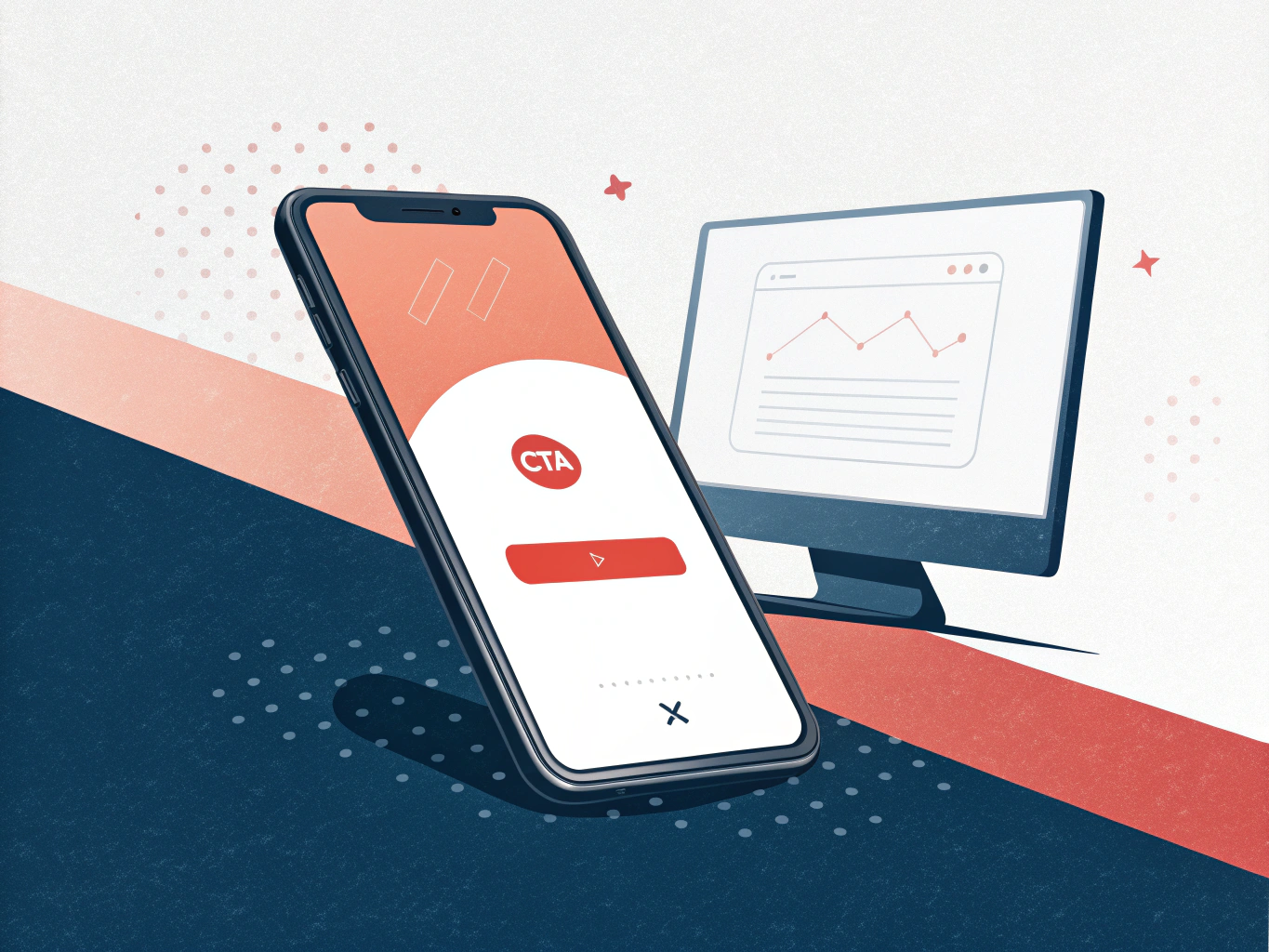
Close the 8% gap by treating mobile as your primary platform, not an afterthought. The conversion lift is immediate.
Core Elements of High-Converting Landing Pages
Here's your section:
Your landing page needs five core elements working in perfect harmony. Get any one wrong, and your conversion rate tanks. Here's what actually matters:
Headlines That Stop the Scroll
Your headline must communicate your unique value proposition in under five seconds. Don't be clever. Be clear. Test variations, but always prioritize specificity over creativity. A headline like "Increase Your Sales by 40%" beats "Transform Your Business" every single time.
Forms That Don't Scare People Away
This one's critical: 81% of people abandon forms after starting, but reducing fields to five or fewer doubles conversion rates. Stop asking for everything. Ask only what you absolutely need. Name, email, and one qualifying question. That's it.
CTAs That Command Attention
Clear CTAs are the most important factor in high-converting landing pages. Make your button large, contrasting, and use action-oriented copy. "Get Started Now" outperforms "Submit" consistently. Place it above the fold and repeat it lower on the page.
Speed Matters More Than You Think
Pages loading in under three seconds convert significantly better, directly impacting your ROAS and lead costs. Every additional second of load time costs conversions. Compress images, minimize code, and test your speed ruthlessly.
Video and Social Proof
Videos can increase conversions by up to 80% when strategically placed. Pair this with trust signals: customer testimonials, recognizable logos, review counts, and security badges. These reduce perceived risk immediately.
Message Matching
Your landing page must mirror the promise in the ad that brought the click, using the same headline, offer, and tone. Mismatched messaging kills conversions faster than anything else.
Use this checklist for every page you build. The data is clear: these elements work.
Search Intent Optimization and SEO Best Practices
Here's your section:
SEO and conversion optimization aren't separate goals; they're interconnected. When you optimize for search intent, you're actually optimizing for the right visitor—someone actively looking for what you offer.
Start with keyword research that goes beyond search volume. Identify terms that match your audience's intent at each stage of their journey. A visitor searching "best project management tools for remote teams" has different needs than someone searching "project management software pricing." Target both, but craft distinct landing pages for each intent.
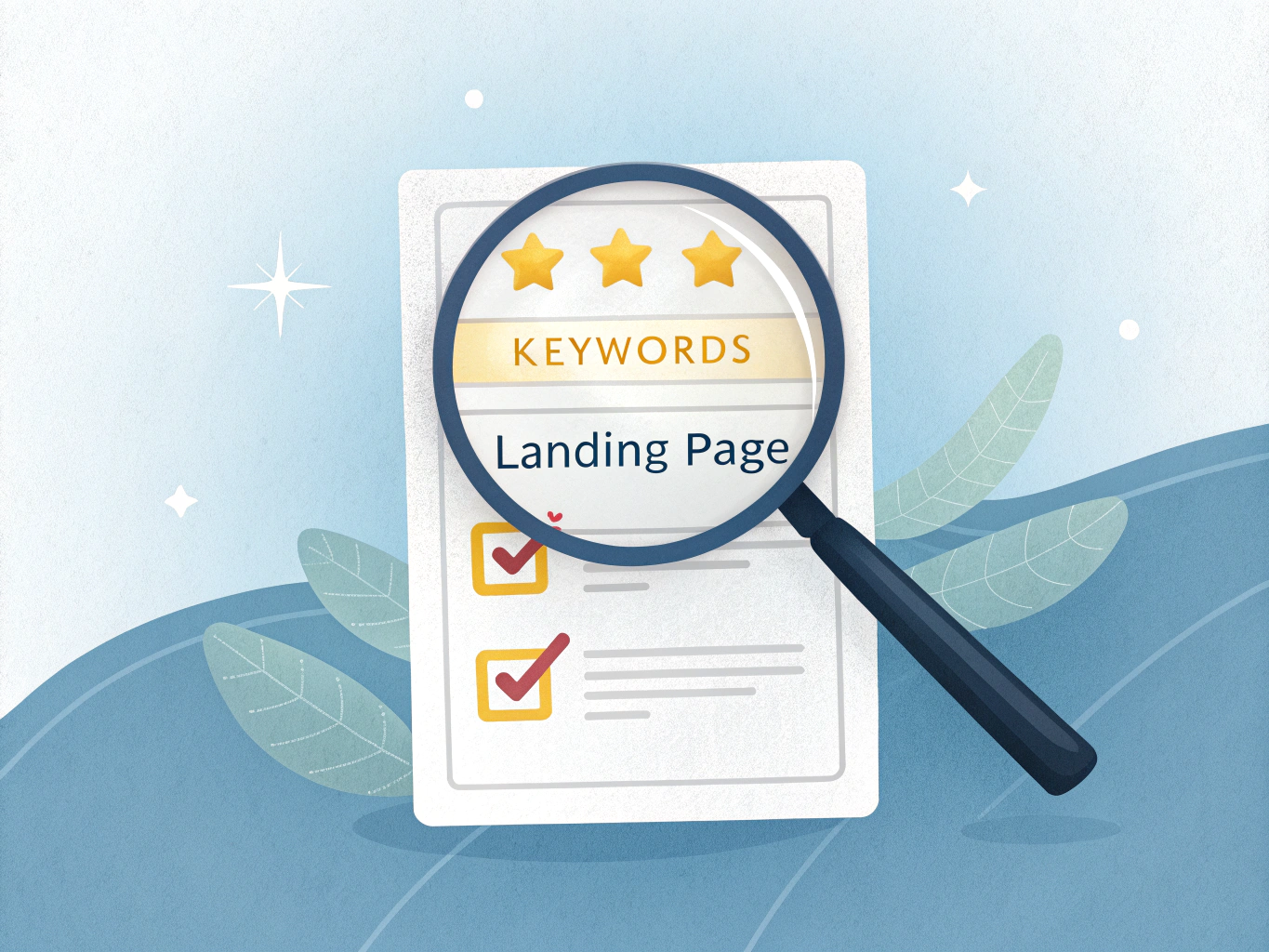
On-page optimization directly impacts user experience. Use short paragraphs, ample whitespace, and clear hierarchy to guide visitors through your message. This isn't just SEO fluff; it's conversion science.
Here's the critical part: readability matters more than you think. Pages written at a 5th-7th-grade reading level get better results, while complex words with three or more syllables show 24.3% decrease in connection with conversion rates. Replace "utilize" with "use." Choose "help" over "facilitate." Your ranking and conversion rates will both improve.
Include your target keyword naturally in the headline, first paragraph, and throughout the body. Ensure proper keyword placement throughout your piece, which helps your page rank well on search engines while maintaining readability for human visitors.
The overlap is intentional: SEO best practices and conversion optimization serve the same master—clarity.
A/B Testing and Data-Driven Optimization
A/B testing is the most reliable path to higher conversion rates. Rather than guessing what resonates with your audience, you're letting real user behavior guide your decisions. The methodology is straightforward: change one element at a time, measure the impact, and implement winners.
Here's the reality: only 1 in 8 tests produces statistically significant improvement, but that single winning test can meaningfully lift conversions. This is why persistence matters. Optimization isn't a one-time project; it's an ongoing cycle where insights compound over time.
Start by testing high-impact elements: headlines, CTA button color and copy, form fields, hero images, and value propositions. Test one variable per experiment to isolate what actually drives results. If you change three things simultaneously, you'll never know which one worked.
Companies testing 10+ variations see 86% better results than those running single tests, reflecting both statistical power and continuous refinement. About 44% of companies actively use A/B testing software, and the gap between testers and non-testers continues widening.
Beyond traditional A/B tests, use heatmaps and session recordings to understand user behavior. These tools show exactly where visitors click, scroll, and hesitate, revealing friction points that tests alone might miss. A user might not convert because they can't find your value prop, not because your CTA is the wrong color.
The key is building testing into your workflow, not treating it as an afterthought. Set a baseline metric, run experiments systematically, document results, and scale winners across your funnel.
This methodical approach transforms optimization from guesswork into science.
Building Your Landing Page Optimization Strategy for 2026
The path to landing page mastery isn't a destination; it's a systematic journey. A high-performing landing page is never truly finished, and the companies seeing the biggest conversion gains treat optimization as continuous, not occasional.
Here's your roadmap for 2026:
Start with benchmarking. Understanding your performance against industry standards reveals where you actually stand. You can't improve what you don't measure.
Build systematically. Mobile-first design forms your foundation. Layer in copy optimization, streamlined forms, and persuasive CTAs. Optimization happens throughout the entire design process, not as an afterthought.
Leverage heatmaps and analytics. See exactly where visitors engage, pause, and abandon. This behavioral data drives smarter decisions than assumptions ever could.
Embrace AI-powered personalization. Real-time adaptation to visitor behavior delivers a 40% conversion lift compared to static approaches. Your page should feel tailored, not generic.
Invest in testing infrastructure. A/B testing, multivariate testing, and rapid iteration separate winners from the rest. Allocate resources here.
The opportunity is yours. Start auditing today, benchmark this week, and commit to testing. Your next conversion surge begins now.
FirstSearch
FirstSearch.AI Team