Complete Strategy for SEO Success in 2026
Why SEO Strategy Matters More Than Ever in 2026
Here's the section:
If you're still treating SEO as a Google ranking game, you're already losing ground in 2026.
The paradox is uncomfortable but real: the fundamentals haven't changed. Quality content, technical health, and user intent alignment still matter. But the bar for "quality" has risen dramatically, and the playing field has fragmented in ways that demand a completely different strategic approach.
Search results are more crowded than ever. Poor content structure, thin value propositions, and weak contextual clarity get buried faster now. Meanwhile, only 36% of searches result in clicks anymore; AI Overviews capture answers directly. That's not a minor shift. That's a fundamental change in how visibility translates to traffic.
Here's what separates winners from everyone else: deliberate strategy. Not random optimizations. Not chasing the latest algorithm whispers. Strategy means alignment between your SEO work and actual business objectives, then disciplined execution across multiple platforms and AI systems simultaneously.
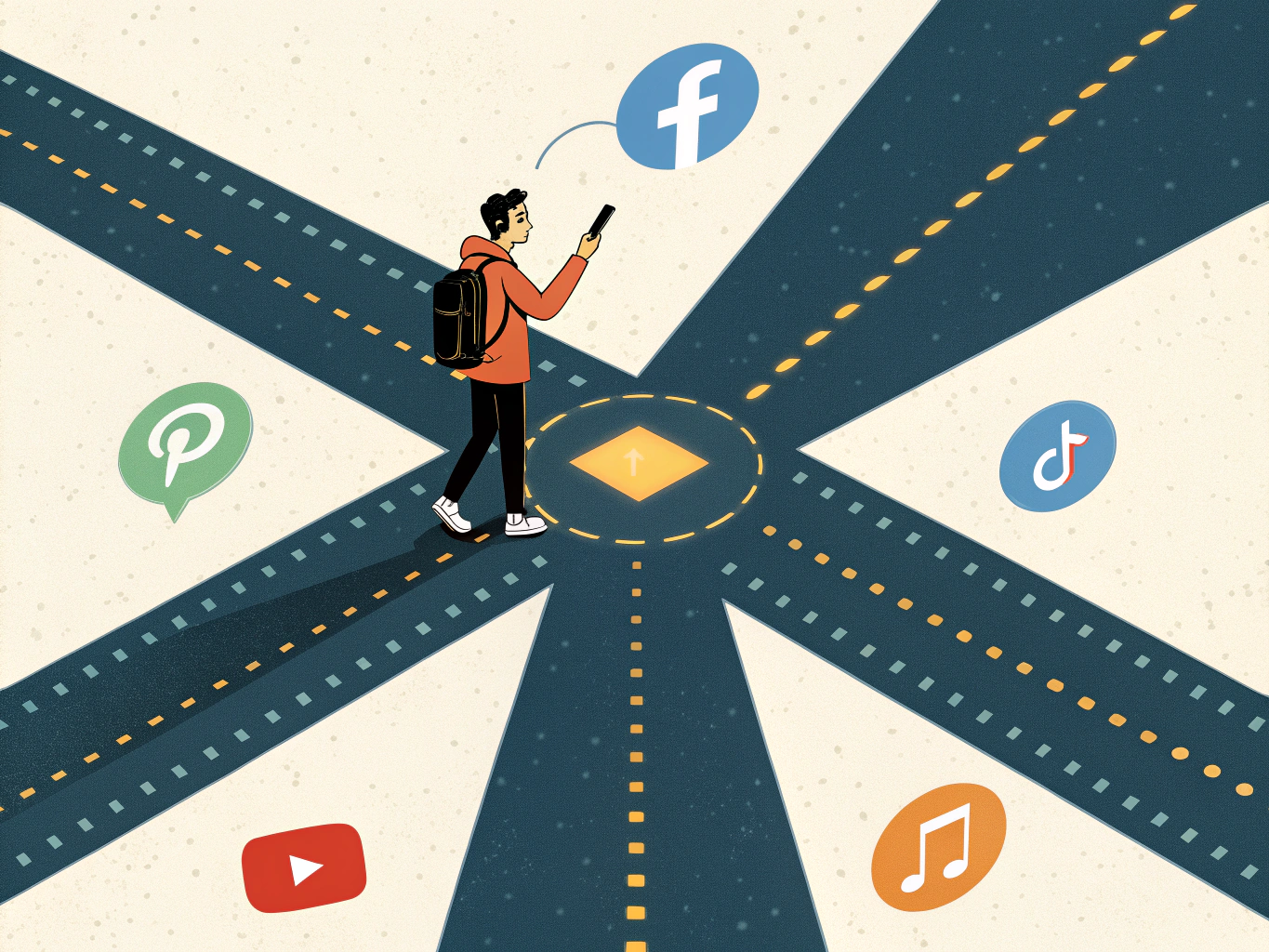
Success in 2026 isn't about dominating Google anymore. It's about building visibility and authority wherever your audience searches: Google, YouTube, TikTok, Reddit, ChatGPT, and emerging platforms you haven't even considered yet. Each demands slightly different content approaches, but they all require the same foundation: clarity, relevance, and trustworthiness.
That's why having a deliberate strategy matters more than ever. It's your north star when everything feels fragmented. It keeps teams aligned when opportunities multiply. It ensures your SEO work actually moves the business needle instead of just boosting vanity metrics.
The companies winning right now aren't the ones chasing trends. They're the ones executing fundamentals with precision across every channel that matters to their customers.
The Four Pillars of Modern SEO Strategy
Every effective SEO strategy in 2026 rests on four interconnected pillars. Neglect one, and the others lose momentum.
Content Optimization with AI Context
Your content must serve both humans and AI systems. This means clarity above cleverness. Use natural language, define jargon, and structure information hierarchically so both readers and search algorithms understand your point immediately. AI tools are now embedded in 86% of SEO workflows, with 93% of professionals reviewing AI-generated content before publishing, so treat these systems as collaborators, not shortcuts.
Technical SEO Excellence
Site architecture, page speed, mobile responsiveness, and crawlability remain non-negotiable. These aren't sexy, but they're the infrastructure that allows your content to reach people. A slow site or broken internal linking structure will undermine even brilliant content.
Authority Through E-E-A-T and Brand Signals
Experience, Expertise, Authoritativeness, and Trustworthiness have evolved. Authentic practitioners outrank generic corporate content. Demonstrate real experience in your field. Showcase credentials, client results, and genuine perspective. Your brand signals now matter as much as backlinks; consistency across platforms builds trust.
Multi-Platform Visibility
Google rankings alone aren't enough anymore. Your strategy must extend to YouTube, LinkedIn, TikTok, Reddit, and industry-specific platforms where your audience actually spends time. Each platform requires adapted content, but your core message stays consistent. This expands your reach and creates multiple entry points to your owned properties.
These four pillars don't work in isolation. Strong technical foundations support better content performance. E-E-A-T signals amplify across platforms. Multi-platform presence generates brand authority signals. The teams that succeed in 2026 treat SEO as a disciplined, integrated system, not a collection of tactics.
Content Optimization: Writing for Humans, AI, and Search Engines Simultaneously
Content strategy has fundamentally shifted. You're no longer writing for search engines alone; you're writing for three audiences simultaneously: human readers, search algorithms, and AI systems that extract answers from your pages.
This means moving beyond single keywords to intent clusters. Instead of targeting "best project management tool," you structure content around what users actually need: Know clusters (how project management works), Do clusters (step-by-step setup guides), Compare clusters (tool comparisons), Buy clusters (pricing and ROI), and Troubleshoot clusters (solving common problems). Intent clusters such as Know, Do, Compare, Buy, and Troubleshoot group searches based on what users actually want. This approach naturally serves all three audiences because it mirrors how people actually search and think.
Semantic fluency matters more than keyword density ever did. Instead of repeating an exact phrase, weave related terms throughout your content: "project management software," "team collaboration tools," "workflow automation platform," and "resource planning solution" work together contextually. Search engines recognize these relationships; so do AI systems scanning for relevant information.
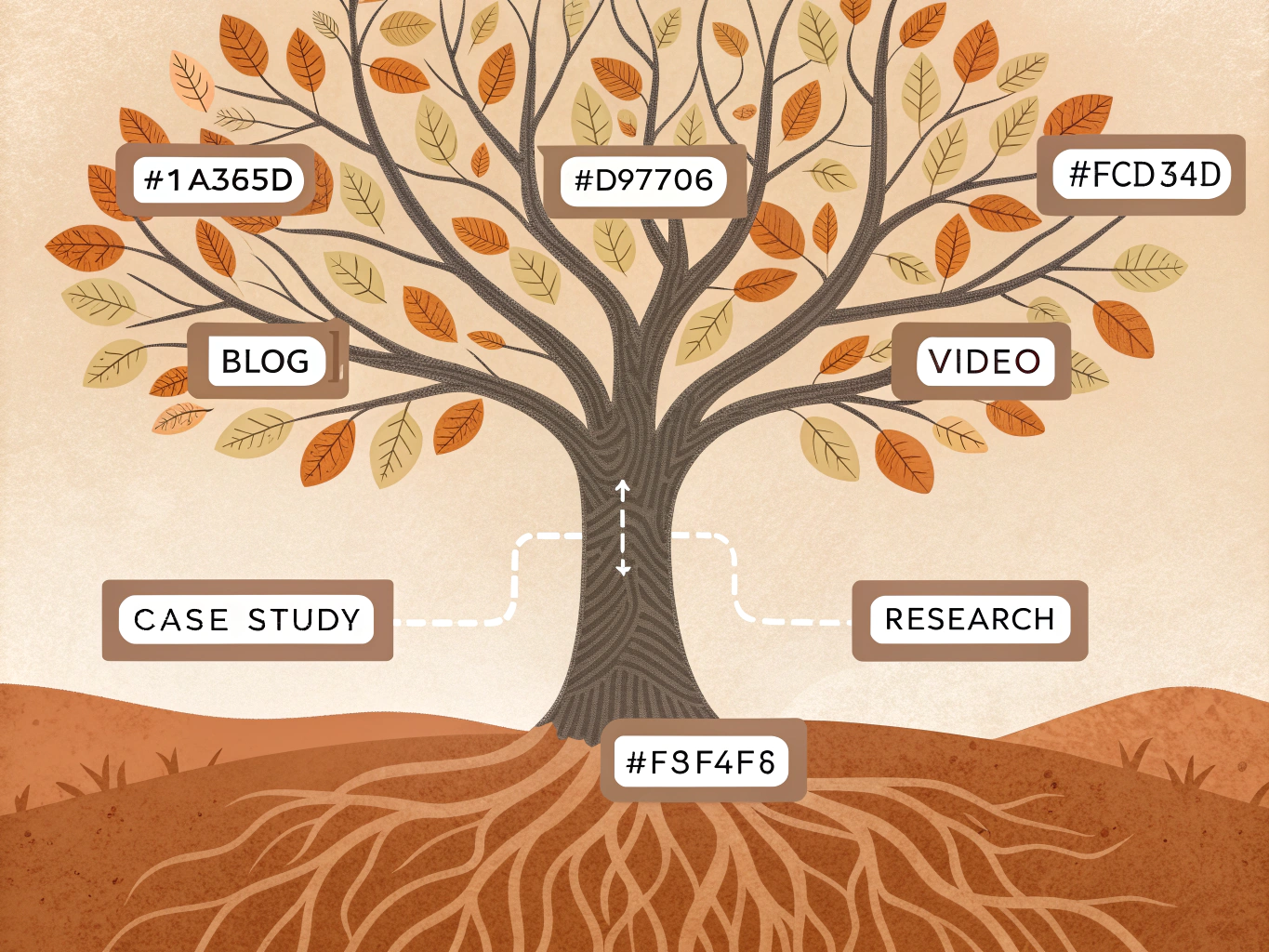
Original insights separate you from competitors. Embed proprietary data, case studies, and research findings. These earn citations from other sites and give AI systems authoritative sources to quote. Practically speaking, structure your content with clear headers, bullet points, and concise explanations. When you embed YouTube videos into blog posts, you signal multimedia authority; one creator moved from ranking 2-3 to #1 after implementing this consistently. The formula works because it satisfies all three audiences simultaneously: readers get visual clarity, algorithms recognize rich media signals, and AI systems find extractable, well-organized information.
Technical SEO and Site Architecture: The Foundation Nobody Sees
Technical SEO isn't flashy, but it's non-negotiable. While content optimization drives conversions, technical foundations determine whether your content gets discovered at all.
Three areas demand immediate attention: crawlability, site speed, and mobile performance. Google still crawls billions of pages daily, and Google handles about 210 times more queries than ChatGPT, making traditional optimization essential. If your site blocks crawlers or loads slowly on mobile, you're losing ranking potential before content even enters the equation.
Site architecture matters more than ever. Clean hierarchy with logical linking patterns helps both search engines and AI systems understand relationships between your content. Clean layout with short paragraphs and distinct sections helps search engines and AI models understand content hierarchy, creating clarity that benefits every system trying to process your information.
Structured data still carries weight despite AI uncertainty. Schema markup signals intent to Google, reducing ambiguity about what your pages actually offer.
Here's the discipline part: fix technical issues independently. Don't wait for engineering roadmaps or other departments to prioritize your requests. Audit your site speed, test mobile responsiveness, check indexation status, and implement structured data yourself. Quick wins on page load times and mobile optimization deliver ranking improvements while you plan longer-term architectural improvements.
The balance is simple: short-term technical fixes compound over months, while proper architecture scales with your business. Both matter. Neither replaces the other.
Authority Building: From Backlinks to Comprehensive Visibility
Authority in 2026 isn't built by chasing links anymore; it's built by becoming genuinely visible where search engines and AI systems actually look. That means your strategy needs to shift from "how many backlinks can we acquire" to "how do we shape what the internet says about us."
The link building goal has fundamentally changed: you need to influence how search engines and LLMs understand your brand. This distinction matters. Search algorithms now reward brands that appear credible across multiple contexts, not just those with the highest link count.
E-E-A-T is the gatekeeper now. Experience, expertise, authoritativeness, and trustworthiness aren't nice-to-haves anymore; they're non-negotiable. But here's what's shifted: you can't fake these signals. Real expertise means publishing substantive work, positioning your team as actual experts in forums and publications, and building a verifiable track record. Your founder's LinkedIn presence matters. Your team's conference speaking matters. Expert bylines matter.
Brand mentions have become surprisingly powerful. Branded search is quietly more powerful as a ranking signal than most teams realize. When people search your company name, the volume and context of those searches influence how search engines perceive your authority. This means building genuine brand recognition, not just chasing vanity metrics.
Comprehensive visibility means being discoverable everywhere: backlinks yes, but also podcast mentions, Reddit discussions, industry forum participation, expert quotes in relevant publications, and social proof across platforms. You're not just building links; you're building a reputation that AI systems and search engines can independently verify.
The practical play: audit where your industry actually congregates, position your expertise there authentically, and let authority follow naturally.
Balancing Short-Term Wins with Long-Term Bets: The Quarterly Framework
The teams that move the needle operate on a simple principle: pick one to three high-impact projects per quarter, each tied to a specific bottleneck. Not ten initiatives. Not a vague roadmap. One to three bets with measurable outcomes.
Here's why this works. Short-term wins build momentum. A technical audit that fixes crawl errors, a content refresh that captures ranking opportunities you're currently losing, a schema implementation that improves CTR. These deliver results within 60 to 90 days. They prove ROI to stakeholders, secure budget for bigger plays, and keep your team energized.
Then comes the long-term bet. This is where discipline separates strategy from theater. While competitors chase algorithm updates, you're building systematic authority through YouTube, Reddit, review sites, or proprietary research. These take six to eighteen months to compound, but they create defensible advantages your competitors can't replicate in a quarter.
The framework is straightforward. Start each quarter by identifying your current bottleneck: Is it technical performance? Content gaps? Brand visibility outside search? Pick the project that removes that constraint. Attach a clear hypothesis to it. Not "improve rankings" but "fix internal linking to push 12 pages from position 8 to top 3, capturing an estimated 240 monthly clicks."
Measure ruthlessly. Track what matters to your business: revenue influenced, cost per acquisition, traffic growth, or conversion rate improvement. Not just rankings or impressions.
This structure forces discipline. It kills the impulse to chase every new platform or tactic. It keeps both SMB owners and enterprise teams accountable to outcomes, not activity.
Multi-Platform Visibility: Beyond Google to YouTube, Reddit, TikTok, and AI
Search doesn't happen in one place anymore. Your customers are finding answers in AI chatbots, scrolling YouTube for tutorials, asking Reddit communities for recommendations, and discovering products through TikTok. Google still owns roughly 90% of search market share, but that statistic masks a critical shift: the other 10% is fragmenting across platforms where your audience actually spends time.
The temptation is to optimize everywhere. Resist it. You'll burn resources and dilute your message. Instead, start with an audit: where are your buyers actually searching? A B2B SaaS company might find decision-makers on LinkedIn and Google; a fitness brand might see traction on TikTok and YouTube; a niche hobbyist product might live in Reddit communities. Pick three to four platforms where your audience congregates, then commit.
Platform-specific content doesn't mean starting from scratch each time. It means adapting your core message to how each platform works. A blog post becomes a YouTube explainer, a Twitter thread, a Reddit comment with authority. Consistency in brand voice matters more than identical messaging. Your audience should recognize you across channels, even if the format changes.
Here's what's changed most: AI systems now answer queries directly without sending clicks anywhere. ChatGPT, Claude, and others are becoming search engines themselves. This doesn't mean abandoning SEO; it means ensuring your content shows up in AI training data and cited sources. Platforms that encourage citations and original insights have an advantage.
The strategy is straightforward: stop thinking platform-by-platform and start thinking audience-first. Where do they search? What format do they prefer? What problem are they solving? Answer those questions with discipline on a handful of channels rather than scattered effort everywhere. That's how you win in 2026.
Optimizing for AI: From Answers to Citations
Here's the section:
Let's be direct: AI Overviews and LLM-based search engines are reshaping how traffic flows from search. AI Overviews are a major factor in SEO traffic in 2024 and 2025, with significant growth expected in 2026. This isn't a threat if you understand what's actually happening.
The shift from clicks to citations fundamentally changes your optimization target. You're no longer competing solely for position one in traditional search results; you're competing to be cited as a credible source within AI-generated summaries. The objective is shifting from winning clicks to becoming a cited authority in AI-synthesized answers.
Here's what matters: AI systems don't need special content. They need better content structure. Clear headers, concise answers, organized data points, and logical section breaks make your content more useful to AI parsers and readers alike. The fundamentals that worked for SEO in 2020 still work in 2026 because they serve both human readers and machine learning models.
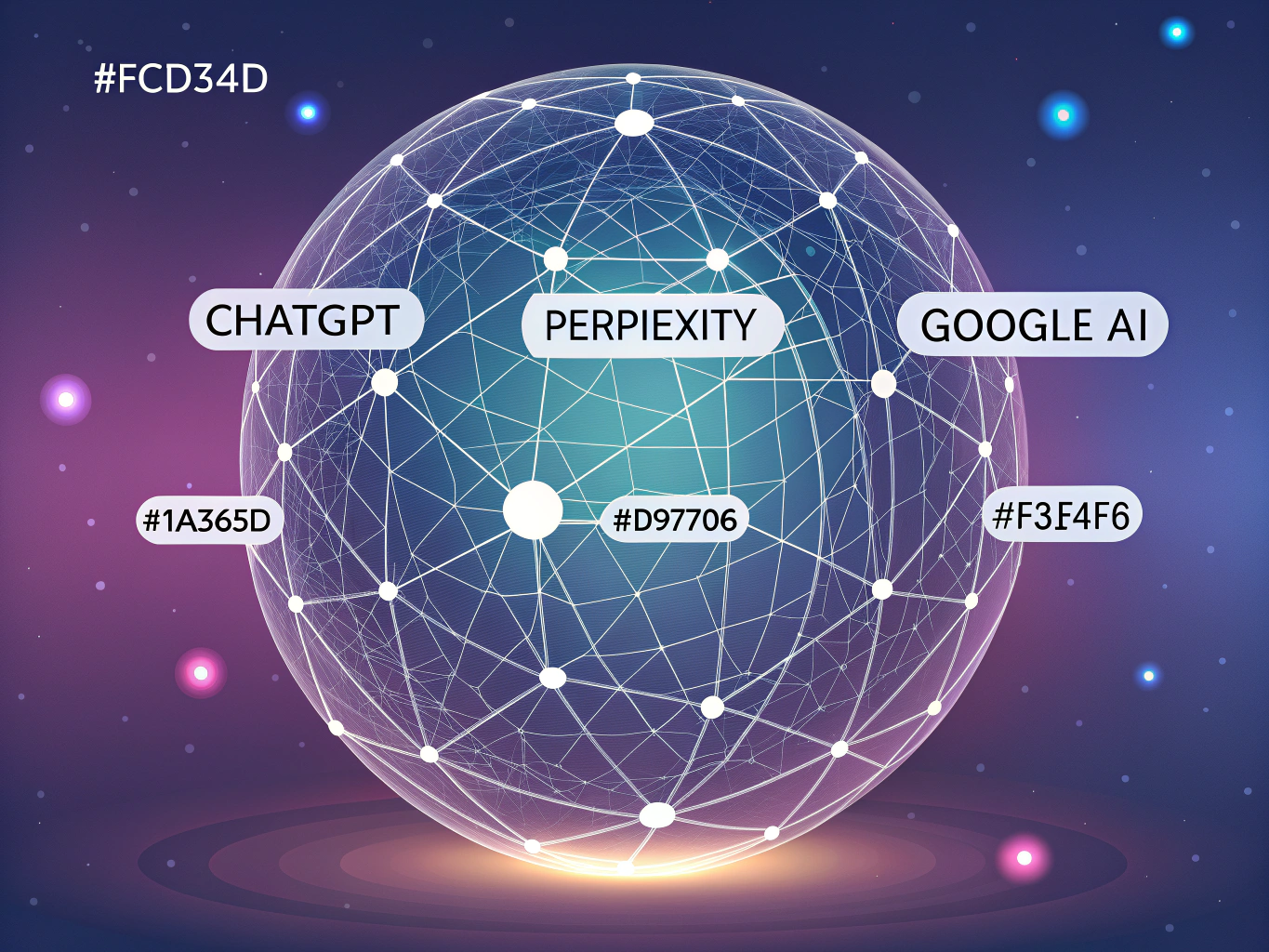
One critical point: AI-generated content alone won't earn citations. Combine AI's speed and efficiency with human expertise, real data, and original insight. That combination signals authority to both algorithms and users. Your competitive edge isn't in being first to use AI tools; it's in creating content substantive enough to be cited when AI summarizes your industry.
Word count: 318
Measuring What Actually Matters: Revenue Over Rankings
Here's the hard truth: your rankings mean nothing if they don't generate revenue.
In 2026, measuring SEO success has become genuinely harder. Organic CTR is dropping not because your content got worse, but because users get instant answers from AI Overviews. Only 36% of searches result in clicks anymore. You can rank first for a high-volume keyword and still see zero qualified leads because the answer appeared in the AI summary.
This shift demands a complete measurement reset. Stop obsessing over rankings and impressions. Start tracking what actually moves your business: qualified leads, customer acquisition cost, and revenue attribution.
The framework is straightforward. First, map your content to business outcomes. Which pages drive leads? Which convert browsers into customers? Not all traffic is equal. A single qualified lead from a bottom-funnel page beats 1,000 impressions from top-of-funnel content that never converts.
Second, implement proper attribution. Use UTM parameters, conversion tracking, and CRM integration to connect organic traffic to revenue. This gets messy with AI Overviews stealing clicks, but it's non-negotiable. You need to know exactly what SEO contributes to your bottom line.
Third, focus on down-funnel content. When users do click through from search, they're typically ready to decide. Product comparison pages, case studies, and pricing content matter more than ever. These pages reflect real buyer intent.
The SEO teams winning in 2026 aren't the ones chasing rankings. They're the ones speaking the language of revenue and proving it with data. That's what makes your CFO listen.
Getting Started: Your 2026 SEO Action Plan
Here's where most SEO programs fail: they start everywhere at once. You need to start nowhere except diagnosis.
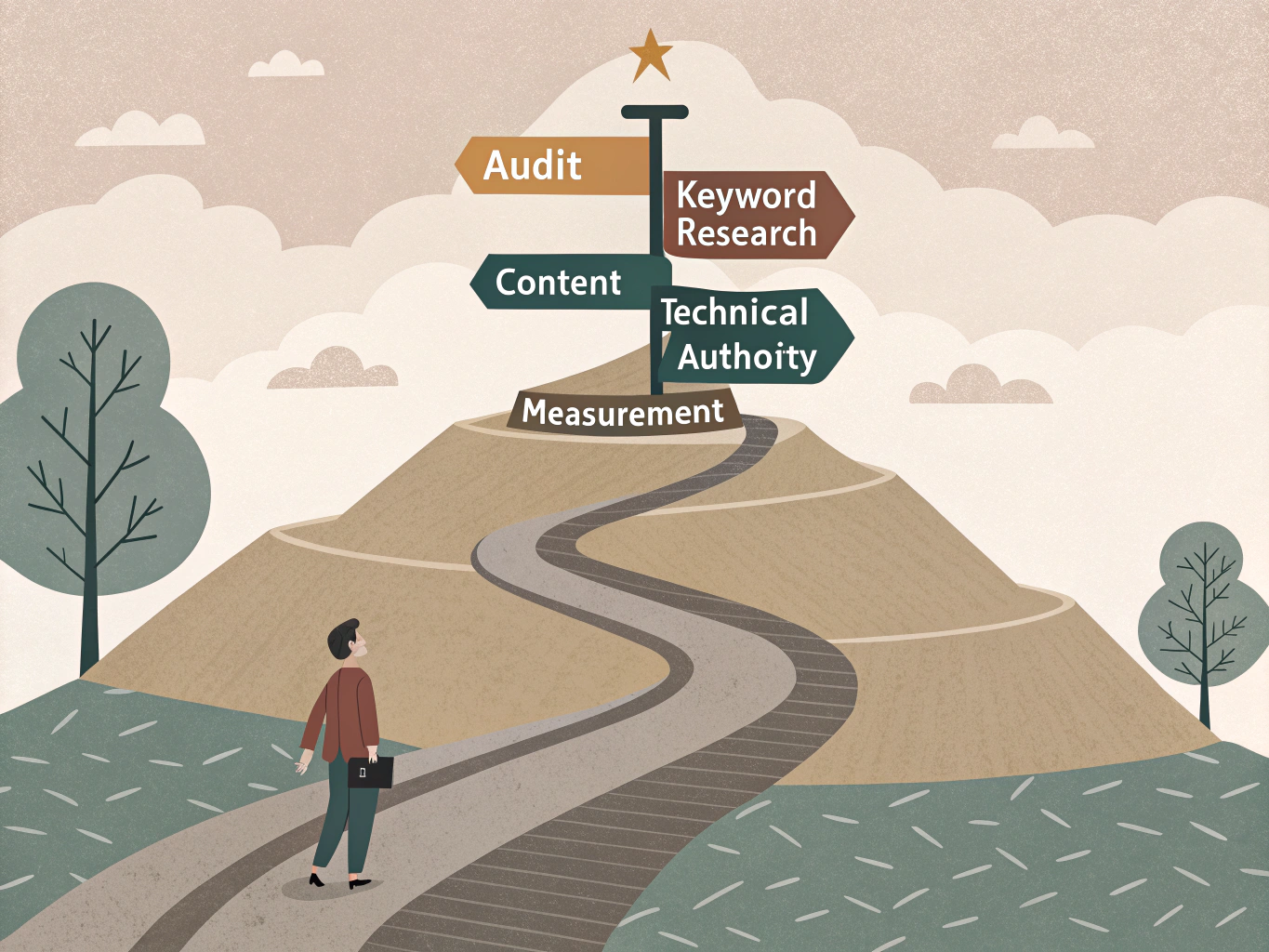
Ask yourself: where is your funnel actually breaking? Most effective SEO strategies in 2026 start with diagnosis of where funnel breaks down. Is it visibility for high-intent keywords? Content that doesn't convert? Technical issues killing crawlability? Or simply that your audience has shifted to different platforms entirely?
Next, audit where your audience actually searches. Not where you think they search. Check your analytics, competitor keywords, and where conversations happen in your industry. This takes a week, not a month.
Then pick one high-impact project per quarter. One. Not five. Maybe it's fixing your site structure. Maybe it's launching a content hub around your strongest keyword cluster. Maybe it's building structured data for AI systems to actually understand your business. Start small, measure results, build momentum.
The measurement part matters most: track business outcomes, not just rankings. Revenue influenced by organic search. Customer acquisition cost. Repeat purchase rate. These numbers prove ROI to your leadership and guide your next quarter's priorities.
You don't need permission to start. You need clarity on what matters most, then the discipline to execute it completely.
FirstSearch
FirstSearch.AI Team