10 Free AI Tools for Content Creation You Need in 2026
Last Updated: February 6, 2026
TL;DR: Free AI Tools That Actually Work in 2026
- ChatGPT free tier offers GPT-4o-mini, web browsing, and file uploads without payment
- 87% of creators use AI; free tools now rival paid alternatives in core features
- Perplexity AI provides real-time research with citations; Google Gemini integrates with Workspace
- Video creation tools like Lumen5 and Descript turn content into multimedia in minutes
- The gap between free and paid isn't intelligence anymore, it's volume and advanced features
Table of Contents
- Why Free AI Content Tools Matter More Than Ever in 2026
- The Top 5 Free AI Writing Tools That Replace Paid Software
- Free AI Tools for Image Generation, Video, and Visual Content
- Research and SEO Optimization: Free Tools That Compete with Paid Platforms
- Building a Complete Content Workflow with Free Tools
- The Human Element: Why Free AI Tools Work Better with Human Oversight
- FAQ: Your Questions About Free AI Content Tools Answered
- Key Takeaways: Start Using Free AI Tools Today
- Ready to Transform Your Content Workflow?
Why Free AI Content Tools Matter More Than Ever in 2026
The gap between free and paid AI content tools has narrowed dramatically. What once separated enterprise software from consumer options was raw capability; now it's mostly about usage limits and feature volume. A free tool can write, edit, and optimize content just as effectively as its $99-per-month competitor. The real difference? Paid versions let you do it 10 times faster or across more projects simultaneously.
This shift matters because adoption is accelerating. 83.2% of content marketers plan to use AI tools in 2026, a significant jump from 64.7% in 2023. Meanwhile, 72% of companies worldwide now use AI in at least one business function. For freelancers, small agencies, and bootstrapped startups, free tools remove the barrier to entry entirely. You're not settling for less; you're accessing legitimately competitive technology at zero cost.
2026 is the inflection point because the free tier has matured. These aren't limited demos anymore; they're functional, production-ready platforms. They handle writing, image generation, video summarization, and design tasks that previously required separate subscriptions or manual work. The market is growing at 22.8% annually, meaning new free options launch constantly while existing tools expand their capabilities.
The opportunity is now. Starting with free AI tools lets you experiment, learn workflows, and prove ROI before committing budget. Many teams never need to upgrade. Those that do can scale confidently, knowing exactly which features justify the investment.

The Top 5 Free AI Writing Tools That Replace Paid Software
The gap between free and paid writing AI has narrowed dramatically. You no longer need a subscription to access powerful tools; you just need to know which ones to use and how to work within their limits.
ChatGPT remains the versatile workhorse. The free tier now includes GPT-4o-mini with web browsing, file uploads, and 30 chat turns per hour. That's enough to draft blog posts, refine headlines, brainstorm angles, and research topics without hitting a paywall. The real limitation isn't capability; it's speed. You'll need patience between sessions, but the quality hasn't suffered.
Claude is the rising star for long-form work. If you're writing something over 2,000 words, Claude's context retention outperforms most competitors. It handles nuance better than other free options and produces a more measured, measured tone. The free tier caps at 100,000 tokens per month, which translates to roughly 50 substantial articles. For newsletter writers and content strategists, this is genuinely useful.
Google Gemini shines for research-heavy content. It integrates directly with Google Workspace, Docs, and Sheets, eliminating the copy-paste workflow. The free version works well for pulling information together and organizing thoughts, especially if you already live in Google's ecosystem. No credit card required to start.
Perplexity solves a specific problem: finding current information with citations. Instead of hunting through search results, Perplexity pulls real-time web data and cites its sources, making it invaluable for fact-checking and research-backed writing. The free tier handles several queries daily without restriction.
Copy.ai targets short-form creators. The free tier includes 10 credits monthly, enough to test social media captions, email subject lines, and ad copy before committing to paid tiers.
The strategy isn't picking one tool; it's combining them. Use ChatGPT for drafting, Claude for depth, Gemini for organization, Perplexity for research, and Copy.ai for refinement. This layered approach replaces what companies once charged hundreds monthly for.
Free AI Tools for Image Generation, Video, and Visual Content
Visual content creation has become the speed layer of content marketing. 34 million AI images are created daily, and the free tools available now make it genuinely accessible for creators without design budgets.

Start with DALL-E, which is built right into ChatGPT's free tier and can turn a short prompt into blog illustrations, concept art, or social media graphics in seconds. No signup friction, no separate tool to learn. Canva remains the Swiss Army knife here, combining AI-powered design with thousands of platform-specific templates. The free version handles everything from Instagram posts to LinkedIn graphics without watermarks.
For video, Lumen5 converts your written content into animated videos in minutes, perfect for LinkedIn feeds or email embeds. Just paste your blog post or article, and the tool structures it into scenes with stock footage and music. Descript takes a different angle, turning podcasts, interviews, and webinars into blog posts and short clips. You can edit video by editing text, which sounds simple until you realize how much time it saves.
The practical reality: free tiers of these tools produce output that rivals paid alternatives for social media, blog illustrations, and quick videos. You're not limited to low-quality experiments anymore. Spend your budget on strategy and messaging, not software licenses. These tools handle the heavy lifting while you focus on what matters: ideas that resonate.
Research and SEO Optimization: Free Tools That Compete with Paid Platforms
The research phase determines your content's credibility, and free tools now handle this work as effectively as premium platforms. Perplexity AI is a research powerhouse where every answer comes with citations, making it invaluable for creating authoritative content. Unlike generic AI assistants, Perplexity returns real-time information with clickable source links, letting you verify facts instantly and build citations directly into your research process.
Google Gemini shines for research-heavy content creation and integrates seamlessly with Google Docs, Sheets, and other Workspace tools. This integration matters; you can research, draft, and optimize without switching between five different tabs. For competitive analysis, Frase AI approaches content creation from a different angle with competitive intelligence and 10K free AI words. Use these words to analyze competitor briefs, identify content gaps, and structure outlines before writing.
Surfer SEO's free paraphrasing tool polishes your prose without changing meaning, which matters when you're refining sections for clarity and readability.
Here's the workflow: start with Perplexity for sourced research, move to Gemini for integration with your drafting space, use Frase to understand what competitors ranked, then refine with Surfer. This process addresses both traditional SEO and Answer Engine Optimization (AEO), the emerging priority as AI search engines grow. In 2026, the goal is shifting from writing faster to creating better, with full-stack tools handling research, drafting, formatting, and SEO.
The combination eliminates the "I don't have time to research properly" excuse. You're producing fact-checked, authoritative content at scale without premium subscriptions.
Building a Complete Content Workflow with Free Tools
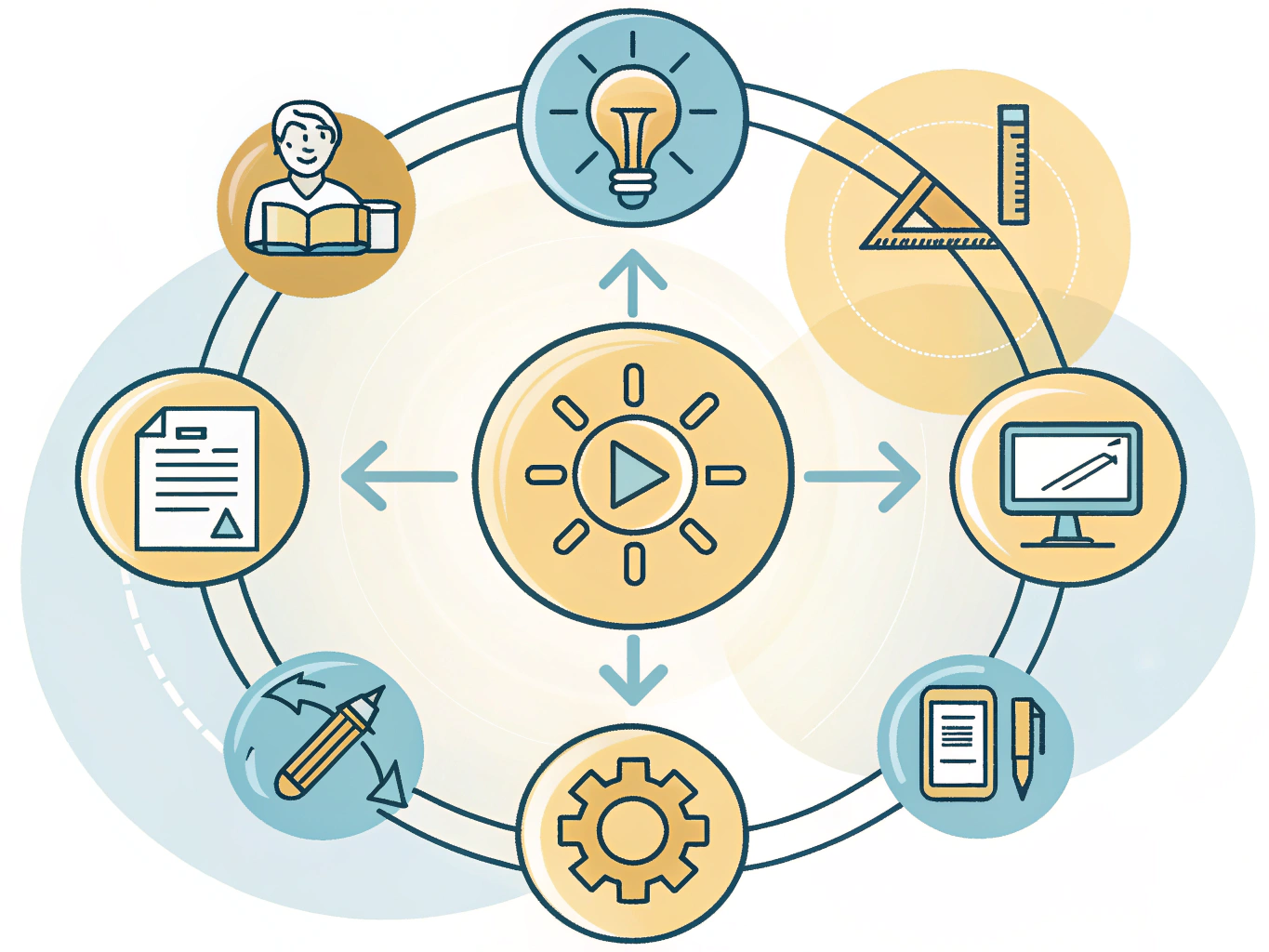
The real power of free AI tools emerges when you stop using them individually and start chaining them together. Think of it like building a content assembly line where each tool handles what it does best.
Here's how it works in practice: a freelance marketer needs to create a blog post, social graphic, and short video. She starts with Perplexity for research, getting current data and fresh angles on her topic. That research feeds into ChatGPT for drafting, where she writes the full article and generates social captions simultaneously. Canva takes those captions and transforms them into polished graphics with her brand colors. Finally, Lumen5 pulls the blog post and automatically generates a video script, which becomes a 60-second social clip.
The entire workflow costs nothing. The output rivals what a small agency would charge thousands for.
Yes, free tools have constraints. Rate limits cap how many requests you can make daily. Feature restrictions mean you won't access every advanced customization. But here's the reality: the gap between free and paid AI isn't intelligence anymore, it's volume and advanced features. The core capabilities are remarkably similar.
Strategic workarounds exist for every limitation. Hit a rate limit? Batch your requests or stagger them across hours. Need advanced design elements? Layer multiple free tools or export and refine in simpler software. The constraints actually force better planning, which often improves output quality.
The critical piece? Human oversight remains non-negotiable. AI drafts the skeleton; you shape it into something authentic. You catch factual errors, inject your voice, and ensure the message lands. Small teams and solo creators now compete on equal footing with larger operations, not because AI replaced their judgment, but because strategic tool combinations amplified it.
The Human Element: Why Free AI Tools Work Better with Human Oversight
Here's the reality: AI is a research assistant and draft generator, not a creative director. The free tools flooding the market in 2026 work best when humans remain firmly in control.
Think of it this way. AI excels at synthesizing information, generating multiple angles, and producing first drafts at scale. What it can't do is understand your audience's nuances, catch factual errors, or infuse your brand's authentic voice into the work. That's where you come in.
71% of marketers using AI rate their content performance as effective, but here's the catch: those marketers aren't blindly publishing AI output. They're applying the human-in-the-loop model, where AI handles the heavy lifting while humans refine, verify, and strategize. You use free tools to brainstorm five headline options; you choose which resonates. AI drafts an outline; you reshape it to match your narrative. This collaboration amplifies your creativity rather than replacing it.
The competitive edge in 2026 isn't about having the slickest AI tool. It's about authentic, human-centered content that actually connects with readers. In 2026, the human-made label will be a selling point that content marketers use to signal the quality of their creation. Audiences can sense when content lacks genuine expertise and intentionality.
Free AI tools aren't shortcuts; they're force multipliers. They compress timelines and eliminate busywork so you can focus on what matters: strategy, refinement, and ensuring your voice shines through. Use them as partners, not replacements, and you'll see measurable results.
FAQ: Your Questions About Free AI Content Tools Answered
Are free AI tools safe to use?
Yes, reputable free tools are secure. Major platforms use encryption and don't train on your data without consent. Always check privacy policies, though. Avoid suspicious sites asking for excessive permissions.
Can I use AI-generated content commercially?
Absolutely. Most free tools grant commercial licenses for their output. The key exception: verify the tool's terms. Some restrict commercial use on free tiers. When in doubt, check the fine print before publishing.
What's the real difference between free and paid versions?
Free tiers typically offer limited monthly outputs, fewer customization options, and slower processing. Paid plans remove these caps and add advanced features. For hobbyists and small creators, free often suffices. Heavy users eventually hit walls.
How do I maintain quality with AI assistance?
Treat AI as a starting point, not finished work. Edit ruthlessly. Fact-check claims. Add your voice and perspective. The best content combines AI efficiency with human judgment. Quality comes from your curation, not the tool alone.
Should I disclose AI usage?
Yes. Transparency in AI-generated content will be crucial by 2026, and marketers must clearly disclose AI usage. Audiences increasingly expect honesty. Disclosure builds trust and protects you legally as regulations tighten.
What are the biggest limitations?
Free tools struggle with specialized knowledge, niche industries, and maintaining consistent brand voice across multiple pieces. They also generate generic content sometimes. You'll need human expertise to elevate output above average.
The bottom line: free tools work well when you understand their constraints and treat them as collaborators rather than replacements for your creativity.
Key Takeaways: Start Using Free AI Tools Today
The data is clear: 87% of content creators now use AI in their creative workflows. You're not behind the curve by experimenting with free tools in 2026; you're joining the mainstream.
Here's what actually matters: stop waiting for the perfect setup. Pick one tool this week. If you write, start with ChatGPT or Perplexity. If you design, open Canva. If you need research, use Perplexity. Spend seven days using it for real work, not just testing. Track one metric: how much time you reclaimed.
After one week, you'll understand your workflow gaps. That's when you add a complementary tool. Maybe you pair ChatGPT with a free image generator. Maybe you combine Canva with a free video editor. The magic isn't in any single tool; it's in strategic combinations that replace your old process entirely.
But here's the non-negotiable part: human oversight matters. AI drafts, you refine. AI suggests, you decide. AI accelerates, you authenticate. Your voice, perspective, and judgment are what separate your content from everyone else's.
2026 is the inflection point where free tools stop being "good enough" and become genuinely competitive with paid alternatives. The barrier to entry is zero. The cost of waiting is opportunity lost.
Pick your tool. Start today. Measure what changes. Then build from there.
Ready to Transform Your Content Workflow?
The barrier to entry for AI-powered content creation has collapsed. What once required enterprise budgets now sits in your browser, free and ready to use. The real competitive advantage isn't access to tools anymore; it's knowing how to wield them strategically alongside your own judgment.
Start this week. Pick one tool from this guide, spend an hour experimenting, and notice where it fits into your workflow. Maybe it's speeding up research. Maybe it's generating first drafts you refine into something exceptional. Build from there. Combine free tools with human creativity, and you'll produce content at a scale that would've required a full team just two years ago.
The question isn't whether to use AI for content creation. Businesses already integrating AI into their workflows report measurable ROI improvements. The real question is how you'll use it strategically to amplify your voice without losing authenticity.
Ready to optimize beyond tool selection? Check out FirstSearch's ultimate guide to SEO automation tools and our content optimization checklist to maximize what you build.
Your content evolution starts now. No excuses, no budget constraints. Just you and the tools in front of you.
FirstSearch
FirstSearch.AI Team