Understanding Gated Recurrent Units: A 2026 Overview
What is a Gated Recurrent Unit? The Foundation
A Gated Recurrent Unit, or GRU, is a type of recurrent neural network designed to process sequential data efficiently. Think of it as a smarter version of traditional RNNs, equipped with internal gates that control how information flows through the network. GRU was introduced in 2014 by Kyunghyun Cho and colleagues, arriving at a critical moment in deep learning history.
To understand why GRUs matter, you need to know what problem they solve. Standard RNNs struggle with something called the vanishing gradient problem. When training networks on long sequences, gradients shrink exponentially as they backpropagate through time, making it nearly impossible for the network to learn long-term dependencies. GRU addresses this challenge while maintaining simplicity, using a mechanism that lets the network decide what information to remember and what to forget.
GRU is a type of recurrent neural network that accomplishes this through two key gates: a reset gate and an update gate. These gates act like selective filters, allowing the network to preserve important information over many time steps while discarding irrelevant details.
You might wonder why we're discussing GRUs in 2026 when Transformers dominate headlines. The answer is practical. GRUs require less computational power, train faster, and work exceptionally well for many real-world tasks where Transformers feel like overkill. They're particularly valuable for edge devices, resource-constrained environments, and scenarios where interpretability matters.
How GRU Works: The Two-Gate Architecture
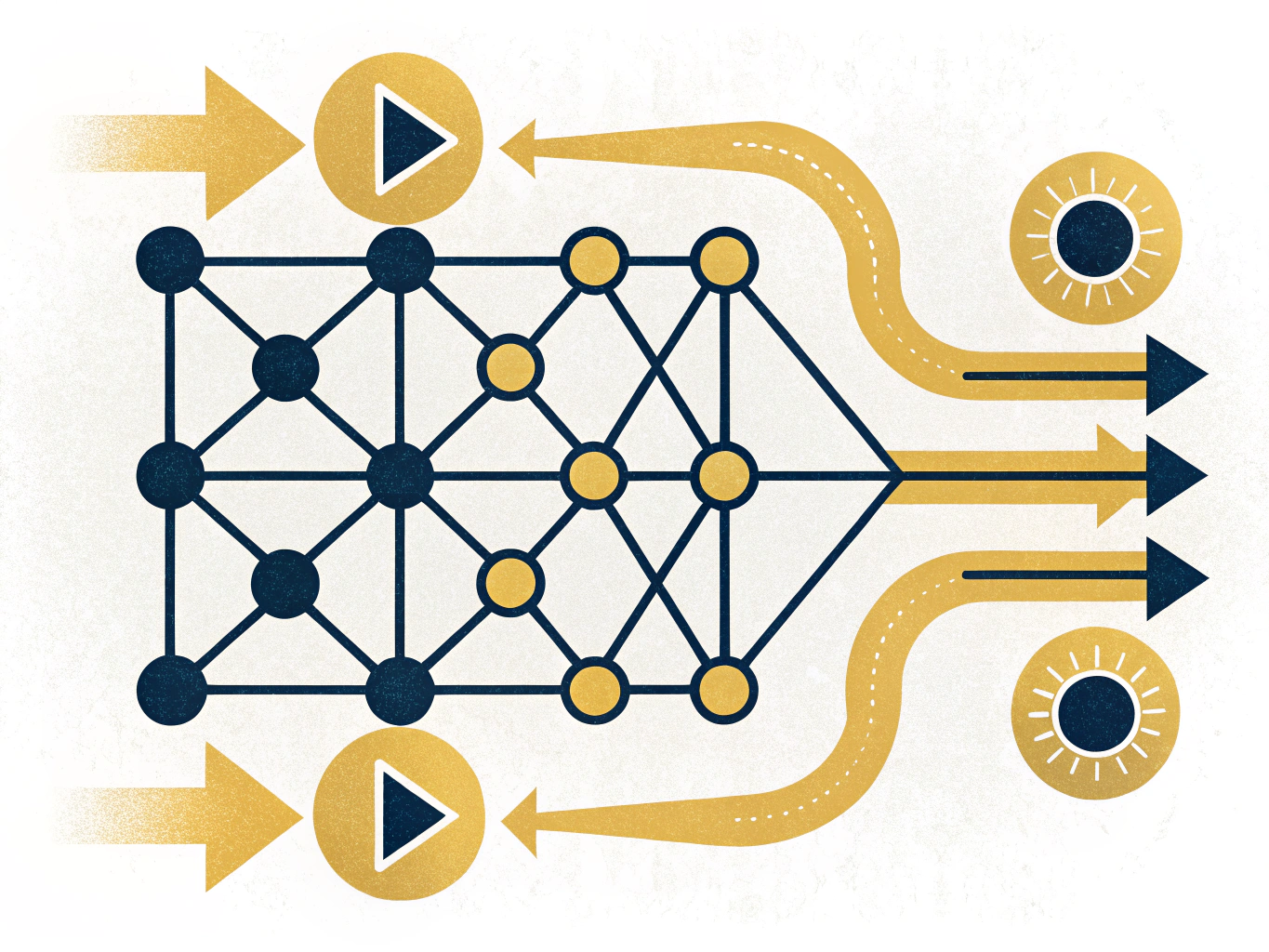
Think of a GRU as a decision-making system with two critical checkpoints. At each moment in time, it faces a question: what should I remember from the past, and what should I accept as new information? Two gates handle this responsibility.
The reset gate acts like a selective memory filter. It examines the previous hidden state and the current input, then decides which parts of the past are relevant right now. Using sigmoid activation, this gate produces values between 0 and 1 for each dimension. A value close to 1 means "keep this memory," while 0 means "forget it." As detailed in Dive into Deep Learning, the reset gate controls how much of the previous state to remember. Think of it as an editor deciding which old notes deserve to influence your current decision.
The update gate then takes over, determining how much of the candidate hidden state (freshly computed using the reset information) should actually replace the old hidden state. This gate also outputs values between 0 and 1. A high value means "trust this new information," while a low value means "stick with what you already knew." According to Dive into Deep Learning, the update gate controls how much new state is a copy of the old state.
Here's where the elegance emerges: these two gates work together seamlessly. The reset gate prepares the past, the update gate blends past and present, and the result flows forward to the next time step. This two-gate design is notably simpler than LSTMs, which employ three gates. GRUs achieve comparable performance with less computational overhead, making them practical for many real-world scenarios where efficiency matters as much as accuracy.
GRU vs LSTM: Key Differences That Matter
GRUs and LSTMs solve the same problem, but they take different architectural paths. The core difference lies in their gate structure: GRUs use two gates while LSTMs employ three. This seemingly small distinction cascades into real performance and efficiency trade-offs.
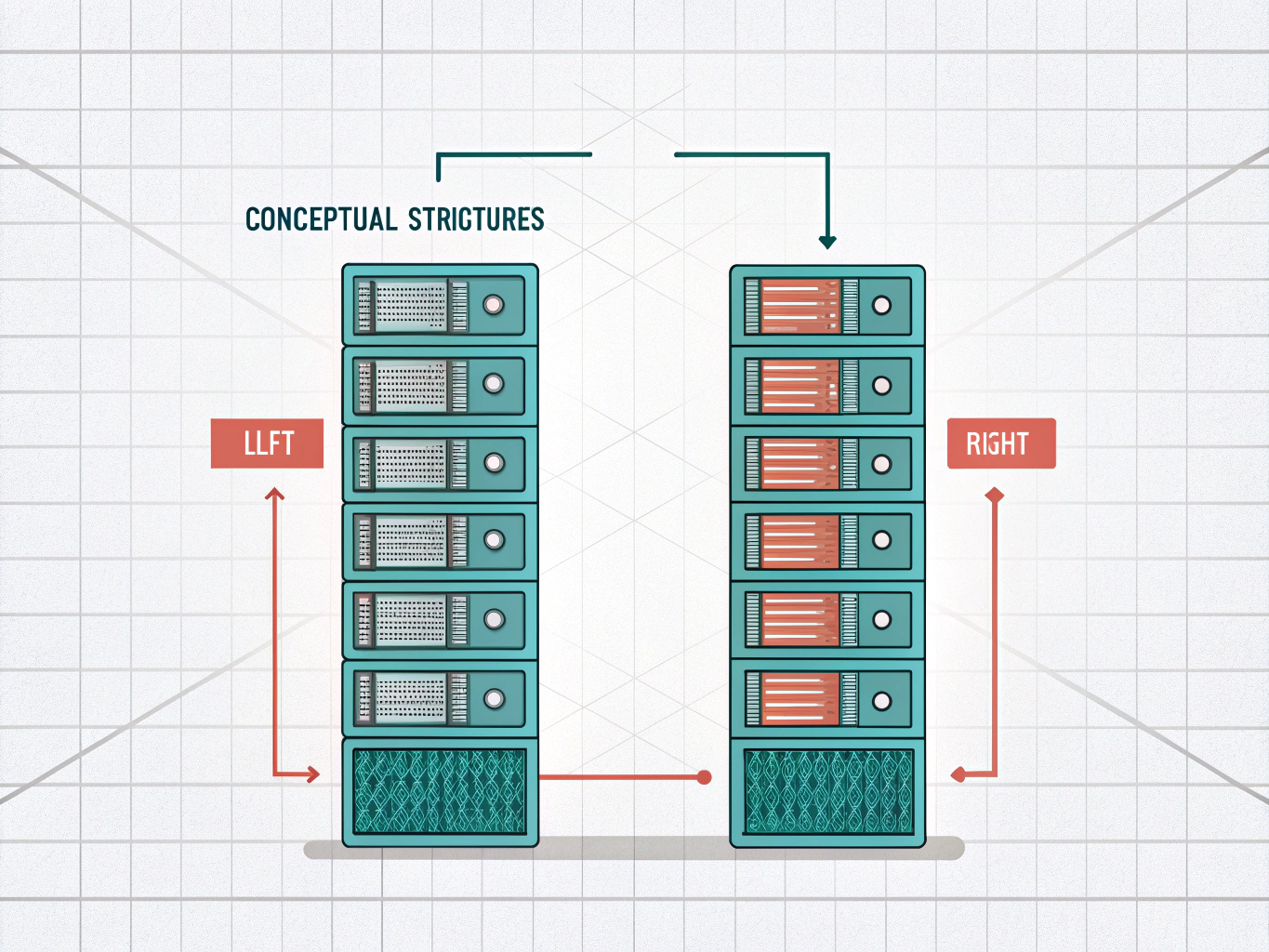
LSTMs maintain separate cell states and hidden states, giving them more granular control over information flow. This architecture excels when you're wrestling with very long-term dependencies or highly complex sequential patterns. The trade-off is computational overhead; more gates mean more parameters to train and more calculations per time step.
GRUs simplify this by merging the cell and hidden states into one, and combining the input and forget gates into a single update gate. The result: fewer parameters, faster training, and lower memory requirements. This efficiency matters when you're deploying on edge devices or working with resource constraints.
Here's where it gets practical: research shows GRUs outperform LSTMs on low-complexity sequences while LSTMs excel with high-complexity patterns. In real-world benchmarks, GRUs achieved 96.2% accuracy versus 96.8% for LSTM, but with 35% faster inference time. That speed advantage becomes significant at scale.
Choose GRUs when you need rapid prototyping, have limited computational resources, or are working with moderately complex sequences. Pick LSTMs when you absolutely need to capture intricate long-range dependencies or when accuracy margins matter more than speed. In 2026, neither is obsolete; they're simply tools for different jobs. Your sequence complexity and deployment constraints should guide the decision, not hype.
Why GRU Matters: Advantages and Limitations
GRUs shine where efficiency matters. With fewer parameters than LSTMs, they demand less memory and compute power, making them practical for edge devices, mobile applications, and resource-constrained environments. GRU combines gates into a single update gate, which simplifies the architecture without sacrificing performance on many real-world tasks.
Training speed is another genuine advantage. GRUs often converge more quickly during training, reaching acceptable performance in 25% fewer epochs, which matters when you're iterating rapidly or working with limited computational budgets. For time-series forecasting, sentiment analysis, and text generation at moderate complexity levels, GRUs deliver solid results without the overhead.
But here's where honesty matters: GRUs have real limitations. They struggle with extremely long-term dependencies spanning hundreds of timesteps. If your task requires remembering information from the distant past while processing new sequences, an LSTM or Transformer will likely outperform a GRU. The gating mechanism, while elegant, also creates an interpretability challenge; understanding exactly why the network made a specific prediction remains difficult.
Smaller datasets pose another risk. GRUs' reduced complexity can become a liability when you lack sufficient training data. The model may underfit or overfit more readily than more expressive architectures. Additionally, modern Transformers have largely eclipsed GRUs in NLP, though GRUs remain competitive in specialized domains like time-series work.
The practical takeaway: GRUs aren't universally better or worse. They're a smart choice when you need a balance between performance and efficiency, when computational resources are tight, or when you're working with shorter sequences. Evaluate them based on your specific constraints, not assumptions about what's "latest." Sometimes simpler is smarter.
Real-World Applications of GRU in 2026
Despite the rise of transformers, GRUs continue proving their worth in production environments where efficiency matters. Their practical advantages make them ideal for specific business problems.
Speech recognition systems rely on GRUs to align audio features with phonetic sequences, powering virtual assistants embedded in smart devices. As Ultralytics documents, this capability has become fundamental to how millions of people interact with technology daily.
Financial services leverage GRUs for time-series forecasting because they capture temporal dependencies in stock prices and market trends without the computational overhead of larger models. Financial analysts use GRUs to identify patterns that inform trading strategies and risk management decisions.
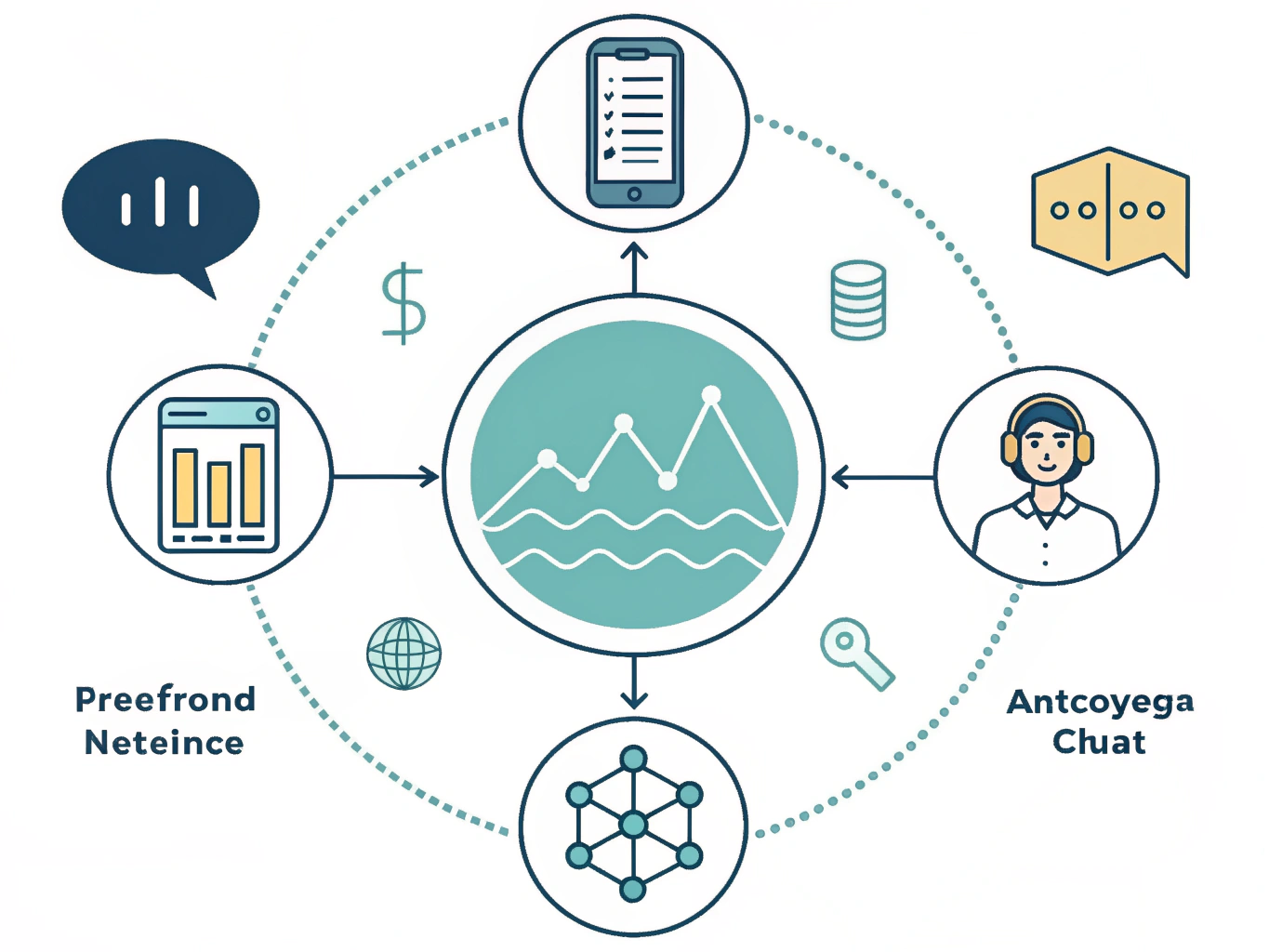
Anomaly detection represents another strong use case. GRUs can identify unusual patterns in sequences for fraud detection and network intrusion detection, catching suspicious behavior in real time.
Mobile and IoT applications benefit most from GRU's efficiency. These devices operate under strict memory and power constraints; GRUs deliver strong performance without draining batteries or requiring extensive computational resources. Chatbots, music generation systems, and question-answering platforms all utilize GRUs effectively because they process sequential data intelligently while remaining lightweight.
The key insight: GRUs excel where you need real results without excessive complexity or computational cost.
GRU in 2026: Competing with Transformers and Staying Relevant
Let's be honest: Transformers have won the popularity contest. They dominate large-scale NLP tasks, handle long-range dependencies with elegance through parallel processing, and achieve impressive results on massive datasets. But dominance doesn't mean GRUs are obsolete.
The real question isn't whether Transformers are better. It's whether you need what Transformers offer. Transformers require significantly more compute resources but achieve higher accuracy on massive datasets, making them impractical for many real-world scenarios.
This is where GRUs remain genuinely valuable. GRUs are generally more suitable for mobile or embedded systems due to smaller size and faster processing times. If you're deploying models on IoT devices, smartwatches, or edge servers with limited memory and power budgets, GRUs deliver respectable performance without the overhead.
Real-time applications benefit too. Financial trading algorithms, sensor monitoring systems, and live stream processing often need quick inference, not maximum accuracy. GRUs process sequences sequentially, which seems slower than Transformer parallelization, yet their simpler architecture means faster actual inference on single-device deployments.
The practical landscape in 2026 isn't binary. Hybrid approaches work well: use GRUs for initial feature extraction or lightweight models, then apply Transformer layers for complex reasoning. Some teams even stack them inversely depending on throughput needs.
GRUs remain a preferred choice for simpler tasks or environments with constrained hardware. That's not a weakness. That's a different job description. Understanding which tool fits which problem beats chasing architectural trends.
Getting Started with GRU: Implementation and Best Practices
Implementing GRUs is refreshingly straightforward compared to more complex architectures. As Ultralytics notes, implementing a GRU is straightforward using modern frameworks like PyTorch, and TensorFlow/Keras offer equally accessible pathways. Start with a standard stack: embedding layer, one or two GRU layers with 128-256 hidden units, then a dense output layer sized to your task.
For hyperparameter tuning, begin conservatively. A learning rate between 0.001 and 0.01 works well with Adam optimization. Batch size typically ranges from 32 to 128, depending on your sequence length and available memory. Don't overthink it initially; start simple and adjust based on validation performance.
Regularization matters more than you'd expect. Apply dropout (0.2-0.5) between layers and recurrent dropout within GRU cells to combat overfitting. These techniques significantly improve generalization without requiring massive datasets.
The choice between GRU and LSTM depends on task requirements, dataset size, and resource constraints. Choose GRU when you need faster training, fewer parameters, or have limited data. Select LSTM for complex, long-range dependencies where computational budget allows.
Common mistakes to avoid: setting learning rates too high (causes instability), ignoring sequence padding (creates silent failures), and using insufficient training time. GRUs often converge slower than you'd expect with smaller datasets.
Your next step: pick PyTorch or Keras based on your existing toolkit, implement a simple text classification task, and experiment with layer configurations. Real learning happens through iteration, not theory. Start building today.
FirstSearch
FirstSearch.AI Team