How to Make Netherite Tools: Complete 2025 Guide
What Are Netherite Tools and Why You Need Them
If you're ready to push your Minecraft gameplay to the absolute limit, netherite tools are your endgame goal. These represent the strongest tier of equipment available in the game, surpassing even diamond tools in every meaningful way. according to Sportskeeda, netherite gear stands as the best equipment for most Minecraft players, and for good reason.

The benefits are substantial. As documented by ScalaCube, netherite tools are faster, more durable, and float on lava. That last feature alone can save you from devastating losses during Nether exploration. You'll also get significantly more uses from each tool compared to diamond, meaning less time crafting replacements and more time building, mining, or fighting.
Here's what you need to know upfront: obtaining netherite tools requires serious effort. You'll need to venture deep into the Nether, mine rare ancient debris, and since the 1.20 update, you'll also need to find netherite upgrade smithing templates. This guide walks you through every step of the process, from gathering materials to applying that final upgrade at the smithing table. The investment is worth it, and with the right approach, you'll have your full netherite toolkit faster than you might expect.
Materials You'll Need to Make Netherite Tools
Before you start your netherite journey, let's get organized. Think of this as gathering ingredients before cooking—having everything ready makes the process much smoother.
The Base Requirement: Diamond Tools
Here's what surprises new players: you don't craft netherite tools from scratch. You upgrade existing diamond tools at a smithing table. So you'll need a complete set of diamond gear first—sword, pickaxe, axe, shovel, and hoe if you want the full collection.
Ancient Debris and the Crafting Chain
Ancient debris is your primary target in the Nether. You'll need 4 pieces of ancient debris to create 4 netherite scraps (smelt the debris in a furnace or blast furnace). Then, netherite ingots are obtained by crafting four netherite scraps and four gold ingots according to the official Minecraft Wiki. It is a shapeless recipe, so placement doesn't matter when crafting as noted in the wiki.
Per-Tool Breakdown
Each tool requires exactly 1 netherite ingot to upgrade, which means:
- 1 netherite ingot = 4 ancient debris + 4 gold ingots per tool
- Full toolset (5 tools) = 20 ancient debris + 20 gold ingots
- Full armor set = 16 ancient debris + 16 gold ingots (4 pieces)
The New 2025 Requirement: Smithing Templates
Since the 1.20 update, you need a Netherite Upgrade Smithing Template to perform upgrades at the smithing table. The good news? Templates are reusable—but only if you duplicate them first using 7 diamonds, 1 netherrack, and the original template. Find your first template in bastion remnant chests.
Other Essentials
Don't forget a smithing table (4 planks + 2 iron ingots) and plenty of fuel for smelting all that ancient debris.
How to Find Ancient Debris in the Nether
Finding ancient debris is the most time-consuming part of making netherite tools, but the right strategy makes all the difference. This rare ore only spawns in the Nether, and you'll need a diamond or netherite pickaxe to mine it—nothing else works.
Best Y-Level for Mining
Head straight to Y-level 15, which has the most ancient debris on average according to Minecraft Wiki data. You can check your coordinates by pressing F3 (Java Edition) or enabling them in world settings (Bedrock Edition). There is an average of 1.65 ancient debris blocks per chunk as documented by the wiki, so patience is essential.
Two Effective Mining Methods
Bed Explosion Method: This is the fastest technique for experienced players. Beds explode when used in the Nether and are cheaper than other explosives per the official tutorial. Dig a short tunnel, place a bed at the end, click it to trigger the explosion, then check the exposed blocks for ancient debris. The blast radius reveals a large area quickly, but you'll take damage without proper protection.
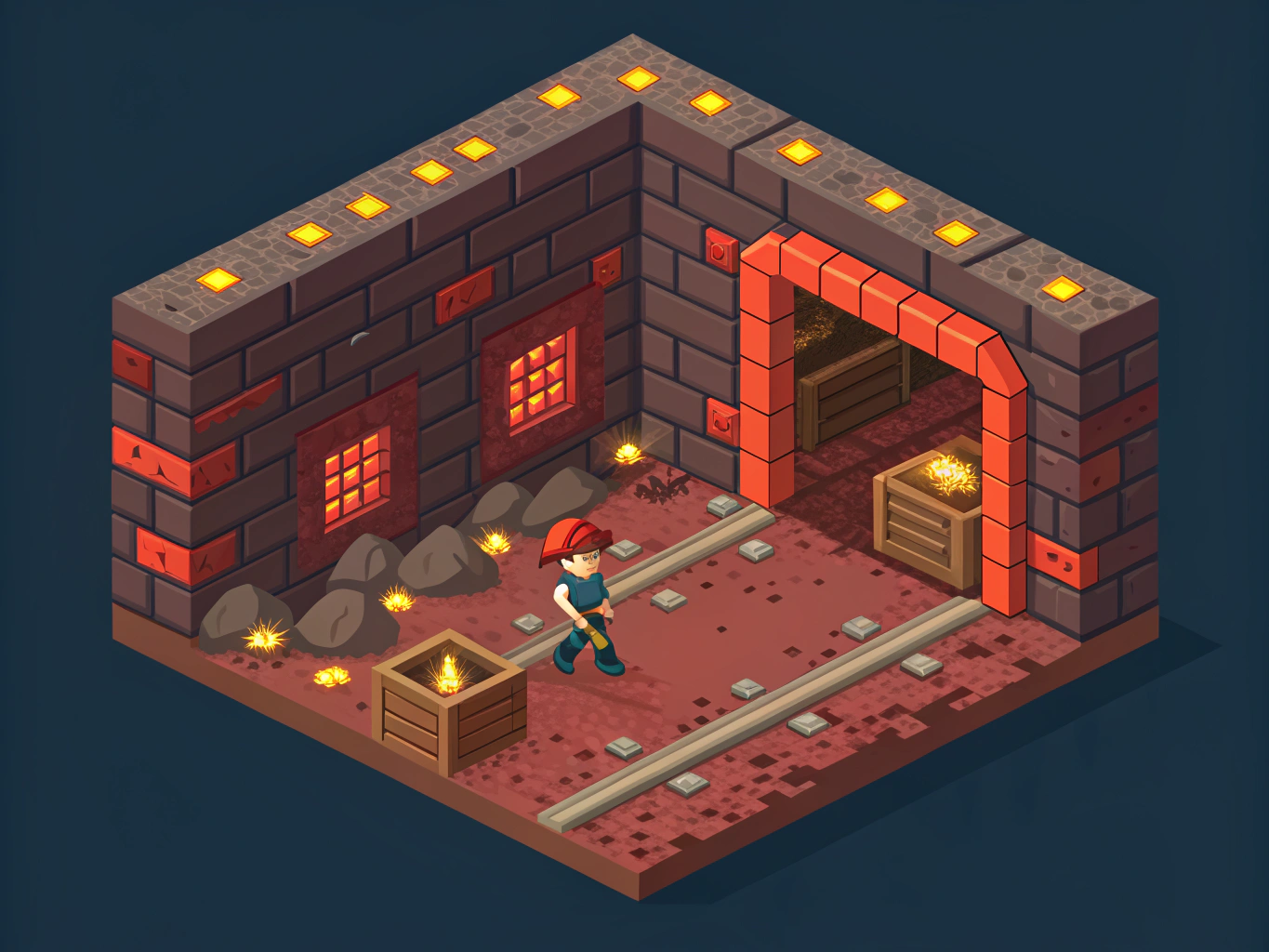
Strip Mining Method: For a safer approach, create a main tunnel at Y=15. At every 16th block, mine 1×1×5 tunnels perpendicular to your main tunnel following the recommended pattern. This covers maximum ground while minimizing wasted effort.
Essential Safety Gear
Always bring fire resistance potions—lava is everywhere at this depth. Armor with Blast Protection IV helps survive bed explosions. Pack a stack of blocks to plug lava flows, food for healing, and extra pickaxes since ancient debris is tough to mine.
One critical note: Fortune enchantment does NOT work on ancient debris. Each block drops exactly one piece regardless of your pickaxe enchantments, so don't waste levels trying to get more.
Crafting Netherite Ingots from Ancient Debris
Once you've collected your ancient debris, it's time to transform it into something useful. First, you'll need to smelt each piece of ancient debris in either a furnace or blast furnace to obtain netherite scraps, per the Minecraft Wiki. The blast furnace works twice as fast, so use one if you have it available. Each ancient debris block yields exactly one netherite scrap.
Here's where things get interesting. To create a single netherite ingot, you'll need to gather four netherite scraps and four gold ingots. Place all eight items in your crafting table in any arrangement, as specified in the crafting guide. This is a shapeless recipe, meaning the placement doesn't matter at all. Just toss them in and you're good to go.
Let's talk numbers. A full netherite tool set (pickaxe, axe, shovel, hoe, and sword) requires five netherite ingots total. That means you'll need 20 netherite scraps, which translates to 20 ancient debris blocks. Don't forget you'll also need 20 gold ingots for the crafting process. If you're planning to upgrade armor as well, add another 16 ancient debris to your shopping list (four ingots for the full armor set).
Stock up on fuel for your furnaces because you're going to be doing a lot of smelting.
Getting and Using the Netherite Upgrade Smithing Template
Since the 1.20 update, crafting netherite tools requires an additional component that catches many players off guard: the Netherite Upgrade smithing template. You can't simply combine your diamond gear with netherite ingots anymore – according to Sportskeeda's guide, players now need this specific template as part of the smithing recipe.
Finding Your First Template
The netherite upgrade smithing template can only be found in Bastion Remnants, as reported by Beebom. These dangerous Nether structures contain various chest types, but your best bet is locating the treasure room variant, which guarantees a template spawn. Other bastion chest types offer roughly a 10% chance, so treasure rooms are worth the extra effort.
Come prepared with strong armor and plenty of fire resistance potions. Bastions are crawling with piglins and occasionally magma cubes, making template hunting a risky venture.
Duplicating Templates
Here's the good news: once you have one template, you can create more using the duplication recipe. Place your template in a crafting table surrounded by 7 diamonds and 1 netherrack. Yes, it's expensive, but it beats repeatedly raiding bastions for each tool upgrade.
The Upgrade Process
Using the smithing table is straightforward with its three-slot system. Place the netherite upgrade template in the leftmost slot, your diamond tool or armor piece in the middle, and a netherite ingot in the right slot. The template gets consumed during the process, which is why duplication matters.
The best part? According to the official wiki, upgrading costs no experience and preserves all enchantments and remaining durability. Your fully enchanted diamond pickaxe transfers everything to its netherite version seamlessly.
Which Tools to Upgrade First (Priority Guide)
Since ancient debris is one of the rarest resources in Minecraft, you'll want to make every netherite ingot count. Here's how to prioritize your upgrades strategically.
Start with your pickaxe. This is non-negotiable. You'll use your pickaxe more than any other tool, and the durability boost alone justifies the investment. The netherite pickaxe is the perfect choice for the first netherite tool, as recommended by Game Rant, because it directly impacts your ability to gather more resources efficiently.
Next, upgrade your sword. Combat becomes significantly easier with netherite's increased damage output and durability. If you're tackling the End or frequent Nether expeditions, this upgrade pays for itself quickly.
Armor comes third, but it's crucial for survival. Upgrade your full set when you have four ingots available. The knockback resistance is genuinely useful against stronger mobs, and the added protection can mean the difference between life and death in challenging situations.
Your axe deserves consideration fourth. It functions as both a tool and a weapon, making it surprisingly versatile. If you frequently use axes in combat or chop lots of wood, prioritize this over remaining tools.
Save shovel and hoe for last. These tools offer minimal performance gains compared to their diamond versions. Shovel and hoe are less essential and can be upgraded if you have excess netherite, as noted by experts.
The math supports this strategy: netherite tools boast roughly 470 additional durability points compared to diamond, according to CyberPost analysis. That's substantial for frequently-used items, less impactful for occasional tools.
Your playstyle matters too. Farmers might prioritize the hoe earlier, while builders focused on terraforming could benefit from an early shovel upgrade.
Tips for Maintaining Your Netherite Tools
Congratulations! You've officially joined the elite ranks of Minecraft players wielding the game's most powerful tools. Now let's talk about keeping them in pristine condition for the long haul.
Your first priority should be enchanting with Mending, hands down. This enchantment lets you repair tools using experience orbs, which means your netherite pickaxe can last indefinitely as long as you're mining or fighting. Pair it with Unbreaking III to dramatically reduce durability loss, and you've got a tool that might outlive your entire world save. For pickaxes, axes, and shovels, add Efficiency V to maximize your productivity—it is recommended to have Mending and Unbreaking III on your tools per official recommendations.
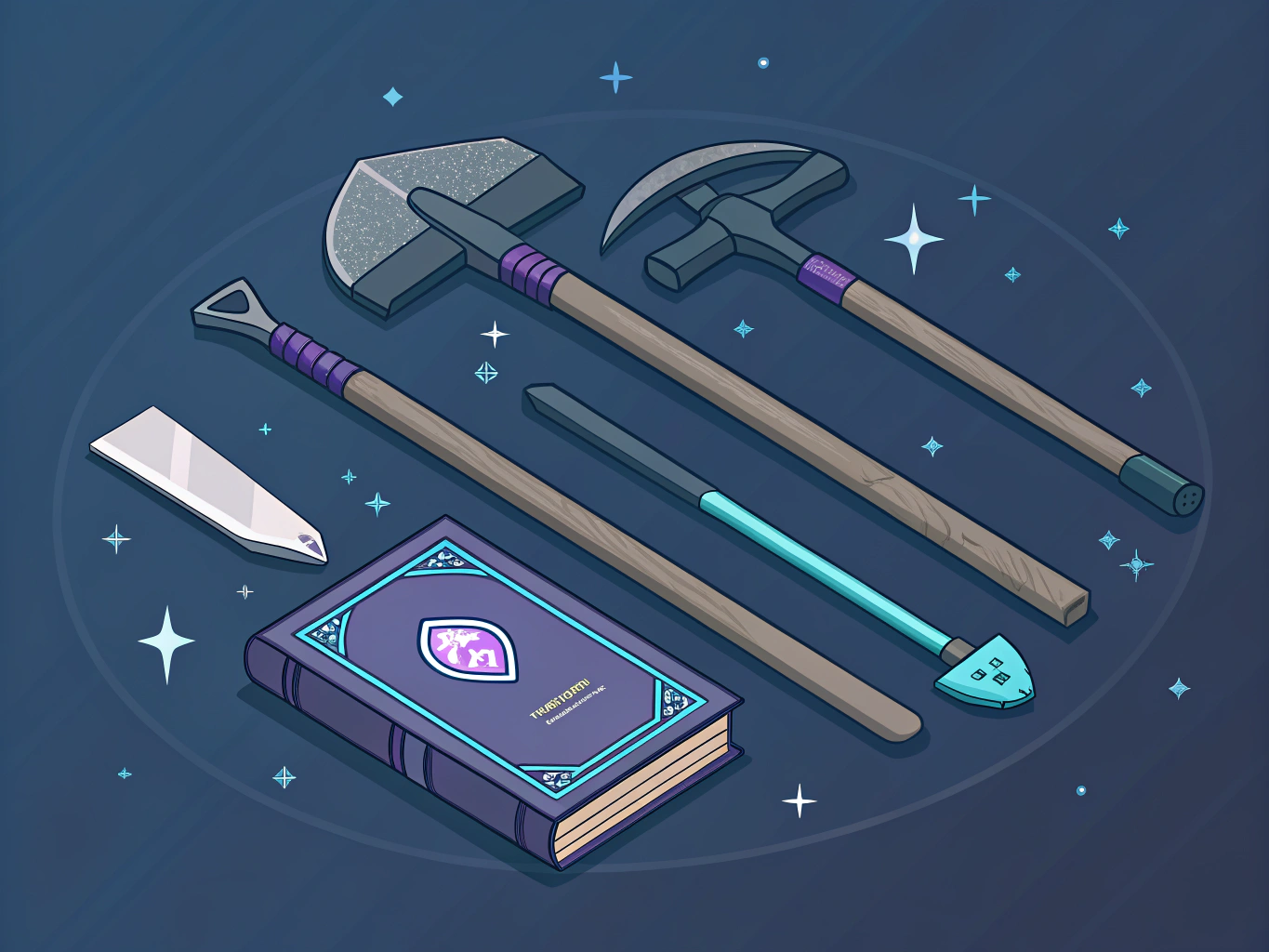
Here's something that sets netherite apart: these tools are completely immune to fire and lava damage. Drop your pickaxe in a lava lake? It'll float right to the surface. Netherite items are fire and lava-proof, making them invaluable for Nether exploration as highlighted by Game Rant. This alone justifies the entire upgrade process.
If you don't have Mending yet, you can repair netherite tools in an anvil using netherite ingots, though this gets expensive with repeated repairs. Focus on finding a Mending villager or fishing for the enchanted book—it's worth the effort.
Consider keeping a backup diamond toolset for risky ventures into unexplored caves or during raid farms. Better safe than sorry, even with netherite's durability.
Your next milestone? Complete your netherite armor set for full protection, then maybe tackle a beacon pyramid. You've already mastered the hardest crafting chain in Minecraft—everything else is downhill from here.
Author
FirstSearch.AI Team