How Zapier Grew to $310M ARR With Content Alone

Last Updated: February 2026
This is the first article in our Growth Playbooks series, where we break down exactly how specific startups grew, with real numbers and real strategies you can learn from.
In 2012, three guys from Missouri raised $1.3 million. They never raised another dollar. Today, their company generates $310 million in annual revenue, employs 800 people across 40 countries, and is valued at $5 billion.
The company is Zapier. And the engine behind this growth is not a sales team, not paid ads, not viral loops. It's content.
This is the story of how Zapier built one of the most effective content machines in SaaS history, and what you can steal from their playbook.
The Problem: Nobody Searches for "Automation Software"
When Wade Foster co-founded Zapier, he faced a fundamental marketing problem: nobody was searching for what he was selling.
"Automation platform" gets roughly 1,000 monthly searches globally. For context, "best note-taking apps" gets 30,000. The category Zapier was creating barely existed in people's minds.
Most founders in this position would try to educate the market. They'd write blog posts explaining what workflow automation is, why it matters, why you should care. Wade took a completely different approach.
"We like to write posts that are like, 'How to Tie a Tie.' Our user is doing something really cool. What are they searching in Google for?"
This single insight, writing about what your customers search for instead of what your product does, became the foundation of a content empire.
The Insight That Changed Everything
Wade realized that Zapier's customers weren't searching for Zapier. They were searching for solutions to specific problems:
- "How do I connect Gmail to Slack?"
- "What's the best project management app?"
- "How do I automatically save email attachments to Dropbox?"
Each of these searches represented a potential Zapier user. The person searching "connect Gmail to Slack" has exactly the problem Zapier solves. They just don't know Zapier exists yet.
So instead of trying to rank for "automation tool" (impossible at their size), Zapier built content around every possible thing their users might search for. This wasn't a blog strategy. It was a search engine strategy disguised as a product.
The Three-Layer Content Engine
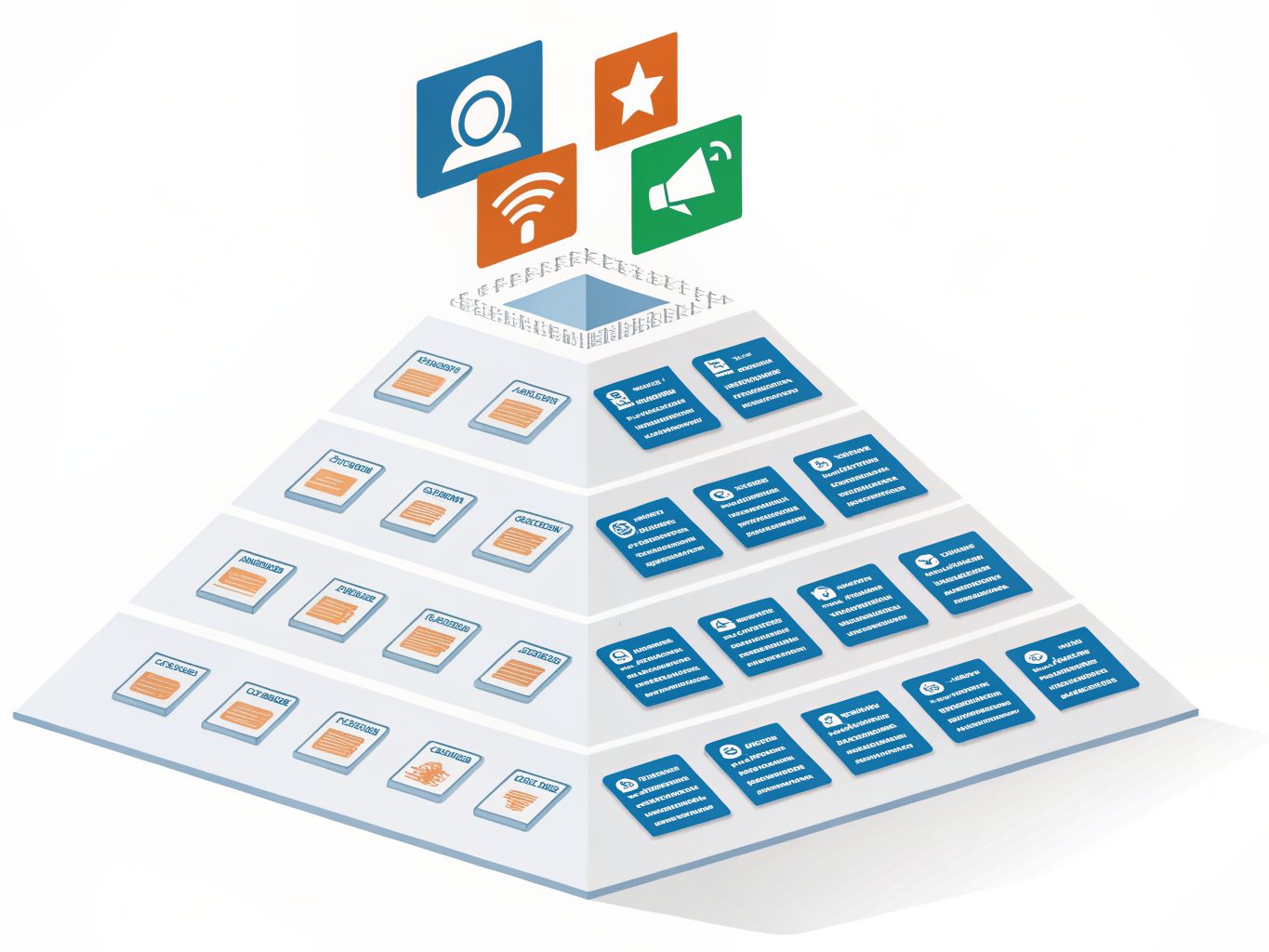
Zapier's content engine has three distinct layers, each serving a different purpose:
| Layer | What It Is | Scale | Traffic Share |
|---|---|---|---|
| Programmatic Pages | Auto-generated integration pages | 60,000+ pages | ~15% |
| Listicles | "Best X Apps" articles | 170+ articles | ~58% of blog |
| Productivity Blog | How-to guides, tutorials | 4,000+ posts | ~42% of blog |
Combined, these layers drive approximately 5.5 million monthly organic visitors. Let's break down each one.
Layer 1: 60,000 Programmatic Pages
This is the layer that makes SEO people's jaws drop.
Zapier has over 7,000 app integrations. For every pair of apps that can be connected, Zapier automatically generates a landing page. "Connect Gmail to Slack." "Connect Trello to Google Sheets." "Connect Salesforce to HubSpot."
The math is staggering. With 7,000+ apps, the number of possible two-app combinations is in the millions. Zapier has generated over 60,000 of these pages, each one targeting a specific long-tail search query.
The URL Structure
The system follows a clean four-tier hierarchy:
| Level | Example URL | Purpose |
|---|---|---|
| Hub | zapier.com/apps | All integrations (235K visits/month) |
| App profile | /apps/gmail/integrations | All integrations for one app |
| App-to-app | /apps/gmail/integrations/slack | Specific two-app connection |
| Workflow | Individual Zap templates | Specific automation recipes |
The Brilliant Part: Partners Write the Content
Here's what makes this scale without a massive content team. When an app company joins Zapier's platform, they write their own descriptions and use cases as part of the onboarding process. The app partner is incentivized to write good copy because it markets their own product.
So Zapier gets 7,000+ companies creating unique content for 60,000+ pages, at zero content cost.
Traffic Impact
Individually, each programmatic page gets modest traffic (roughly 3-5 visits per page per month on average). But collectively, they drive 275,000-343,000 monthly organic visits and rank in the top 10 for over 38,000 keywords.
More importantly, this traffic is bottom-of-funnel. Someone searching "connect Salesforce to HubSpot" is actively looking for a solution. They're not browsing; they're buying.
Layer 2: The Listicle Machine
If the programmatic pages are Zapier's foundation, the listicles are their traffic engine.
Zapier publishes "Best X Apps" articles for virtually every software category: best note-taking apps, best URL shorteners, best time tracking apps, best presentation software, best CRM for small business. They have over 170 of these.
The Numbers Are Absurd
| Article | Monthly Traffic | Keywords Ranked |
|---|---|---|
| Best URL Shorteners | ~100,000 | 9,500+ |
| Best Note-Taking Apps | ~54,000 | 10,000+ |
| Best To-Do List Apps | ~54,000 | 10,000+ |
| Best Time Tracking Apps | ~16,000 | 3,500+ |
| Best Presentation Software | ~14,000 | ~10,000 |
The top 170 listicles collectively drive approximately 1.5 million monthly visits and rank for 400,000+ keywords. They represent roughly 58% of all blog organic traffic.
Why Zapier Can Dominate "Best Apps" Lists
Most "best apps" listicles are written by review sites (G2, Capterra) or by software companies recommending their own product. Zapier has a unique advantage: perceived neutrality.
Zapier integrates with all the apps they review. They have no reason to favor one over another. Whether you pick Notion or Evernote, Zapier works with both. This neutrality builds trust that review sites with paid placements can't match.
The Hidden Strategy: Listicles as Product Intelligence
This is the part most people miss. Zapier doesn't just write listicles for traffic. They use them as a product development signal.
If their "Best SEO Tools" listicle gets massive traffic, that tells the product team: users care about SEO tools. Build more integrations with SEO tools. The content strategy directly informs which integrations to prioritize.
The content team isn't just a marketing function. It's a product intelligence function.
Layer 3: The Productivity Blog
Beyond listicles, Zapier maintains a massive productivity blog with over 4,000 articles covering:
- How-to tutorials ("How to use Gmail filters," "How to create a Gantt chart in Google Sheets")
- Productivity guides ("How to run an effective meeting," "The Eisenhower Matrix explained")
- AI and automation content ("How to use ChatGPT for work," "Best AI tools for X")
- Remote work resources and research reports
The blog has accumulated a Domain Rating of 91 and over 6 million backlinks. Their remote work reports alone earned 439 backlinks from a single study.
Danny Schreiber, who was the sole person on Zapier's editorial team in early 2014, grew the blog to over 1 million monthly visitors. The key, he said, was simple: help readers work faster and solve software problems, recommending Zapier naturally along the way.
The Revenue Timeline
The content engine didn't produce overnight results. Wade Foster described the early days bluntly:
"Those first six months were tough. The next six months were a little bit better. And the last six months have been great."
Here's how the revenue grew:
| Year | ARR | What Happened |
|---|---|---|
| 2012 | ~$0 | Y Combinator S12, raised $1.3M seed |
| 2014 | Profitable | Became profitable in roughly 2 years |
| 2018 (Jan) | ~$35M | Wade confirmed on SaaStr Podcast |
| 2018 (Dec) | $50M+ | 50% growth in a single year |
| 2020 | $100M | Crossed $100M ARR in under 10 years |
| 2021 (Mar) | $140M | Sequoia valued them at $5B |
| 2022 | ~$230M | Continued compounding |
| 2024 | $310M | 805 employees, ~$385K revenue per employee |
The founders still own roughly 80% of the company. They never needed to dilute because content-driven growth is cheap. Wade Foster put it this way:
"It's a lot like your personal savings. You have to keep making little deposits. If you keep making deposits on a consistent basis over the course of time, you're going to get compound interest, and ultimately, much bigger rewards."
The Flywheel
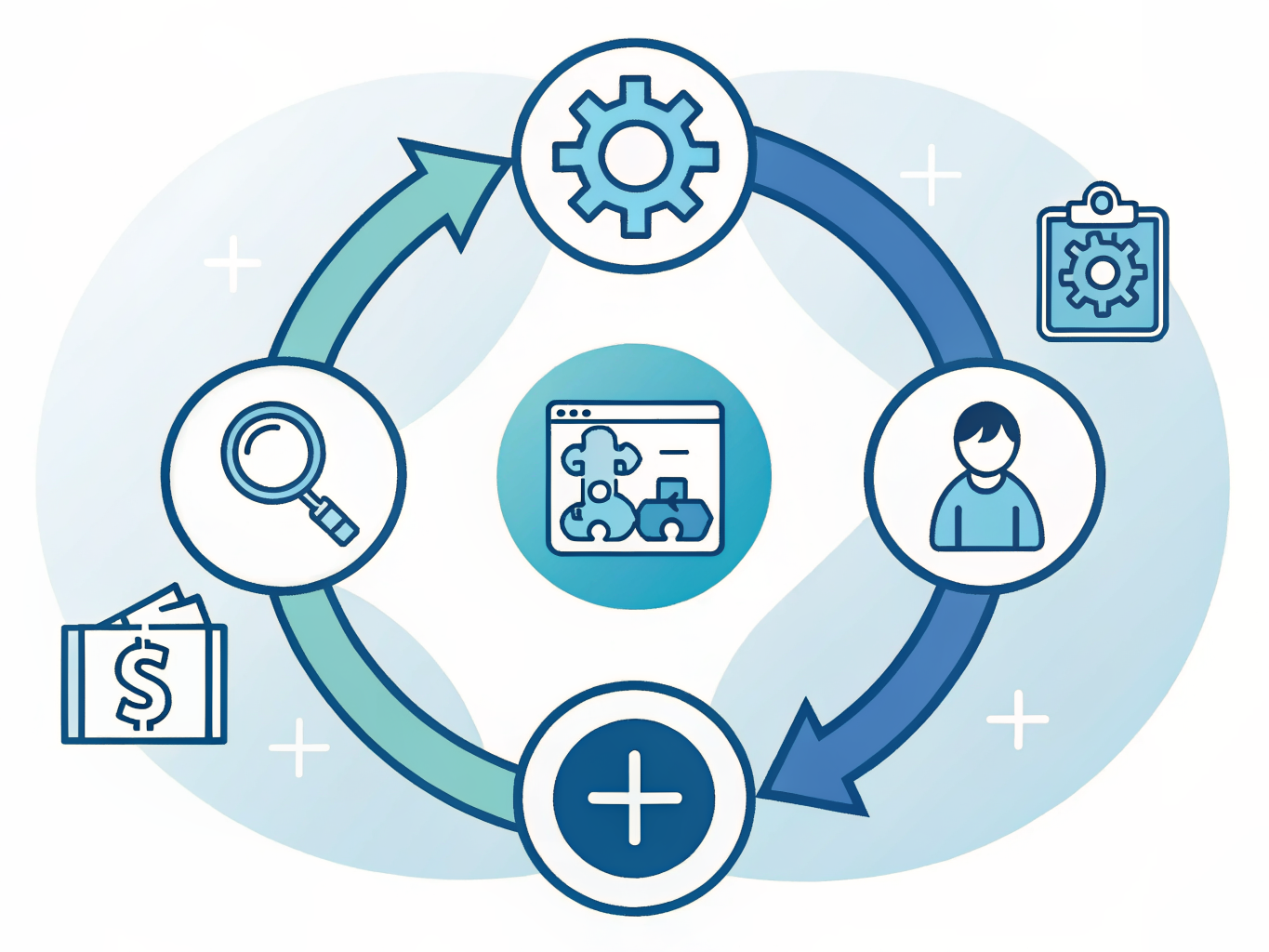
Wade described the growth engine as a flywheel, and it's worth understanding because it explains why Zapier's content advantage compounds:
- Partners build integrations on Zapier
- Pages are auto-generated for those integrations
- Pages get indexed by Google
- Users find Zapier through search
- Users sign up and connect more apps
- More apps want to join the Zapier ecosystem
- Repeat from step 1
"It really is this flywheel where partners build things on Zapier that creates pages that get indexed in Google that we can send traffic to that people will link to."
Each new integration partner doesn't just add a feature. They add dozens of new search-indexed pages. They link to their Zapier integration from their own website, adding backlinks. Their users search for the integration and find Zapier. And Zapier's traffic data tells the product team which integrations to prioritize next.
This is why Zapier's content advantage is almost impossible to replicate. The content isn't separate from the product. They're the same thing.
Why Zapier Beat IFTTT
IFTTT launched before Zapier (2011 vs. 2012), had more consumer buzz, and raised $60M+ in funding compared to Zapier's $1.3M. Today, IFTTT has 0.02% market share. Zapier has 7.54%.
The difference was a strategic fork. IFTTT went after consumers and smart home devices (if my lights turn on, then play my morning playlist). Zapier deliberately targeted businesses and professional SaaS tools (if a new lead enters Salesforce, then create a task in Asana and notify the sales team in Slack).
The B2B market proved far more monetizable. Businesses pay $20-$600+/month for automation that saves employee hours. Consumers won't pay $5/month to automate their lights.
But the content strategy was equally divergent. Zapier wrote about business software, productivity, and workflows. Their content attracted decision-makers with budgets. IFTTT's content attracted hobbyists and tinkerers.
The Five Lessons
1. Write About What Your Customers Search For, Not What You Sell
Zapier's most successful content has nothing to do with automation. "Best URL Shorteners" drives 100,000 monthly visits. Those readers need software tools and might need to connect them. That's a future Zapier user.
Don't write about your product category. Write about the adjacent problems your customers have.
2. Make Your Product Generate Content Automatically
Zapier's 60,000 programmatic pages cost almost nothing to maintain because the product itself generates them. Every new integration creates new pages. Every partner writes their own copy.
Ask yourself: is there a way your product's data or structure can generate useful pages at scale?
3. Treat Content as Compound Interest
Wade Foster compared content to savings. The first six months feel worthless. But if you publish consistently, the returns compound. Zapier published daily for years before the traffic snowballed. Most companies quit after three months.
4. Use Content as Product Intelligence
Zapier's listicles tell them which app categories have user demand. High-traffic listicles signal which integrations to build. Your content analytics aren't just marketing metrics. They're product signals.
5. Build Flywheels, Not Campaigns
The difference between a campaign and a flywheel: a campaign stops working when you stop spending. A flywheel accelerates on its own. Zapier's content drives signups, signups attract partners, partners create pages, pages attract more signups.
Frequently Asked Questions
How many people work on Zapier's content team?
Zapier's content team has grown to approximately 20+ people, including editors, writers, SEO specialists, and content strategists. They also actively use freelancers and guest contributors. Danny Schreiber started as the sole editorial person in early 2014.
How much does Zapier spend on content marketing?
While Zapier doesn't disclose exact content budgets, their content leader Lane Scott Jones has managed $2M+ in annual content spend and teams of 20+. For a company generating $310M ARR, this represents well under 1% of revenue, making content their most efficient growth channel.
Can smaller companies replicate Zapier's strategy?
You can't replicate 60,000 programmatic pages without a product that supports it. But the core principles apply at any scale: write about what your customers search for, be consistent, and treat content as compound interest. Many startups have grown to millions in traffic using similar strategies at a smaller scale.
How long did it take Zapier's content to show results?
Wade Foster described the first six months as "tough." Meaningful traffic growth took 12-18 months. But Zapier's traffic grew 7x between 2016 and 2021, from roughly 850,000 to 6 million monthly visitors. The compounding effect took years to kick in.
What tools does Zapier use for content marketing?
Zapier uses their own product to automate editorial workflows (naturally). They follow a structured editorial process with a 4-6 week pipeline from pitch to publication.
This article is part of our Growth Playbooks series, where we research how specific companies built their growth engines. We spend days researching each story so you get real numbers and real strategies, not generic advice.
If you're a startup that wants to publish 30 SEO articles a month without hiring a content team, that's what we built.
FirstSearch Research Team
FirstSearch.AI Team