Keyword Difficulty Checker: Complete Guide for 2026
Last Updated: March 24, 2026
Quick Summary
- Keyword difficulty measures how hard it is to rank on page 1 for a specific search term
- Most KD tools use a 0-100 scale analyzing backlinks, domain authority, and SERP features
- New sites should target KD scores below 30; growing sites can aim for 30-50; established sites can compete for 50+
- KD is one metric,always combine it with search volume, intent, and manual SERP analysis for best results
- AI-powered platforms now automate KD analysis alongside content optimization and backlink building
What Is a Keyword Difficulty Checker?
A keyword difficulty checker is an online tool that estimates how challenging it is to rank on the first page of Google for a specific keyword. Think of it as your SEO reality check; it tells you whether a keyword is worth pursuing based on the current competition you'd face.
Here's what makes this different from Google Keyword Planner's "Competition" metric: that tool measures paid advertising competition (how many advertisers are bidding on a keyword), while a keyword difficulty checker focuses on organic search difficulty. It analyzes the actual websites currently ranking on page one and evaluates their authority, backlink profiles, and content quality to generate a numerical score, typically between 0 and 100.

Why does this matter? Because a low difficulty score doesn't guarantee traffic if nobody searches for the keyword, and a high score might be worth targeting if you've built significant domain authority. This metric helps you identify keywords your site can realistically rank for given your current position, which is the foundation of any smart keyword strategy. You're not just looking for easy wins; you're finding the sweet spot where opportunity meets capability.
How Keyword Difficulty Checkers Work: The Core Metrics
At its core, a keyword difficulty checker analyzes the top 10 ranking pages for your target keyword and measures what it takes to compete for that position. Think of it like assessing the strength of competitors in a race; the tool looks at their weapons and calculates how powerful yours need to be.
The primary factors examined are referring domains (the number of unique websites linking to a page), domain authority (the overall strength of those linking domains), backlink quality, content depth, and SERP features like featured snippets or knowledge panels. Keyword Difficulty is calculated by analyzing the number of referring domains the top 10 ranking pages have. Each factor contributes to an overall score, but they don't weigh equally across all tools.
Here's where things get interesting: the 0-100 scale isn't linear. A keyword with a KD of 30 doesn't require twice as much effort as one with a KD of 15. Instead, the difficulty increases exponentially as you move up the scale. If you're aiming for a keyword with KD 40, you're likely to need approximately 56 referring domains to get into the top 10 search results. Jump to KD 60, and you're looking at significantly more domain authority and backlink quality required.
Different tools use proprietary algorithms, which means Ahrefs, Semrush, and SE Ranking may produce different scores for the same keyword. Semrush's multi-factor approach considers over 10 parameters including search intent signals alongside traditional metrics. This variation isn't a flaw; it reflects different methodologies.
What's changed recently is that AI-enhanced tools now predict how keyword difficulty will evolve over the next 12 months. Rather than treating KD as static, you can anticipate whether a keyword is becoming more or less competitive. This forward-looking approach helps you time your content strategy better and identify keywords before they become oversaturated.
Understanding the KD Scale: What Scores Really Mean
Keyword difficulty scores run from 0 to 100, and understanding where your target keywords fall on this scale is crucial for realistic planning. Think of it as a difficulty meter that tells you how competitive a search term actually is.
Keywords scoring 0-10 are genuinely easy wins. These are typically long-tail phrases with minimal competition, perfect for brand new websites still building their initial authority. You can rank for these relatively quickly with solid, relevant content. If you're just starting out, this is your sweet spot.
The 11-30 range represents accessible opportunities. New sites should look for keywords with lower difficulty scores and work their way up as they build authority. These keywords have some competition but aren't dominated by massive brands. You'll need decent content and basic on-page optimization, but you won't need an extensive backlink profile.

Keywords in the 31-50 moderate range require more effort. You'll need quality content, strategic internal linking, and a growing backlink profile to compete. Growing sites can aim for medium-difficulty keywords as they make backlink and content quality improvements. This is where many established blogs focus their efforts.
Scores of 51-70 signal tough competition. Ranking here typically demands strong domain authority, numerous quality backlinks, and exceptional content. Reserve these for topics where you have genuine expertise or resources to compete.
The 71-100 range represents extremely competitive keywords usually owned by established authorities. Don't dismiss them entirely, but they're rarely worth pursuing early on.
Here's the critical part: context matters more than the score itself. A KD of 45 might be easily achievable for an established site with solid authority but nearly impossible for a brand new domain. Always match keyword difficulty to your current site strength.
Keyword Difficulty vs. Search Volume: Finding Your Sweet Spot
Here's the uncomfortable truth: the keywords everyone wants to rank for are the hardest to rank for. High-volume keywords attract serious competition, which means their difficulty scores reflect that reality. Keywords with 100,000+ monthly searches average 76% difficulty, while those pulling in 11-100 monthly searches sit around 39% difficulty. This inverse relationship isn't random; it's economics.
But here's where strategy trumps wishful thinking. You don't need massive search volume to build meaningful traffic. A keyword with 500 monthly searches and 28% difficulty might be worth ten times more than chasing a 50,000-search term with 72% difficulty. Why? Because you'll actually rank for it, and you'll rank faster.
Long-tail keywords are your shortcut here. These longer, more specific phrases typically have lower difficulty scores and higher conversion intent. Someone searching "best CRM for real estate teams" is further along the buying journey than someone typing "CRM software." That specificity matters.
The sweet spot exists in the middle ground: moderate search volume paired with low-to-moderate difficulty. Think 500-5,000 monthly searches with KD scores between 20-45. These keywords are achievable without requiring a six-month content marathon, and they drive meaningful business results.
Don't dismiss low-volume keywords either, especially if they match your audience's actual search intent and have proven conversion potential. A 200-search keyword that converts at 8% beats a 10,000-search keyword converting at 0.5%. Volume matters less than relevance and intent alignment.
Start by mapping your keyword targets across both metrics. Where do your competitors cluster? Where are the gaps? Your competitive advantage often lives in those overlooked pockets where difficulty and volume haven't yet collided.
How to Use Keyword Difficulty Checkers Effectively
Keyword difficulty checkers are useful, but only if you use them correctly. Here's the workflow that actually works.
Step 1: Run your keyword through a KD checker. This takes 30 seconds. You'll get a score, usually on a 0-100 scale. Write it down. That's your baseline.
Step 2: Treat that score as a starting point, not gospel. This is where most people go wrong. A KD score of 35 doesn't mean you should automatically pursue it; it doesn't mean a KD of 60 is impossible for your site. These scores are estimates based on competing domains and content volume. They're helpful signals, not destiny.
Step 3: Manually analyze the top 10 SERP results. Look at the actual domains ranking. What's their domain authority? How old are their pages? What type of content dominates (blog posts, product pages, guides)? This manual inspection reveals what a score alone can't: whether those top results are actually good or just entrenched by age and backlinks.
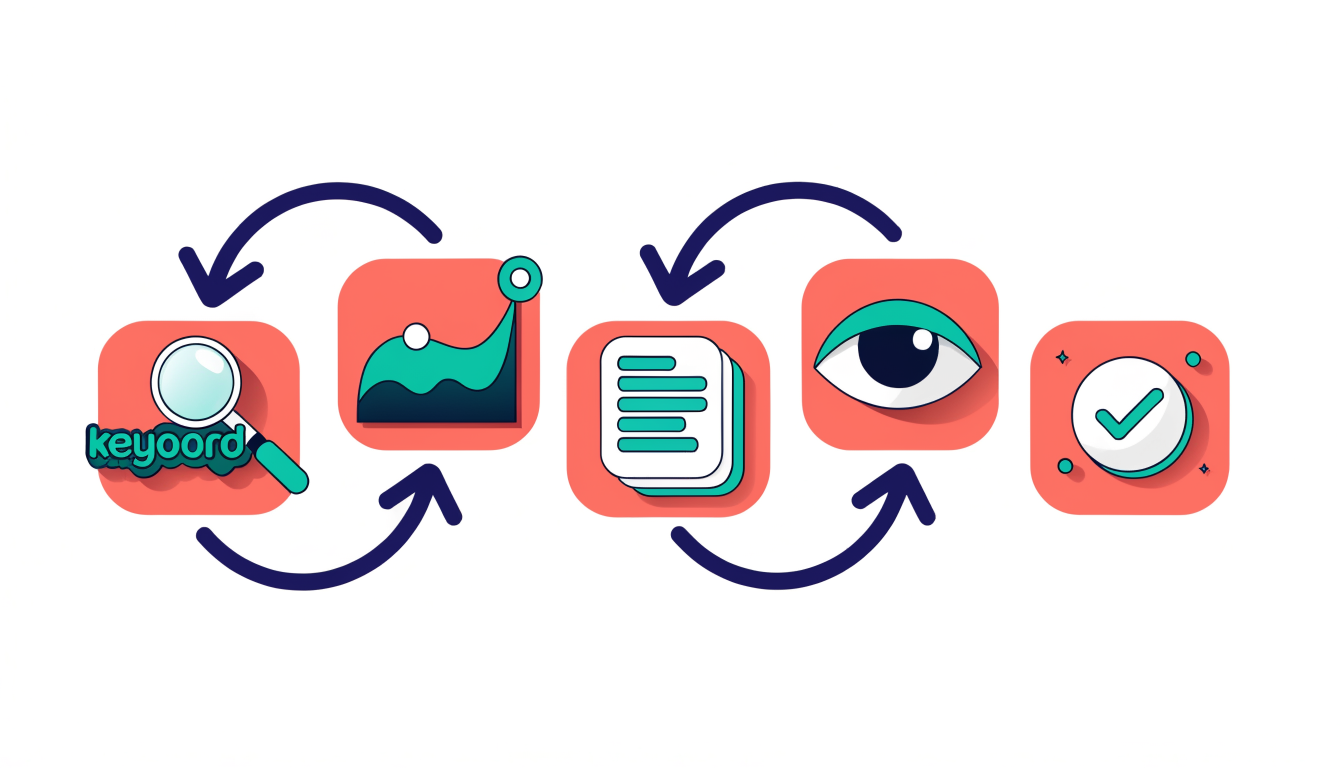
Step 4: Check for SERP features that block organic traffic. Featured snippets, local packs, and AI Overviews can eat most of the clicks, even if organic ranking is easy. Look at what's actually visible on the page.
Step 5: Ask yourself honestly: can we beat this? Not "is it possible," but can your site and team produce something genuinely better? That's the real question.
Two mistakes kill keyword strategies here. First, targeting a KD 40 keyword when your site has authority for KD 25 content. You're overreaching. Second, ignoring search intent because the KD looks manageable. A low difficulty score doesn't matter if you're answering the wrong question.
Combine KD scores with search volume, user intent, and SERP features for the complete picture. That's when keyword difficulty checkers become strategic assets instead of just noise.
Beyond Basic KD Scores: Why AI-Powered Keyword Analysis Matters
Here's the honest truth: a keyword difficulty score tells you almost nothing about whether you can actually rank.
Traditional KD checkers show you a number between 1 and 100, then leave you hanging. You still need to manually analyze the top 10 results, research competitor backlinks, identify content gaps, and figure out what your optimization strategy should be. That's not a tool; that's a starting point that creates more work.
The real limitation isn't the difficulty metric itself. It's that most platforms stop there. They give you data but no direction, forcing you to jump between five different tools to answer basic questions: What's my actual ranking potential? Will this keyword get harder or easier in six months? What specific content angle beats the competition?
Modern AI-powered platforms are changing this equation. Modern tools now offer AI-enhanced predictions, showing not just current competition levels but projected difficulty trends over the next 12 months. Beyond forecasting, intelligent automation now handles keyword clustering, identifies content gaps across your topic cluster, and maps backlink opportunities simultaneously.
The difference is automation at scale. Instead of manually researching each keyword, smart platforms process competitor content, analyze ranking patterns, and suggest optimization priorities automatically. They connect your keyword research directly to content creation and backlink strategy, removing the friction between discovery and execution.
This is where the future of keyword research lives: not in better difficulty scores, but in complete workflows that turn keyword analysis into actionable strategy. The tools that combine KD analysis with automated content optimization and intelligent backlink networks will define competitive advantage in 2026.
Frequently Asked Questions About Keyword Difficulty Checkers
Why do different tools show different KD scores for the same keyword?
Each tool builds its own algorithm using different data sources, ranking factors, and weighting methods. One tool might prioritize backlink quality while another focuses on content freshness. Some tools sample top 10 results; others analyze top 50. Think of it like asking five cardiologists to assess heart health using different equipment. They'll reach similar conclusions, but the exact numbers won't match. Use multiple tools to triangulate, not to find the "correct" answer.
Can I rank for high-difficulty keywords with a new site?
Absolutely, but you need two things: exceptional content that genuinely solves a problem better than competitors, and keywords where intent alignment matters more than domain authority. New sites rank for competitive terms all the time when they target specific angles competitors miss. The catch? It takes longer and requires more precision.
Is KD the same as Google Keyword Planner's Competition metric?
No. Competition in Google Keyword Planner measures paid search competition (how many advertisers bid on that term), not organic difficulty. They're completely different metrics measuring different marketplaces.
Should I ignore keywords with low search volume?
Never. Low-volume keywords often convert better because they're more specific. Someone searching "best CRM for solo accountants" might convert faster than someone searching "CRM software," even though the latter has massive volume. Build your strategy on a mix of search volume, intent clarity, and difficulty.
How often do KD scores update?
Most tools refresh weekly to monthly as search results shift. Scores aren't static, so revisit keywords quarterly to catch opportunities before competitors do.
The Bottom Line: Making Keyword Difficulty Work for Your SEO Strategy
Keyword difficulty checkers are indispensable, but they're not a complete SEO strategy on their own. Think of KD scores as your first filter, not your final answer. A low difficulty score tells you something is worth investigating; it doesn't guarantee you'll rank.
Here's what actually works: Use KD as a starting point, then dig into the search results yourself. Look at who's ranking, what their domain authority is, and whether their content is genuinely better than what you could create. This manual validation takes fifteen minutes but saves you weeks of wasted effort chasing keywords that look easy on paper but aren't.
Match your keyword targets to your site's current authority level. A brand new domain shouldn't chase medium-difficulty keywords expecting quick wins. Start with lower KD opportunities to build momentum, then move up as your domain strengthens. This isn't about playing it safe; it's about working strategically.
Combine KD with search volume, user intent, and conversion potential. A keyword with low difficulty and high volume is tempting, but if searchers aren't ready to buy or convert, you're chasing vanity metrics. The best keywords balance all four factors: they're achievable for your site, they get searched, they match what your audience actually wants, and they drive business results.
The future of SEO isn't manual analysis across a dozen disconnected tools. It's intelligent automation that moves from keyword research through content creation, optimization, and link building. Tools that integrate KD analysis with content scoring and competitive tracking turn insights into actual rankings, not just spreadsheets.
Start today: pick three keywords your KD checker says are achievable, validate them manually against the SERPs, and create content that beats what's currently ranking. That's the formula that works. The tools are here to support your strategy, not replace your judgment.
FirstSearch
FirstSearch.AI Team