Local SEO Ranking Factors: Boost Your Business Visibility Locally
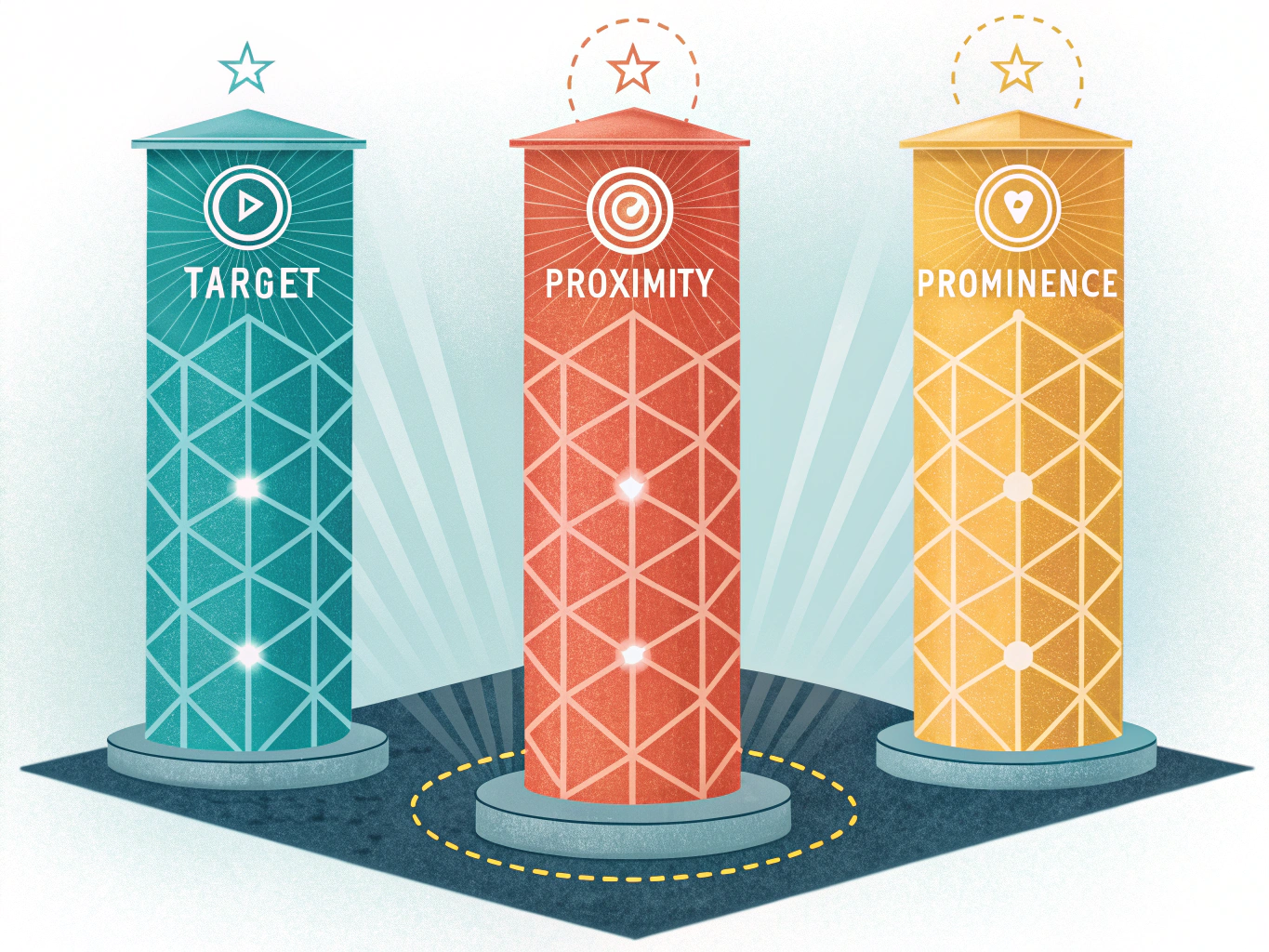
Understanding the Three Core Pillars of Local SEO Ranking Factors
If you want your business to show up when customers search for your services nearby, you need to understand what Google actually prioritizes. The search engine doesn't rank local businesses randomly. Instead, it relies on three interconnected pillars that determine everything from your visibility in the Local 3-Pack to your prominence on Google Maps.
according to Google's official guidance, these pillars are relevance, proximity, and prominence. Each one matters equally, and each one requires different optimization strategies.
Relevance answers whether your business matches what someone is searching for. If a customer looks for "emergency plumber in Denver," Google needs to confirm your plumbing business actually operates there and your content reflects that service.
Proximity measures how close you are to the person searching. A business five miles away typically ranks higher than one fifteen miles away, assuming relevance and prominence are similar. This factor is why location optimization matters so much.
Prominence reflects your business's reputation and authority. This includes reviews, citations, backlinks, and overall online presence. A well-reviewed establishment outranks a newer competitor with minimal feedback.
These three factors determine which businesses show up in the local pack, how visible you are across different areas, and ultimately how many nearby customers find and choose you. Understanding this framework isn't theoretical background noise; it's the foundation for every tactic that follows.
Relevance: How Google Determines Your Business Matches Search Intent
Google matches your business to what people are actually searching for through one critical factor: relevance. And here's the reality—your Google Business Profile category is the foundation of everything. Your Google Business Profile category is not just a small detail; it's the number one ranking factor for your Google Search and Maps business listing.
This isn't optional fine-tuning. Your primary category tells Google exactly what you do, which determines which local searches surface your business. Select "Plumber" instead of "Plumbing Service," and you're narrowing your visibility. Choose too vague a category, and you'll compete with hundreds of irrelevant businesses.
But your category alone isn't enough. Your business name, service descriptions, and secondary categories all reinforce relevance signals to Google. If you're a dental practice offering orthodontics, add "Orthodontist" as a secondary category. This expands the keyword range Google associates with your business, making you visible for more relevant searches.
Don't overlook business hours either. Businesses' operating hours have become increasingly influential on their visibility in local searches since the November 2023 core update. Keep them current and accurate across your profile. When someone searches "dentist near me open now," Google prioritizes businesses with verified hours showing availability.
Here's your action plan: audit your primary and secondary categories right now. Are they truly representative of what you do? Review your business description and ensure it naturally incorporates the services you offer. Update your hours if they've changed. These aren't glamorous optimizations, but they're the foundational relevance signals that determine whether Google even considers your business for a customer's search. Get this right first, and everything else becomes more effective.
Google Business Profile Optimization: Your Most Powerful Local SEO Lever
Your Google Business Profile isn't just another directory listing. It's the command center for your local search visibility, and the numbers prove it: GBP signals account for as much as 32% of all map pack ranking factors. That's not a minor detail. That's your foundation.
Start with the basics and get them right. Claim and verify your profile if you haven't already, then complete every single field. This means your business name, phone number, and address (NAP) must match exactly what appears on your website and other citations. Inconsistencies here will tank your rankings faster than almost anything else.
Next, nail your category selection. Choose your primary category with precision, then add two to three secondary categories that genuinely reflect what you do. Don't try to game the system with irrelevant categories. Google's algorithm catches that, and it hurts more than it helps.

Here's where most businesses miss an opportunity: services and attributes. Attributes are playing an even bigger role in 2025, particularly services and menu items, which now impact visibility significantly. If you run a restaurant, list your menu items. If you offer plumbing services, specify what you actually do. This specificity signals relevance to Google's algorithm.
Keep your profile active and fresh. Post updates regularly, upload high-quality photos of your business and team, and actively manage the Q&A section. These signals tell Google your business is current and engaged. Reviews matter too, but they're just one piece of a larger puzzle.
Don't treat GBP optimization as a one-time task. Revisit your profile quarterly. Update your hours, refresh your photos seasonally, and stay on top of customer questions. This consistent attention directly translates to better rankings and more visibility where your customers are actually searching.
The Review Revolution: Why Customer Feedback Now Drives Local Rankings
Here's the reality: reviews are no longer just social proof. They're a ranking signal that Google takes seriously, and the numbers prove it.
Review signals account for 9-15% of local pack ranking factors, making them one of the heaviest weights in the local SEO equation. But it's not just about having reviews; it's about having the right mix of quantity, quality, recency, and sentiment working together.
Here's what matters most: you need at least 10 reviews to see a meaningful ranking boost, but the top performers are operating at a completely different level. Businesses ranking in the top Google local pack positions average 404 reviews, compared to 281 for positions three through five. That gap isn't accidental.
Your star rating needs to sit at 4.0 or higher to stay competitive. Below that, you're fighting an uphill battle. But here's the game-changer: review velocity matters just as much as the total count. A steady stream of new reviews signals to Google that your business is active, engaged, and worth ranking higher.
Don't overlook response rates either. When you respond to reviews, you're not just building customer relationships; you're improving both your ranking signals and conversion rates. For every 25% of reviews a business responds to, conversion improves by 4.1%.
The action step is straightforward: implement a systematic review collection process. Use automated requests at key touchpoints, respond to every review within 48 hours, and address negative feedback with genuine solutions. This isn't optional anymore. Review management is now a core local SEO strategy that directly impacts your bottom line.
Proximity and Citations: Building Local Authority Through Consistency
Proximity matters in local search, but here's what many business owners miss: you can't control how far customers are from your location. What you absolutely can control is how consistently your business appears across the web.
Citations are the backbone of local authority. These are mentions of your business name, address, and phone number (NAP) on directories, review sites, industry listings, and other web properties. Google uses citations as a trust signal. When your information appears consistently across multiple authoritative sources, Google gains confidence that your business is legitimate and established in your local area.
The stakes are real. NAP consistency is confirmed as a top-five ranking factor for both the Local Pack and organic search results. Even small inconsistencies, like listing your phone number with different formats or your address with abbreviated versus full street names, can damage your local authority score and push competitors ahead of you.
Here's your action plan. Start by auditing your current citations. Search "[Your Business Name]" plus your city and document where you appear online. Check Google My Business, Yelp, Apple Maps, industry-specific directories, and local chamber of commerce listings. Note any discrepancies.
Next, prioritize high-authority directories in your industry. A citation on your local chamber of commerce or a relevant industry directory carries more weight than a random listing. Build citations systematically rather than sporadically.
Finally, create a citation management spreadsheet. Track each listing, its NAP information, and when you last verified it. This prevents future inconsistencies as your business evolves. Consistent business information builds trust with both Google and consumers, funneling customers toward purchase decisions while strengthening your local rankings.
Prominence: Building Authority and Trust Signals
Prominence is how Google measures your business's reputation and trustworthiness across the web. It's the hardest ranking factor to game, which is exactly why it carries significant weight in local search results.
Think of prominence as your business's digital footprint. The more authoritative websites linking to you, the more reviews you accumulate, and the more consistently you appear across trusted directories, the stronger your prominence signal becomes. This isn't something you build overnight; it compounds over months and years.
Backlinks remain a cornerstone of prominence. A link from a respected local news outlet, industry association, or established business partner tells Google far more than links from random websites. Quality trumps quantity every time. Similarly, citations in relevant industry directories act as digital endorsements that reinforce your legitimacy.
Reviews are where prominence becomes tangible. Review signals can account for over 15% of how you rank in the local pack, and both quantity and recency matter. More importantly, Google watches how people interact with your reviews. Responses you provide, the sentiment of feedback, and review velocity all factor into your prominence score.
User behavior signals add another layer. When people click your Google Business Profile listing, spend time on your website, or call your number from search results, Google interprets this as a prominence indicator. Your business is clearly resonating with searchers.
The strategic advantage here is simple: prominence is earned through genuine business excellence and consistent visibility. Focus on generating authentic reviews, building relationships with local partners and media, and maintaining accurate citations everywhere your business appears online. This foundation compounds faster than most realize, especially when combined with solid relevance and local signals.
Emerging Ranking Factors: What's New in Local SEO for 2025
The local SEO playbook is shifting faster than ever. If you're still optimizing for 2023 ranking factors, you're already behind.
Google AI Overviews now appear above the map pack for many local searches, particularly queries like "best plumber near me." Google may show an AI-generated summary for local searches before the map pack, especially for queries like best [service] near me. This means your visibility depends on being featured in AI-generated summaries, not just traditional local pack rankings. You need content that answers specific local questions comprehensively.
Operating hours have become surprisingly influential. Rankings can drop significantly, sometimes by up to 11 spots, as closing time approaches for closed businesses. This isn't just about having accurate hours listed; it's about real-time status updates. If your hours are wrong or outdated, you're losing ground every single day.
Peak-time engagement is the new frontier. Peak-time traffic now influences rankings, with businesses that experience higher engagement during busy hours tending to rank better. Google is increasingly rewarding businesses that attract genuine customer activity during high-demand periods. Monitor when your customers engage most and ensure your team is responsive during those windows.
Mobile experience has evolved beyond responsive design. Page speed, tap-friendly navigation, and seamless checkout processes now carry real ranking weight. Review sentiment analysis is becoming more sophisticated too; Google isn't just counting stars anymore but analyzing the actual language customers use.
Don't overlook your menu items and specific services listings either. These explicit signals help Google match customer intent more precisely. The businesses winning in 2025 are those actively monitoring these emerging factors and adapting quickly.
Technical SEO and On-Page Optimization for Local Search
On-page optimization accounts for roughly 24% of local SEO ranking factors, which means ignoring it costs you real visibility. Here's what actually matters.
Start with your website's technical foundation. Mobile optimization requires more than a responsive design; you need lightning-fast load times, intuitive navigation, and content tailored for on-the-go users. Google prioritizes sites that don't waste visitors' time. If your pages lag, you're losing rankings and customers simultaneously.
Local schema markup is your bridge to clarity. This structured data tells Google exactly what your business does, where it operates, and what services you offer. Without it, you're making Google guess. Implement LocalBusiness schema on your homepage and Service schema for each offering you provide.
Your content needs local relevance woven throughout. Include location-specific keywords in your title tags, H1 headers, and naturally within your body copy. Instead of "Best Coffee Shop," write "Best Coffee Shop in Denver's LoDo District." This specificity signals to both Google and searchers that you understand the local market.
Don't overlook NAP consistency on your website itself. Your Name, Address, and Phone number must match exactly across every page, footer, and contact form. Inconsistencies create confusion in Google's indexing and erode trust.
User experience signals like bounce rates, engagement depth, and interaction quality are now crucial ranking factors. Fast load times, clear calls-to-action, and readable content keep visitors engaged longer. These metrics directly influence your local rankings.
The bottom line: traditional SEO fundamentals haven't disappeared for local search. They've become the foundation upon which local visibility is built.
Common Local SEO Ranking Mistakes to Avoid
Many businesses sabotage their local SEO rankings without realizing it. Here are the mistakes costing you visibility right now.
NAP inconsistencies are silent killers. Your business name, address, and phone number must match exactly across Google Business Profile, your website, local directories, and social media. Even a missing suite number or inconsistent formatting confuses Google's algorithms and tanks your rankings.
Incomplete Google Business Profile information is leaving money on the table. Missing photos, outdated hours, vague business descriptions, or empty service areas signal to Google that you're not serious. Fill every field completely and keep it current.
Ignoring reviews is a missed opportunity. Reviews are both a ranking factor and a conversion driver. If you're not responding to feedback, you're essentially telling Google and customers you don't care about your business.
Keyword stuffing remains tempting but dangerous. Adding keywords to your business name on Google Business Profile isn't permitted and could result in a GBP suspension, according to Local Falcon's guidance on GBP optimization. Write naturally for humans first.
Fake reviews destroy trust and rankings. Google actively penalizes fake engagement through targeted algorithm changes, including recent spam updates. One suspicious review is never worth the risk to your reputation.
Poor mobile optimization directly impacts rankings and conversions. Most local searches happen on phones. If your website loads slowly or isn't mobile-friendly, Google will rank you lower and customers will leave.
Stop making these mistakes today. Fix them systematically, and you'll see measurable ranking improvements within weeks.
Your Local SEO Action Plan: Implementing Ranking Factors Today
Ready to move from strategy to results? Here's your roadmap for the next 30 days.
Week 1: Claim and Optimize Start with your Google Business Profile. This is non-negotiable. Complete every field, add high-quality photos of your storefront and team, and write a compelling business description. This single step typically delivers the fastest ranking improvements.
Week 2: Reviews and Citations Launch a systematic review generation process. Ask satisfied customers for Google reviews through email and text. Simultaneously, audit your business name, address, and phone number across directories like Yelp, Apple Maps, and industry-specific sites. Consistency here directly impacts rankings.
Week 3: Technical Foundation Add local schema markup to your website's homepage and service pages. This structured data helps search engines understand your location and services. Most platforms offer plugins that make this straightforward, even without coding knowledge.
Week 4: Monitor and Iterate Set up rank tracking using tools like Google Search Console and local SEO software. Track your top 10 keywords weekly. Which ranking factors moved the needle most? Double down there.
Remember: local SEO isn't a project you complete. It's an ongoing commitment. The businesses winning locally today are the ones treating it as a permanent priority, not a checkbox task.
Author
FirstSearch.AI Team