SEO Ranking Factors Experts Recommend in 2025 | FirstSearch
Introduction: The SEO Ranking Landscape Has Fundamentally Changed
Google processes over 3.5 billion searches per day, yet most SEO professionals waste time chasing a moving target. Here's the truth: while Google's algorithm technically considers 200+ ranking factors, only a handful actually move the needle for your rankings in 2025.
The game has fundamentally shifted. Five years ago, keyword optimization and backlink quantity dominated the conversation. Today, that's table stakes. Google's algorithm now prioritizes user intent and experience above all else, meaning your content must satisfy what people actually want to find, not just match their search terms.
The #1 ranking factor in 2025 remains consistent publication of satisfying content. This isn't metaphorical. AI and machine learning have transformed how Google evaluates whether your content genuinely solves problems for real people. The algorithm has gotten smarter at detecting shallow, unhelpful material and rewarding depth, accuracy, and relevance.
The urgency here is real. If you're not aligning your SEO strategy with these shifted priorities, your competitors who are will capture your traffic. This guide cuts through the noise and identifies the 10 ranking factors that demonstrably impact your visibility in search results right now.
Understanding these factors gives you a competitive edge. You'll stop wasting resources on outdated tactics and focus your effort where it actually counts.
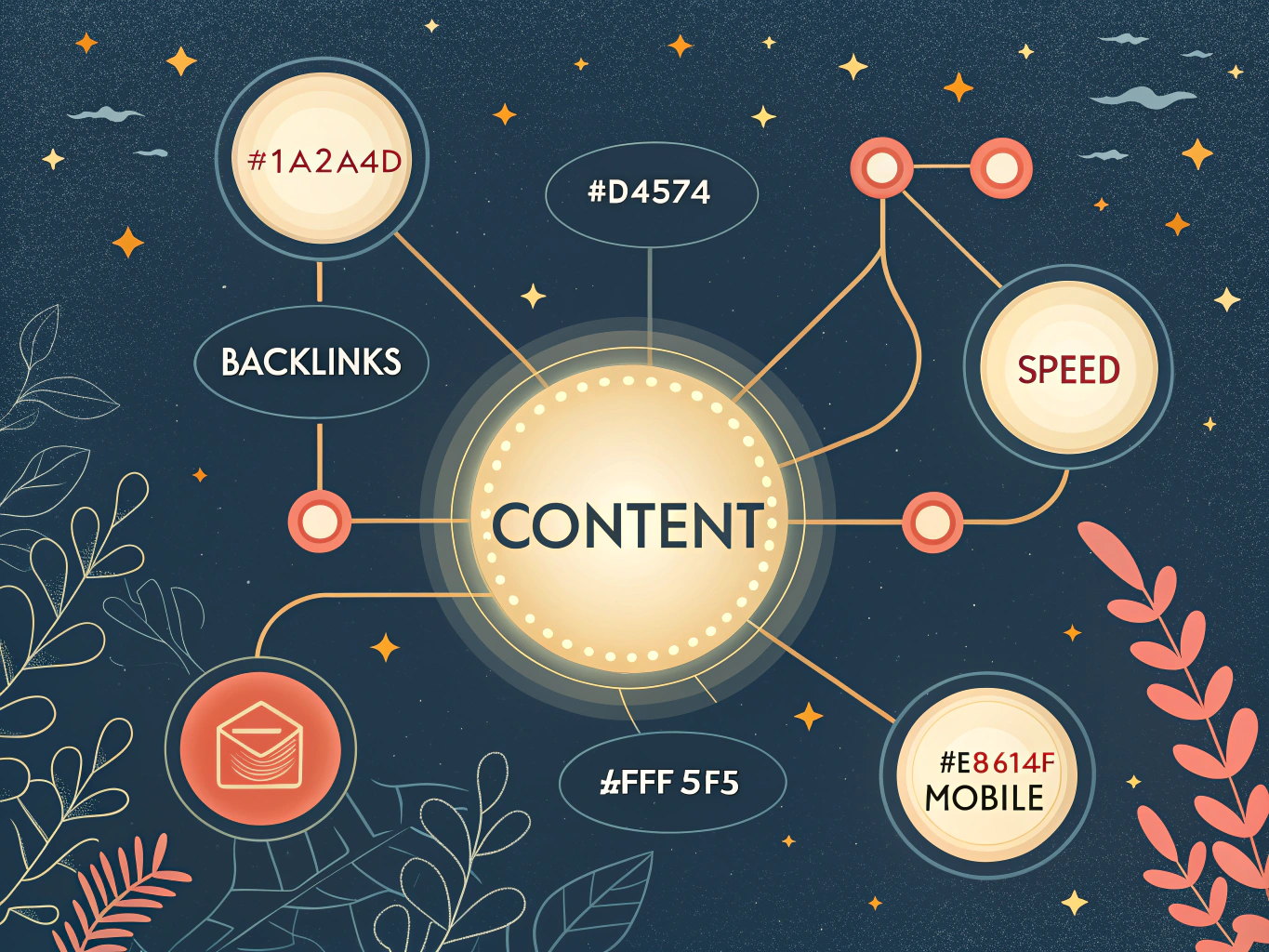
Content Quality and Topical Coverage: Why 'Content is King' Evolved
The phrase "content is king" has been around for decades, but what makes a king in 2025 looks dramatically different than it did five years ago.
Gone are the days when stuffing your target keyword into every paragraph would move rankings. Quality content remains the most important SEO factor, but Google's definition has evolved. Today, topical coverage and depth matter far more than keyword density. Instead of obsessing over exact-match phrases, you need to demonstrate comprehensive knowledge across related subtopics and entities. Analysis of 1 million SERPs shows topical coverage has become the most important on-page ranking factor, defined by how thoroughly you explore related topics around your core subject.
This shift reflects how Google now evaluates content: through E-E-A-T signals. Expertise, experience, authoritativeness, and trustworthiness aren't just buzzwords anymore. They're measurable indicators Google uses to determine whether your content deserves top rankings. Google prioritizes helpful, original, and people-first content that demonstrates E-E-A-T, which means your byline, author credentials, and evidence of real-world experience matter.
The practical takeaway? Write for actual people, not algorithms. Create content that answers related questions your audience is asking, not just the primary keyword. If you're writing about "best running shoes," explore shoe technology, injury prevention, different running styles, and brand comparisons. That breadth signals authority.
Content freshness has also expanded beyond news articles. While breaking news still requires real-time updates, evergreen content benefits from periodic refreshes that reflect current data, examples, and insights. Outdated statistics or references signal staleness to both users and Google.
The stakes for content quality are higher now because top-ranking pages feed AI Overviews and voice search results. If your content doesn't rank, it won't appear in these emerging search formats, meaning fewer visibility opportunities. Invest in substantive, well-researched content that genuinely serves your audience, and rankings will follow naturally.
Technical SEO and Page Speed: Making Speed Work for Rankings
Core Web Vitals have moved from "nice to have" to "must have" territory. Google confirmed these metrics are ranking factors, and the data backs it up: websites passing Core Web Vitals rank 28% higher on average.
Here's what you're actually measuring:
Largest Contentful Paint (LCP) tracks how fast your main content loads. Aim for under 2.5 seconds. If your hero image or primary text takes forever to appear, you're losing ranking potential.
Interaction to Next Paint (INP) measures responsiveness. When someone clicks a button or types in a form, how quickly does the page react? Keep this under 200 milliseconds to stay competitive.
Cumulative Layout Shift (CLS) prevents the frustrating experience of content jumping around as the page loads. Your target: below 0.1. Nothing kills user experience faster than ads or images shifting mid-scroll.
The crucial nuance: you need 75% of your traffic experiencing "Good" performance across these metrics to see ranking benefits. One slow visitor won't tank you, but consistent poor performance will.
Here's the reality check though. Core Web Vitals act as a tiebreaker between pages with similar content quality. If your competitor has better, more relevant content but slower page speed, they'll still rank higher. Content relevance isn't negotiable; speed optimization is the differentiator when everything else is equal.
When should you prioritize speed work? If your content is already solid and you're hovering near the top 10 for your target keywords, Core Web Vitals optimization could be your edge. If you're on page three fighting for visibility, fix your content strategy first.
Speed matters. Just don't let it distract you from the fundamentals.
Mobile-First Indexing and User Experience: The Non-Negotiable Foundation
Mobile-first indexing isn't a future consideration anymore; it's Google's baseline expectation. The platform now crawls and indexes your site primarily through a mobile lens, which means your desktop version is secondary. This shift reflects reality: over 60% of web traffic is now mobile, and ignoring this means leaving rankings on the table.
Here's what matters. Responsive design is table stakes, not a differentiator. Every site needs it. What actually moves the needle is how users interact with your mobile experience. Google evaluates this through signals like bounce rate, dwell time, and scroll depth. If visitors land on your page and immediately leave because it's slow or cluttered, that signals poor relevance to RankBrain, Google's machine learning system that interprets user satisfaction.

Speed is non-negotiable. Mobile users expect pages to load in under three seconds. Anything slower triggers abandonment and tanks your metrics. Similarly, intrusive elements like aggressive pop-ups or sticky headers that consume screen real estate actively harm your rankings. Google penalizes these because they degrade user experience.
The practical takeaway: audit your mobile site ruthlessly. Test load times, navigation flow, and visual hierarchy on actual devices. Remove friction. Make primary actions obvious. Every second counts, and every pixel matters on a small screen. Mobile-first isn't optional anymore; it's foundational to ranking.
Backlinks and Off-Page Authority: Quality Over Quantity in 2025
Backlinks remain one of the most powerful ranking signals Google uses, accounting for 13% of the algorithm's weight in 2025. But here's what matters: not all links are created equal.
A single backlink from a high-authority, relevant website beats dozens of low-quality links from unrelated sites. Think of backlinks as votes of confidence. When a reputable industry publication links to your content, Google interprets that as a strong endorsement. When a random blog farm does, it signals nothing.
The shift toward quality over quantity has accelerated. Google's spam detection now actively penalizes manipulative link schemes, making shortcuts counterproductive. If you're buying links or participating in link exchanges, you're wasting money and risking penalties.
The modern approach is earning links through content that deserves them. When you publish original research, comprehensive guides, or data that solves real problems, other sites naturally want to reference it. This is sustainable link building that compounds over time.
E-E-A-T signals extend beyond your website too. Brand mentions and backlinks from authoritative sources strengthen your off-page authority, signaling expertise and trustworthiness to Google. Getting mentioned in industry publications, even without a direct link, carries weight.
Anchor text still matters, but it should feel natural. Over-optimized anchor text ("click here for the best SEO tips") looks manipulative. Instead, contextual anchors that fit naturally within sentences perform better and avoid red flags.
Start by auditing your current backlink profile. Identify which links drive real referral traffic and which are dead weight. Then focus on building relationships with relevant sites in your industry. Create content worth linking to, reach out to journalists and bloggers covering your space, and position yourself as a resource they'll want to cite.
Quality backlinks take time to build, but they're the foundation of sustainable rankings.
Search Intent and Topical Authority: Ranking for What Users Actually Want
Google's BERT algorithm fundamentally changed how search engines interpret queries. Rather than matching exact keywords, BERT decodes what users actually want when they search. This shift means ranking for "best running shoes for flat feet" is entirely different from ranking for "running shoes," even though they share keywords. The algorithm prioritizes intent matching, and this matters: how well your content fits a user's search intent is an important ranking factor.
But here's what's changed in 2025: single-keyword rankings are dead. Google now rewards topical authority, meaning sites that comprehensively cover an entire subject area outrank those with isolated, keyword-stuffed pages. In 2025, Google rewards sites that establish topical authority, and niche expertise represents a meaningful portion of the algorithm's weighting.
This requires a strategic shift in how you approach content. Instead of writing one article about "email marketing tips," you need a cluster of interconnected content addressing email segmentation, automation workflows, compliance, personalization, and ROI measurement. Each piece answers specific user questions while supporting the broader topical authority of your domain.
Internal linking becomes your structural foundation here. When you strategically link related articles together, you signal to Google that your site owns this topic. Users benefit too; they discover deeper resources without leaving your site.
The practical takeaway: audit your content gaps. Map out what comprehensive coverage of your core topics actually requires. Then build content clusters that answer the questions your audience asks at every stage of their journey. This approach converts casual visitors into engaged readers and, ultimately, customers. It's not about gaming search algorithms anymore; it's about becoming the authoritative resource in your niche.
Technical Foundations: Security, Structured Data, and Site Architecture
HTTPS is non-negotiable. Google began flagging sites as unsafe when they lack HTTPS, diminishing ranking ability, so if you're still running HTTP, migrate immediately. An SSL certificate signals security and trustworthiness to both search engines and visitors, making it a confirmed ranking factor you can't ignore.
Structured data and schema markup deserve your attention, but with realistic expectations. These help Google understand exactly what your content is about, which matters for AI Overviews, featured snippets, and rich results. Implementing schema for your business type, products, articles, or FAQs is worth the effort. However, schema markup has diminished in importance in 2025, so don't expect it to compensate for weak content or poor authority.
Site architecture and internal linking still influence rankings, but their weight has declined significantly. A logical structure helps users and crawlers navigate your site, which remains valuable for user experience. Strategic internal linking to pillar content still passes authority, though it's less impactful than it once was.
One quick note: keywords in your URL slug show almost no correlation with rankings anymore. Optimize URLs for clarity and user experience instead of keyword stuffing.
The bottom line: treat technical foundations as table stakes, not silver bullets. HTTPS is mandatory, structured data is smart, and clean site architecture supports better performance. But these factors alone won't move rankings. Focus here to remove barriers, then invest your energy where it truly matters: content quality and earning authoritative links.
Local SEO Ranking Factors: Dominating 'Near Me' Searches
Local search works differently than organic rankings, and if you're ignoring it, you're leaving revenue on the table. Google determines local results based on three core factors: relevance, distance, and prominence. Proximity is the heaviest hitter here; if you're the closest match to a "near me" search, you have a significant advantage.
Your Google Business Profile is non-negotiable. This is your command center for local visibility. Complete every section: business hours, service areas, high-quality photos, and accurate descriptions. Reviews are one of the most important ranking factors, so actively encourage customers to leave feedback. More reviews and higher ratings directly boost prominence, which influences where you appear in local results.
NAP consistency matters more than most realize. Your Name, Address, and Phone number must match exactly across Google Business Profile, your website, and major directories like Yelp, Apple Maps, and industry-specific listings. Even minor variations confuse Google's algorithm and tank your rankings.
Engagement signals are increasingly important. Response time to customer questions, posting frequency, and click-through rates on your profile all influence rankings. For restaurants specifically, menu items are emerging as a ranking factor; ensure your menu is complete and current in your GBP.
Here's what to do right now: audit your Google Business Profile for completeness, verify NAP consistency across all platforms, and implement a system for collecting and responding to reviews. Don't wait for perfect conditions. Local search is immediate and measurable, so fix these factors this week and watch your "near me" visibility shift.
AI Overviews and the Future of Rankings: Preparing for Answer Engine Optimization

Google's AI Overviews have fundamentally altered what "ranking" means. These AI-generated answers now push organic results 900 pixels lower on average, forcing a strategic rethink about visibility and authority.
Here's the reality: AI systems still pull from top-ranking pages. Your traditional SEO foundation remains non-negotiable. But the game has expanded. Being cited as a source within an AI Overview is now a ranking frontier worth chasing.
Fast, authoritative pages are favored by these systems. Speed still matters; authority matters more. When AI systems scan content for answers, they're evaluating trustworthiness alongside relevance. This means your expertise signals, author credentials, and domain authority directly influence whether you become the source AI systems cite.
To prepare, focus on answer-driven content. Structure your pages with clear, scannable sections that directly address user questions. Use structured data and rich media to help AI systems understand your content's context and value.
Think of it this way: optimizing for AI Overviews isn't abandoning SEO. It's evolving it. Your goal isn't just ranking number one in blue links anymore; it's becoming the authoritative source AI systems reference first. That requires the same technical excellence and content quality you've always needed, plus strategic clarity about how you present information.
The pages that rank well tomorrow are those preparing for answer engine optimization today.
Conclusion: The 2025 SEO Strategy Framework for Rankings
Here's the reality: 80% of SEO success comes from focusing on 20% of the ranking factors. That means you don't need to chase every algorithmic shift or emerging tactic. You need a clear strategy.
Your 2025 framework should look like this. Invest 80% of your effort into content quality and user experience. These are your foundation. Make every page answer what people actually search for, load fast, and deliver value. Spend 15% on technical optimization; this is non-negotiable but not complicated. Ensure your site is secure, mobile-friendly, and crawlable. Reserve just 5% for experimental factors like AI signals and emerging patterns.
The interconnection matters. Strong content attracts links naturally. Links build authority, which signals trustworthiness to Google. User experience metrics prove your content works. Authority, technical health, and content quality reinforce each other in a virtuous cycle.
Consistency beats perfection. SEO isn't a sprint; it's compound interest. One excellent page won't rank. A hundred well-optimized pages, built over months, will dominate.
Audit your site today. Identify your weakest ranking factors. Prioritize ruthlessly. Then execute with patience. The businesses winning in 2025 aren't chasing algorithm rumors; they're building systematically on fundamentals that never change: solving user problems, fast delivery, and earning trust.
Start now. Your future rankings depend on it.
Author
FirstSearch.AI Team