Essential SEO Ranking Factors for Success in 2025
Introduction: Why SEO Ranking Factors Matter More Than Ever
Google's algorithm contains over 200 ranking factors, but here's what most SEO professionals won't tell you: the vast majority are noise. According to WordStream's 2025 research, only a handful of these factors actually move the needle for organic visibility. The rest are minor adjustments that won't transform your rankings.
This matters urgently because the factors that drive traffic have shifted dramatically since 2023. What worked eighteen months ago may actively hurt you today. Businesses still chasing outdated SEO tactics are losing ground to competitors who've adapted to how Google's algorithm actually works in 2025.

Understanding which ranking factors actually matter saves you time and resources. Instead of spreading your team thin across 200 variables, you can concentrate on the core factors that deliver measurable results. This focused approach isn't just more efficient; it's the only realistic way to compete in today's search landscape.
SEO has fundamentally changed from gaming the system to earning visibility. As First Page Sage notes, the algorithm has settled into a shorter list of factors requiring genuine attention. This means businesses that invest in legitimate, strategic optimization will outrank those relying on shortcuts.
The stakes are high. Organic search remains the primary source of website traffic for most industries. Without current knowledge of what actually influences rankings, you're operating blind.
The #1 Factor: High-Quality, Satisfying Content
If you're chasing SEO rankings in 2025, stop obsessing over algorithm updates and focus on what actually matters: content that genuinely satisfies your audience.
First Page Sage reports that consistent publication of satisfying content remains the #1 ranking factor. But here's what that really means. Google doesn't just check if your article exists; it tests whether your content actually answers what people are searching for. If visitors land on your page and immediately leave because you missed the mark, Google notices. That behavior signals poor search intent alignment, and your rankings suffer.
This is where E-E-A-T enters the picture. OptinMonster's 2025 analysis shows that Google prioritizes helpful, original, and people-first content demonstrating Experience, Expertise, Authoritativeness, and Trustworthiness. You need real credentials, demonstrated knowledge, and verifiable credibility in your field. Generic listicles written by nobody for nobody don't cut it anymore.
The keyword stuffing era is officially dead. Instead, focus on topical coverage: depth and breadth of information around your core subject. Surfer SEO's 1M SERP study reveals that topical coverage has become the most important on-page ranking factor. This means thoroughly exploring subtopics, answering related questions, and providing context your competitors skip.
Original insights separate winners from content mills. Don't just regurgitate what's already ranking. Add your unique perspective, data, or methodology. Share what you've learned that nobody else is saying.
The bottom line: invest in quality over quantity. One authoritative, well-researched article beats ten mediocre ones. That's the 2025 SEO reality.
Backlinks: The Trust Signal That Still Matters
Backlinks remain one of the most powerful ranking signals in SEO, and the numbers prove it. The #1 result has 3.8x more backlinks than results in positions 2-10, and high-quality content, backlinks, and search intent continue to be the top 3 ranking factors in 2025. Yet here's the reality check: 95% of pages have zero backlinks at all. This creates an opportunity for those willing to earn them properly.
The critical distinction is quality over quantity. A single link from a relevant, authoritative site in your industry carries exponentially more weight than dozens of low-quality links from unrelated sources. Search engines view backlinks as votes of confidence. When a trusted website links to you, it's essentially vouching for your credibility. The more reputable the voucher, the more that endorsement matters.
This is where the Domain Authority myth gets debunked. You don't need links exclusively from massive, high-DA sites to rank. What matters is relevance and topical authority. A link from a niche industry leader in your space outperforms a random link from a general news site with higher overall authority. Context is everything.
Earning backlinks naturally beats manipulating them every time. Here's what actually works: create content so genuinely useful that people want to link to it. This means in-depth research, original data, comprehensive guides, and actionable insights. When you solve a real problem better than competitors, journalists, bloggers, and industry experts naturally reference your work.
Start by auditing your existing backlinks to understand what's working. Then identify content gaps where you could provide superior value. Reach out to relevant websites and industry contacts, not with a pitch, but with something worth sharing. Guest posting, resource pages, and expert roundups are legitimate channels when executed authentically.
The bottom line: backlinks aren't going anywhere. They're not a vanity metric or a relic of old SEO. They're a fundamental trust signal that search engines rely on to determine which sites deserve visibility. Invest in earning them the right way.
Core Web Vitals and Page Experience: The User Experience Ranking Factors
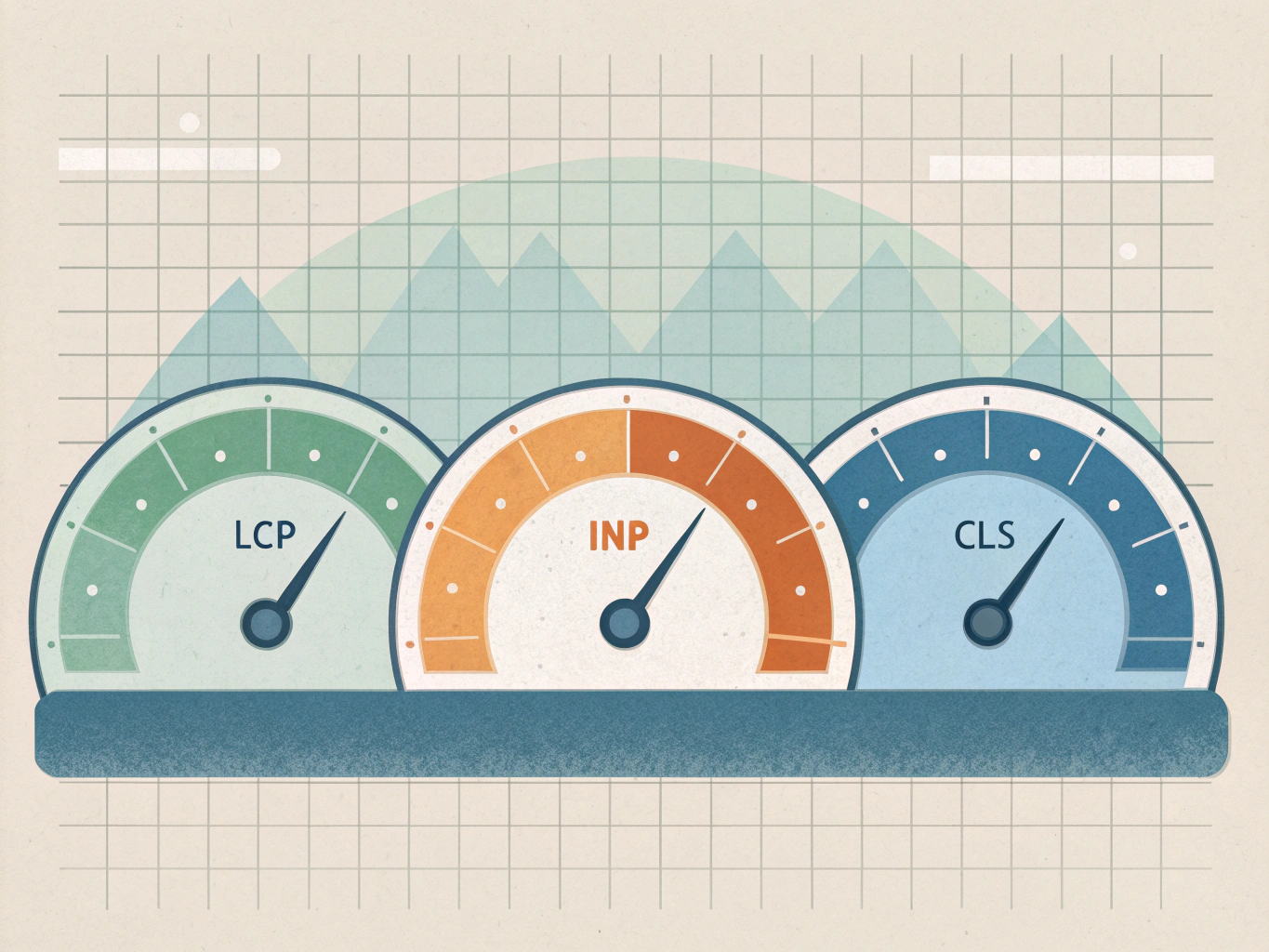
Core Web Vitals represent Google's attempt to quantify what makes a website feel good to use. Core Web Vitals measure real-world user experience for loading performance, interactivity, and visual stability, and they've become a confirmed ranking factor you can't afford to ignore.
Here's what you need to know about each metric.
Largest Contentful Paint (LCP) measures how quickly the main content loads. Aim for under 2.5 seconds. If your hero image or primary headline takes longer, you're losing ranking potential and real visitors who bounce before your page fully renders.
Interaction to Next Paint (INP) replaces the older First Input Delay metric and tracks responsiveness. When someone clicks a button or types in a form, INP measures the delay before the page responds visibly. Keep this under 200 milliseconds. Slow interactions frustrate users and signal poor technical implementation to search engines.
Cumulative Layout Shift (CLS) prevents the annoying experience of content moving around while you're trying to read or click. Target a score under 0.1. This often happens with unoptimized ads, images without dimensions, or late-loading fonts.
The critical context: Core Web Vitals act as a tie-breaker, not a knockout punch. While Core Web Vitals are a ranking factor, creating relevant content is of course paramount for SEO. A page with excellent metrics but mediocre content won't outrank a slower page with genuinely better information.
Start optimizing by compressing images, deferring non-critical JavaScript, and using a content delivery network. Test your metrics with Google PageSpeed Insights, then prioritize fixes by impact. The sites winning in 2025 combine solid technical foundations with content that actually matters.
Domain Authority, Links, and Building Website Credibility
Here's the truth: Domain Authority matters, but probably not the way you think it does.
Your domain's overall authority does influence rankings, but it's not a direct Google ranking factor. Domain authority, external links to specific pages, and internal links still matter a lot in Google searches, yet the metric itself is a third-party creation by SEO tools. Google doesn't use "Domain Authority" in their algorithm. What they do use is PageRank, one of Google's core ranking systems that flows through links across your site.
This distinction changes everything about how you should approach link building.
External links pointing to your domain absolutely matter. They signal credibility and trustworthiness to Google. But here's what separates winners from the rest: how you distribute that authority internally. A strong homepage means nothing if that authority never reaches your money pages. This is where internal linking strategy becomes critical.
Strategic internal links act as authority pipelines. Link from high-authority pages to content that needs ranking boosts. Use descriptive anchor text that tells Google what the linked page is about. This approach compounds over time, pushing authority deeper into your site structure where it actually impacts rankings.
Building genuine authority isn't a sprint. Quality backlinks from relevant, established websites accumulate gradually. Focus on creating content worth linking to rather than chasing link quantity. One authoritative link from an industry leader beats dozens of low-quality links.
The mistake most sites make is treating Domain Authority as a vanity metric while ignoring the mechanics underneath. Stop obsessing over your DA score. Instead, audit your internal linking structure, identify which pages have the most authority, and strategically connect them to pages you want to rank. Build a coherent link architecture that flows authority where it matters most.
That's how you actually move the needle on rankings in 2025.
Mobile-First Indexing and Responsive Design
If your website isn't optimized for mobile in 2025, you're essentially invisible to most of your potential customers. Here's why this matters urgently.
Google made mobile-first indexing its standard years ago, but many sites still treat mobile as an afterthought. The reality is brutal: 92.3% of users access the internet using a mobile phone. Your mobile experience isn't a nice-to-have feature anymore. It's your primary storefront.
Mobile optimization directly impacts rankings. Google confirmed that mobile-friendly design is a core ranking factor, and it evaluates your site based on the mobile version first, not the desktop version. This shift fundamentally changed how SEO works. If your mobile site loads slowly or feels clunky to navigate, you're losing rankings and traffic simultaneously.
Core Web Vitals amplify this urgency. Page speed on mobile devices is now a critical ranking signal, and most users abandon sites that take more than three seconds to load. Slow mobile performance kills both user experience and SEO performance.
Responsive design should be your baseline approach, not an option. This means your layout automatically adapts to any screen size, from smartphones to tablets to desktops. Avoid desktop-first thinking that forces mobile users into cramped, zoomed-out versions of your content.
Practical steps matter now: test your site on actual mobile devices, not just browser tools. Optimize images for mobile screens. Simplify navigation menus. Make buttons and links thumb-friendly with adequate spacing. Check your Core Web Vitals scores in Google Search Console specifically for mobile performance.
Mobile optimization isn't a ranking factor among many. It's the foundation everything else builds on. If you're not prioritizing it immediately, you're already falling behind competitors who are.
Search Intent and Topical Authority: Understanding What Users Really Want
Search intent has evolved from a nice-to-have consideration into one of the top three ranking factors determining your visibility in 2025. Google doesn't just match keywords anymore; it actively tests whether your content actually satisfies what users are searching for. This shift fundamentally changes how you should approach content creation.
Here's what's happening behind the scenes: The past year confirmed without a doubt that Google tests newly-published content to see if it responds well to the search intent. The search engine measures user behavior signals like dwell time, scroll depth, and click-through patterns to determine if your page delivers what searchers genuinely need.
This is where topical authority enters the picture. Rather than creating isolated articles, you need to build interconnected topic clusters that demonstrate deep expertise in your subject area. Google's patents explicitly use the notion of 'topical clusters' when weighting links, which means your internal linking structure signals authority to the algorithm.
To leverage this ranking factor, start by identifying the four search intent types: informational (learning), navigational (finding specific sites), commercial (researching purchases), and transactional (completing actions). Map your keywords to these categories. A user searching "best project management tools" needs comparisons and reviews, not a definition of what project management is.
Then, build your cluster strategy. Create a pillar page covering your main topic broadly, then develop cluster content addressing specific subtopics. Link these strategically back to your pillar. This structure tells Google you're a credible source, not just someone chasing traffic.
The practical takeaway: stop writing for keywords and start writing for questions. What problem does your audience have? What exactly are they trying to accomplish? Answer that precisely, and rankings follow naturally.
Technical SEO: The Foundation That Enables Rankings
Technical SEO isn't flashy, but it's non-negotiable. Think of it as the plumbing behind your website: nobody notices it when it works, but everything breaks when it doesn't.
Let's be clear about what matters here. HTTPS is a confirmed ranking factor, so if you're still running HTTP, that's costing you. Beyond security, Google needs to actually find and understand your content. If your site can't be crawled properly, no amount of brilliant writing will help you rank.
Site architecture and internal linking structure directly influence how search engines navigate your content. A logical hierarchy with strategic internal links guides both crawlers and users through your site. This isn't about manipulation; it's about making your content discoverable.
Structured data deserves serious attention in 2025. By marking up your content with schema markup, you're essentially translating your pages into a language Google understands better. This helps search engines grasp context, improve your appearance in search results, and potentially qualify you for rich snippets that drive clicks.
Here's where many sites stumble: JavaScript rendering. A major focus of technical SEO in 2025 will be on platforms that rely heavily on JavaScript. If your site uses JavaScript to load critical content, ensure Google can actually render and index it. Rendering issues mean invisible content, which means no rankings.
The key insight? Ensure your website is technically sound, fast, mobile-friendly, and easy to crawl. These elements enable your rankings; they're the prerequisites, not the prizes. Fix the foundation first, then build your content strategy on top of it. Technical SEO done right becomes invisible because it simply works.
Local SEO Ranking Factors: Dominating Your Geographic Market
If you're serious about ranking in local search results, you need to understand what actually moves the needle. Local results are mainly based on relevance, distance, and popularity, and mastering these three pillars will transform your visibility in your geographic market.
Start with your Google Business Profile. This isn't optional anymore; it's the foundation of local SEO. Your Google Business Profile category is the number one ranking factor for your Google Search and Maps business listing, so choose it carefully and ensure all business information is complete and accurate.
Here's what's changed dramatically: reviews now outweigh traditional backlinks in local rankings. Reviews have become more influential than ever in local SEO, directly impacting your prominence score. Don't just collect reviews; actively encourage satisfied customers to leave them on Google, and respond to every single one. This signals engagement and trustworthiness to both algorithms and potential customers.
NAP consistency matters more than you'd think. Your business name, address, and phone number need to match exactly across Google Business Profile, your website, local directories, and citation sites. Even minor variations confuse search engines and hurt your rankings.
Create location-specific content that speaks to your actual market. Write blog posts, service pages, and landing pages tailored to neighborhoods or regions you serve. This relevance signal tells Google you're genuinely connected to your community, not just a national brand passing through.
The competitive advantage here is clear: most local businesses ignore these factors or execute them half-heartedly. If you optimize your Google Business Profile, build a steady stream of quality reviews, maintain NAP consistency, and create localized content, you'll separate yourself from competitors who are still relying on outdated tactics. Local search is where intent meets action, and businesses that nail these fundamentals capture disproportionate market share.
The Future of SEO: AI, E-E-A-T, and What's Next
The SEO landscape in 2025 isn't abandoning its roots; it's evolving them. What's changing is how Google rewards those who play by the rules.
E-E-A-T continues to be the north star. Search Engine Land reports that establishing E-E-A-T will remain crucial for SEO success, but the bar is rising. Google now expects verifiable authorship, documented expertise, and demonstrable authority. This isn't new; it's just non-negotiable.
AI Overviews are reshaping discovery itself. AIOSEO's research shows that 63% of respondents reported positive impacts on organic traffic and visibility from AI Overviews. This means your content needs to answer questions comprehensively and cite sources credibly. Original research, unique insights, and authoritative perspectives stand out more than ever.
User experience metrics will continue gaining weight. Core Web Vitals aren't going away; they're becoming table stakes. Speed, responsiveness, and stability matter because they reflect real user satisfaction.
Here's what won't change: quality content, genuine user focus, and earned authority still win. Local Falcon notes that SEO tactics designed to game the system offer diminishing returns in 2025. Shortcuts expire; fundamentals compound.
The future of SEO belongs to creators who prioritize readers over algorithms. Build authority through original thinking. Demonstrate expertise through verifiable credentials. Create content so useful that people want to link to it, share it, and cite it.
The winners in 2025 won't be those chasing the latest trend. They'll be the ones who mastered the fundamentals and adapted them thoughtfully.

Author
FirstSearch.AI Team