Best Free SEO Writing AI Tools 2026: Top Picks
Why Free AI SEO Writing Tools Matter in 2026
The SEO world just hit an inflection point. For the past decade, ranking on Google meant everything. Today, that's only half the battle.

In 2026, your content needs to be found in two places: traditional search results and AI platforms. When someone asks ChatGPT, Claude, or Perplexity a question, they're not getting Google results back. They're getting cited sources. If your content isn't sophisticated enough to be cited by these generative engines, you're invisible to an entire segment of searchers. According to WebTrek's 2026 AI SEO analysis, AI visibility is now as important as traditional search rankings.
The stakes are real. AI platforms show 800% year-over-year growth in content discovery, meaning the competition for AI citations is fiercer than ever. Yet here's the good news: you don't need enterprise software to compete anymore.
Free AI SEO writing tools have matured dramatically. They now offer features that cost thousands annually just two years ago. Budget-conscious marketers and small businesses can access capabilities that level the playing field against well-funded competitors.
This shift changes everything. You can optimize for both traditional rankings and AI visibility without breaking the bank. The tools are here. The opportunity is now. The question is whether you'll adapt before your competitors do.
Top 5 Free AI SEO Writing Tools You Should Use Today
If you're serious about SEO writing without spending money, these five tools cover the essentials. Each has a distinct strength, so your choice depends on what you need most.
ChatGPT (Free Tier) remains the most versatile starting point. The free version handles ideation, outline creation, and first drafts effectively. You won't get specialized SEO features, but the quality is solid enough for brainstorming and generating content angles. The limitation: slower response times and occasional access restrictions during peak hours.
Rytr stands out for its practical approach to free access. Rytr offers unlimited generations for individuals getting started with generative AI on the free plan, which means you can generate as much content as you need without hitting usage caps. It includes built-in SEO meta description and title tag generation, making it genuinely useful for optimizing your pages. The trade-off is fewer customization options compared to paid plans.
Frase takes a different angle by focusing on research and content strategy. Frase provides a free trial with complete feature access and doesn't require a credit card upfront. This matters because you can actually test its competitive analysis and content optimization features before committing. Use it to understand what your competitors rank for and what gaps exist in current content.
Google Gemini deserves serious consideration, especially if you use Google Workspace already. Real-time web access means it can pull current information for your content, something most free tools can't do. The integration with Gmail and Docs makes workflow seamless, though the SEO-specific features are minimal compared to specialized tools.
WebTrek's Free AI SEO Tool fills a niche that others ignore: AI visibility auditing. WebTrek's Free AI SEO Tool offers unlimited audits without login requirements or freemium restrictions. It identifies technical SEO issues and content gaps quickly, giving you actionable priorities for improvement.
The reality: no single free tool does everything. Combine ChatGPT for drafting, Rytr for meta tags, and Frase for research, and you've got a functional workflow. Add Gemini for real-time information and WebTrek for auditing, and you're covering most SEO writing needs without paying a dime. Test each one with your actual content to see what fits your process.
Understanding GEO: The New Frontier Beyond Traditional SEO
Here's the reality: ranking on Google isn't enough anymore. In 2026, your content needs to win in two places at once. According to WebTrek's analysis, SEO has officially entered the era of AI visibility where traditional ranking signals still matter, but winners appear inside AI-generated answers.
This shift introduced Generative Engine Optimization, or GEO. While traditional SEO focuses on Google's algorithm, GEO focuses on getting cited and recommended by AI platforms like ChatGPT, Claude, and Perplexity. GEO hinges on three critical factors: Authority signals, content clarity, and semantic structure. Think of it as the difference between being found and being quoted.
AI platforms don't just scan for keywords; they prioritize content that demonstrates genuine expertise and trustworthiness. They're looking for well-structured answers that directly address user questions, backed by credible sources. A blog post that ranks number three on Google but never gets cited by AI is leaving real traffic on the table.
The practical implication: you can't ignore either approach. Your content strategy now requires simultaneous optimization for both systems. That means using clear, authoritative language; organizing information with proper headings and formatting; and building topical authority around your core topics. Answer Engine Optimization is now as important as traditional SEO, focusing on being the single answer read aloud by AI systems.
The free AI writing tools covered in this guide work differently because they account for both requirements. They're not just helping you rank; they're helping you get cited where your audience actually finds answers.
ChatGPT vs. Gemini vs. Claude: Free AI Chatbots for SEO Writing
When it comes to free AI chatbots for SEO writing, three names dominate: ChatGPT, Google Gemini, and Claude. Each brings different strengths to the table, and choosing between them depends on what you're trying to accomplish.
ChatGPT remains the most accessible entry point. 68.7% of surveyed audiences believe ChatGPT is the most reliable and trustworthy AI for writing, which matters when you're building confidence in your content process. The free tier excels at brainstorming, generating multiple angles on a topic, and producing first drafts quickly. The downside: it has a knowledge cutoff, so current events and recent data aren't its strong suit. For SEO specifically, you'll need to fact-check everything and verify claims independently.
Google Gemini has a real advantage most people overlook: real-time web access. Google Gemini offers real-time information from across the web, including scheduled future events. This matters enormously for SEO content that needs to reference current statistics, news, or trending topics. You can ask Gemini to research something happening today, and it'll pull fresh information. The trade-off is that the interface feels less intuitive than ChatGPT, and sometimes the responses feel slightly more robotic.
Claude stands out for handling complex, long-form content. Claude is now one of the most structured AI content writers, especially for long-form content. If you're outlining a comprehensive guide or working through intricate topics with multiple sections, Claude's reasoning abilities shine. It's also notably careful about accuracy, flagging when it's uncertain rather than confidently stating wrong information.
Here's the honest truth: none of these tools are specifically built for SEO. They're general-purpose chatbots that can support your SEO writing process. All three require you to verify facts, check keyword alignment, and ensure search intent matches. Think of them as writing partners, not replacements for your editorial judgment.

Specialized Free Tools: Rytr, Frase, and SEO Writing AI
If you want specialized tools built specifically for SEO content, these three platforms deserve your attention.
Rytr works best for writers who need quick copy variations and refinement. Its free tier gives you 5,000 characters monthly with unlimited generations, which is enough to test the platform's real value. You get access to 40+ templates covering blog intros, meta descriptions, and call-to-action copy. The limitation hits when you're scaling output, but for individual creators validating ideas, it's genuinely useful. Upgrade when you consistently hit that character limit.
Frase takes a different approach by offering full feature access during its free trial with no credit card required. This matters because you can actually test their research capabilities, content editor, and optimization engine without commitment. Frase shines when you need competitive analysis alongside writing; it pulls top-ranking content and shows you what topics you're missing. The free trial window is your chance to see if this workflow fits your process.
SEO Writing AI focuses on volume and automation. With over 50,000 users relying on its bulk generation capabilities, this tool handles scaling differently than the others. You can generate dozens of articles in one session and auto-post them directly to WordPress. The free trial lets you test this workflow, which is crucial because bulk generation isn't useful if you can't actually distribute the content.
The real distinction: use Rytr for quality refinement, Frase for research-backed strategy, and SEO Writing AI for volume production. Each free tier has real limitations, but they're sufficient for determining whether the tool matches your actual workflow. Don't upgrade based on features alone; upgrade when you've confirmed the tool solves your specific bottleneck.
Free AI SEO Audit Tools: Check Your Content Before Publishing
Before hitting publish, run your content through a free audit tool. It's the difference between posting something decent and posting something that actually ranks.
WebTrek's Free AI SEO Tool gives you a complete AI visibility audit in minutes with no login required or freemium restrictions. You get a snapshot of how your content performs against AI-driven search results, which matters now more than ever.
For deeper optimization, Frase's GEO Score Checker analyzes three critical factors: Authority, Readability, and Structure. It's free with no signup needed, and it specifically scores your content for how AI platforms interpret it. This is practical intelligence you can act on immediately.
Google Search Console remains essential. It now tracks AI Overview performance metrics, showing you exactly how often your content appears in these new AI-generated summaries. That's visibility data you can't ignore.
For technical depth, Screaming Frog's free version includes semantic similarity analysis. This catches duplicate messaging, thin content, and structural issues that hurt rankings.
The workflow is straightforward: write your draft, run it through Frase for readability and structure, check WebTrek for AI visibility, then verify performance in Search Console. Screaming Frog catches technical issues you might miss.
Auditing before publishing saves hours of revisions later and prevents ranking problems from the start. These tools take 10 minutes total and catch the mistakes that cost you traffic.
Building Your Free AI SEO Workflow: A Step-by-Step Process
Here's a workflow that actually works: combine multiple free tools in a structured process, and you'll see real SEO improvements without spending a dime.
Week 1: Research and Strategy
Start with ChatGPT to brainstorm content angles and identify search intent. Then move to free keyword research tools like Ubersuggest's free tier or Google Keyword Planner to find what your audience actually searches for. Spend time understanding search volume and competition. This foundation matters more than you'd think; poor keyword selection wastes everything that comes next.
Week 2: Writing and Optimization
Use Rytr or Frase to draft your content, then immediately optimize it. WebTrek's AI SEO Tool helps you structure content around your target keywords and improve readability for both users and search engines. Don't just write and publish; refine based on the tool's suggestions for meta descriptions, heading structure, and keyword placement. This step separates content that ranks from content that sits invisible.
Week 3: Publishing and Validation
Publish your content, then track performance using Google Search Console. Use Frase's GEO Checker to verify your content appears in local search results if relevant. Most Frase users see AI citations within 2-4 weeks of optimizing content and traditional SEO improvements within 30-60 days, so don't expect overnight results.
The Key: Tools Work Together
Each tool handles one job well. ChatGPT excels at ideation, Rytr at drafting, optimization tools at technical improvements, and Google Search Console at tracking. Using them in sequence amplifies results; using them in isolation limits them.
Adapt this workflow to your schedule. Publishing weekly? Follow this exactly. Publishing monthly? Extend each phase but maintain the sequence. Agencies managing multiple clients? Batch similar tasks across clients for efficiency.
Limitations of Free Tools: When You Should Upgrade
Free AI writing tools work well for testing and small-scale projects, but they hit real walls as your needs grow. Understanding these limitations helps you decide whether upgrading makes sense for your situation.
Word limits are the first constraint you'll encounter. WriteSonic offers a free plan with 10,000 words, while paid plans start at $12.67/month for 200K words. Rytr's free tier caps out at 5,000 characters monthly, compared to 50,000 characters on the $9/month Saver plan. If you're publishing multiple articles weekly, you'll exhaust free allowances quickly.
Advanced customization is typically locked behind paywalls. Free versions generate generic content; paid tiers let you define brand voice, tone preferences, and specific keyword strategies that match your site's personality. This matters because generic output requires more editing work.
Support and update frequency differ substantially too. Paid users get priority assistance and access to new features first. Free users often wait months for improvements or receive minimal customer support.
Here's the practical reality: free tools require significant manual optimization and fact-checking before publishing. Most AI content creation demands substantial human editing for quality and accuracy. If you're publishing one article monthly for a hobby blog, free tools handle this fine. But if you're running a business generating revenue from content, the time spent editing often exceeds what you'd spend on a paid subscription.
Calculate your actual needs: monthly publishing volume multiplied by editing time, then compare that cost against subscription fees. For most serious content creators, paid tools become financially sensible around five to ten articles monthly.
Best Practices: Using AI Tools Without Risking Google Penalties
Here's the thing: Google doesn't care how your content was created. It cares whether it's helpful, accurate, and trustworthy. "Google focuses more on content quality rather than how it is produced, but content generated just to manipulate rankings violates policies," so the distinction matters. AI-generated content that's genuinely useful ranks just fine. AI-generated content stuffed with keywords and published without review? That's where you hit trouble.
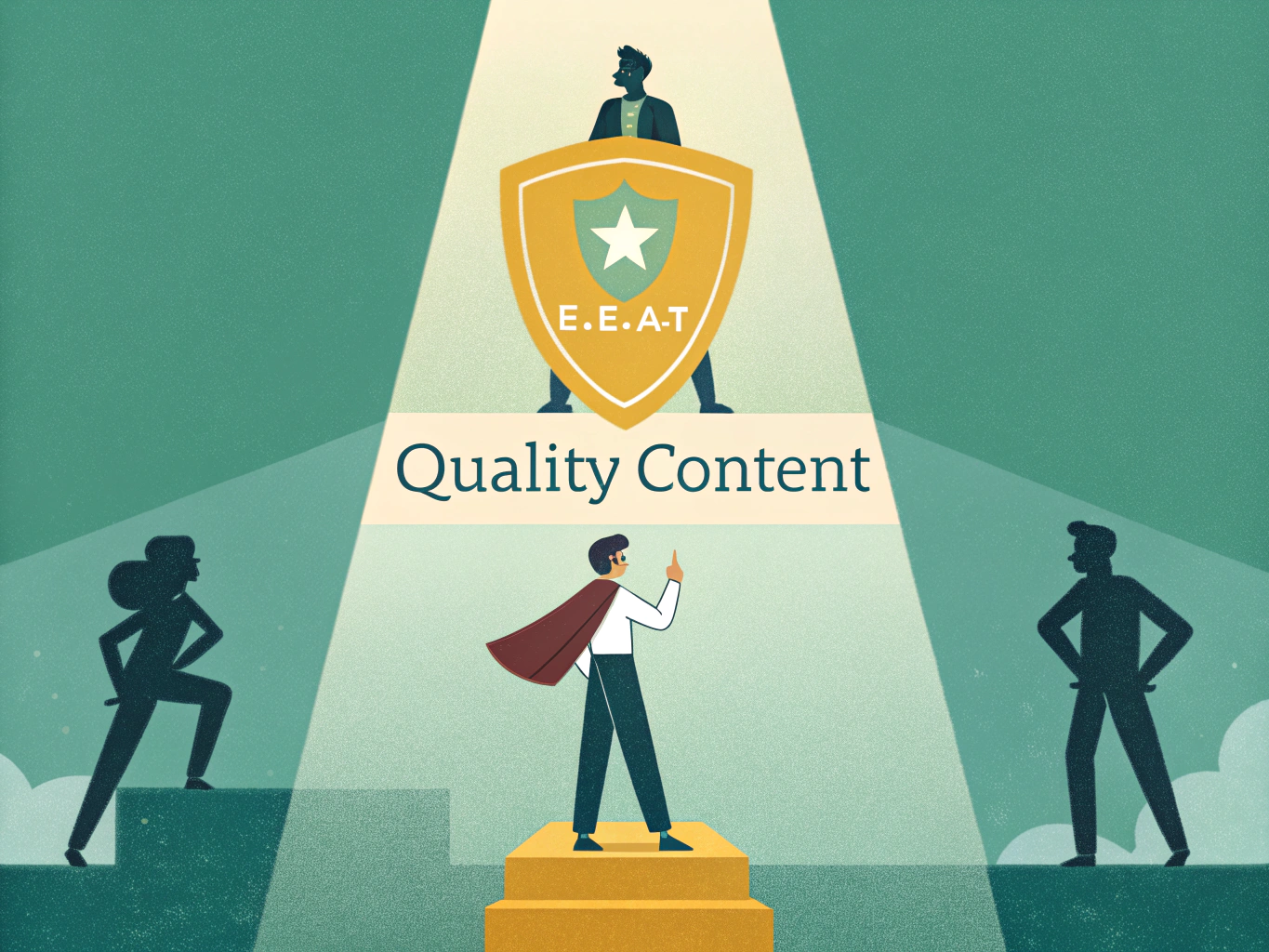
The real safeguard is E-E-A-T: Experience, Expertise, Authority, and Trustworthiness. This framework should guide every piece you publish. An AI tool can draft a technical guide, but it can't replace your lived experience in the field. It can't verify that a statistic is current or catch industry context it might miss. That's your job.
Here's how to use these tools responsibly:
Start with AI, but finish with humans. Use free SEO writing tools to generate outlines, overcome writer's block, or rough out sections. Then fact-check everything. Cross-reference claims against recent sources. Inject your own insights, case studies, and real-world examples that only you can provide. This transforms generic AI output into something genuinely valuable.
Maintain your voice throughout. AI tends toward a neutral, somewhat bland tone. Your brand has personality. Edit ruthlessly to make content sound like it came from an actual person with expertise, not a template.
Finally, focus on answering real questions your audience actually asks. Don't optimize for keywords first; optimize for usefulness. Keywords follow naturally when you're solving actual problems.
Key Takeaways: Start Your Free AI SEO Writing Journey Today
Here's the thing: 2026 is the year free AI SEO tools stopped being the budget option and became genuinely competitive. You don't need to drop thousands on enterprise software to rank better and write faster.
Start here. Pick one tool to begin with, ChatGPT or Rytr for content generation, then layer in Frase for optimization. These two alone handle 80% of what most writers need. Before you publish anything, run it through WebTrek's free audit tool to check your AI visibility score. It takes five minutes and catches issues you'd otherwise miss.
The real power comes from combining tools rather than betting everything on one. Use ChatGPT for drafting, Frase for keyword optimization, and a free plagiarism checker to verify originality. This workflow costs nothing and produces better results than relying on a single paid platform.
Here's what matters: test everything. Measure what actually moves your traffic and rankings, not just what feels productive. Upgrade to paid tiers only when you genuinely hit the free tier's limits, not before. Most people never do.
Quality and authenticity still matter more than speed. An AI-assisted article that's thoughtfully edited and fact-checked outperforms a rushed piece every time. Take your time, trust the process, and let these free tools amplify your work rather than replace it.
Your competitive advantage isn't expensive software. It's knowing which free tools to combine and having the discipline to actually measure results.
FirstSearch
FirstSearch.AI Team