Smart SEO Analysis: Techniques for 2026 | AI Tools Guide
Last Updated: February 23, 2026
Quick Summary
- Smart SEO analysis uses AI to detect anomalies, predict performance, and automate optimization at scale
- Content gap analysis reveals topics competitors rank for that you don't, driving 35% traffic growth
- AI visibility tracking monitors brand mentions in ChatGPT and other AI search engines alongside Google
- Topical authority and semantic relevance matter more than keyword density in 2026 SEO success
What is Smart SEO Analysis and Why It Matters in 2026
Smart SEO analysis isn't just better spreadsheets. It's AI-powered intelligence that detects patterns you'd miss manually, predicts performance before it happens, and automates the optimization work that used to consume entire teams.
Traditional SEO analysis stops at vanity metrics: keyword rankings, traffic volume, click-through rates. Smart analysis connects those searches directly to revenue, showing you which optimizations actually move the needle for your business.
The stakes have shifted dramatically. Gartner predicts a 25% drop in traditional searches by the end of 2026 for the benefit of conversational AI. That's not a distant threat; it's happening now. Meanwhile, topical authority has become the strongest on-page ranking factor, even surpassing domain traffic in importance. Keyword density strategies are dead.

Your competitors who shift to smart analysis first will capture disproportionate market share. Teams that cling to manual methods will find themselves managing spreadsheets instead of strategy. The competitive advantage isn't in doing SEO differently; it's in knowing which changes actually matter.
In 2026, teams need a way to connect searches to traffic and then to revenue. That's the entire point of smart SEO analysis.
Core Components of Smart SEO Analysis
Smart SEO analysis works because it combines four technical capabilities that transform raw data into actionable insights. Here's what actually matters.
Anomaly Detection That Works in Real Time
When your traffic drops 15% overnight, you need answers fast. Traditional analytics show the decline; smart systems show you why. AI flags the change within a day, often linking it to a specific update, device type, or region. Instead of spending hours cross-referencing Google updates with your traffic logs, the system does it automatically. You get notified that mobile traffic fell in Spain after a specific core update rolled out. That specificity saves you weeks of investigation.
Predictive Analytics Built on Your Reality
Generic keyword difficulty scores treat every site the same. A startup and an enterprise publication both see "difficulty: 42" for the same keyword, which is useless. Personalized keyword difficulty uses domain strength and content history to judge if a keyword is realistic for your site. Your domain authority, topical authority, and publishing velocity all factor in. The system tells you which keywords you can realistically rank for within six months, not which ones are theoretically possible.
Semantic Understanding Beyond Keywords
Smart analysis grasps topic clusters and content relationships. It knows "voice search optimization" and "conversational queries" are related concepts, not separate targets. This prevents wasted effort on keyword cannibalization and identifies content gaps where related topics lack coverage.
Multi-Platform Visibility Tracking
Search isn't just Google anymore. AI SERP intelligence analyzes how AI tools answer specific prompts, what sources they cite, and if your brand appears. Monitoring ChatGPT, Perplexity, and emerging AI search engines ensures your content reaches readers wherever they search.
These components work together to replace guesswork with precision.
AI-Powered Automation and Workflow Integration
The shift from manual spreadsheet work to intelligent automation is reshaping how SEO teams operate. Instead of spending hours sorting through keyword lists, teams now use AI to automatically cluster hundreds of keywords into clear content themes and topic hubs. This alone saves days of tedious analysis work.
Natural language interfaces are replacing visual workflow builders entirely. Rather than clicking through complex diagrams, marketers simply describe what they need in plain English. Tools powered by systems like Claude Code understand context and intent, turning conversational requests into executable workflows without requiring technical skills.
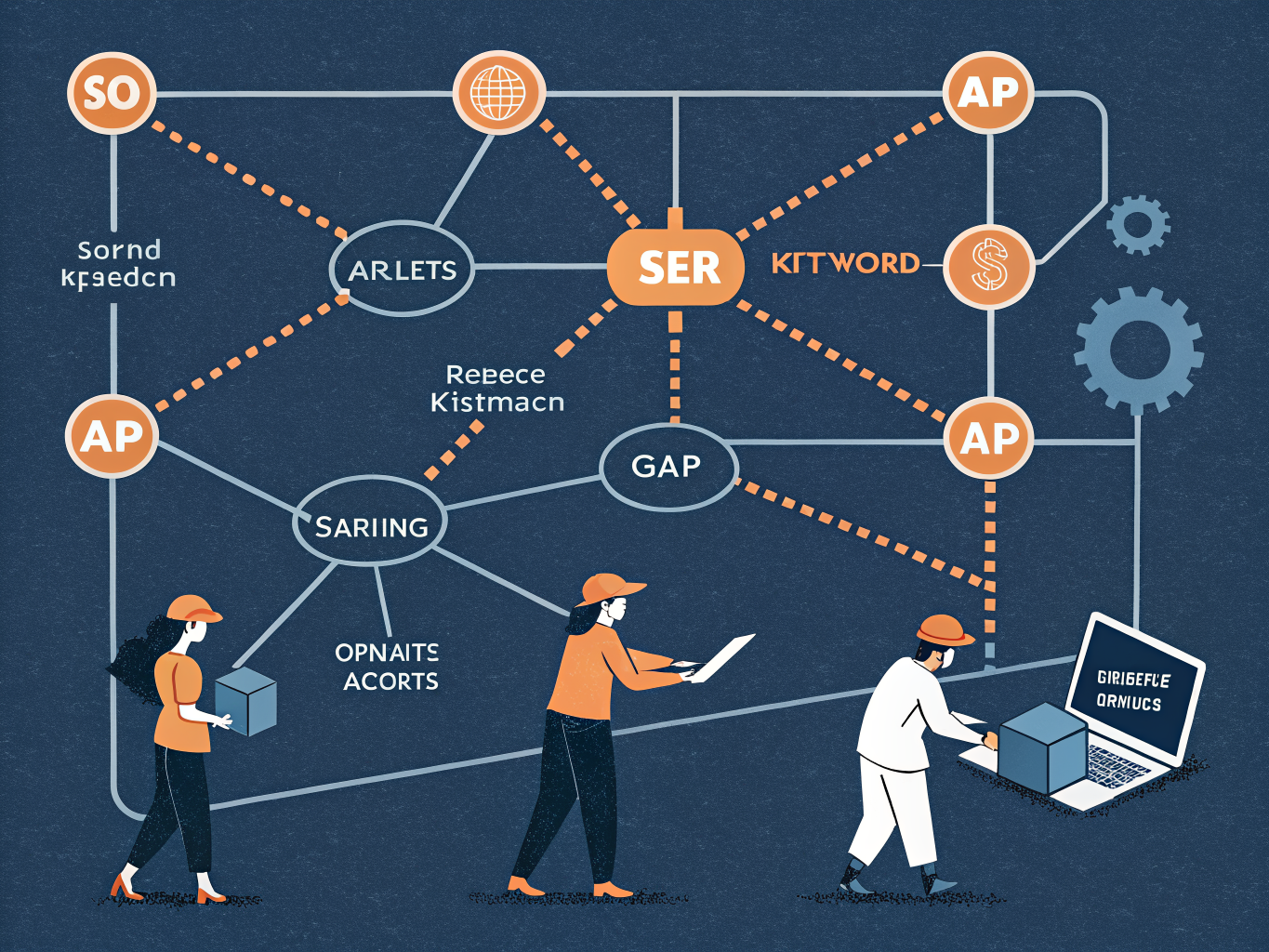
The real efficiency gain comes from prioritized recommendations instead of raw data dumps. Modern AI tools don't just surface information; they analyze it, contextualize it, and tell you exactly what to do next. Your team spends less time interpreting numbers and more time executing strategy.
Workflow automation connects your entire SEO stack seamlessly. Keyword research triggers content gap analysis, which automatically feeds optimization recommendations, which sync with your publishing calendar. What once required manual handoffs across five different tools now happens in minutes.
According to industry analysis, successful SEO teams in 2026 will look less like writers and more like product engineers, with efficiency becoming a competitive advantage. Teams that embrace this automation aren't replacing people; they're freeing them to focus on strategy, creativity, and business outcomes rather than administrative busywork.
Content Gap Analysis: Finding the Opportunities Competitors Miss
Your competitors are ranking for topics your audience actively searches for, and you're missing out on the traffic. Content gap analysis reveals these blind spots before your competitors capitalize on them further.
Here's the reality: 75% of searchers click only on first-page results, meaning every missing topic is lost traffic. Manual gap analysis requires hours of competitor research, keyword mapping, and content audits. AI-powered smart SEO analysis compresses this into minutes, identifying not just missing keywords but the topics your audience expects you to cover.
The difference between traditional and intelligent gap analysis comes down to depth. Manual methods catch obvious keyword gaps; AI catches semantic gaps. Rather than simply noting that competitors rank for "best project management tools," semantic analysis understands your audience is also searching for related concepts like "agile methodology implementation" and "team collaboration software ROI." This connects the dots between topics, creating content clusters that serve multiple search intents simultaneously.
The ROI speaks for itself. Organizations using AI-driven gap analysis see 42% faster content production, 35% traffic growth, and up to 60% cost savings compared to manual methods. That's not incremental improvement; that's transformative.
The process is straightforward. AI tools analyze competitor content, your existing site, and search intent data to map what's missing. You get a prioritized list of topics ranked by search volume and difficulty, allowing you to focus on high-impact opportunities first. Rather than guessing which gaps matter most, you're working from data.
Start by auditing your top 10 competitors in your primary niche. Identify topics they rank for in positions 1-20 where you have zero presence. Then expand your analysis to semantic relationships and question-based searches your audience asks. The gaps you find aren't just content opportunities; they're direct pathways to first-page rankings and measurable traffic growth.
AI Content Performance Analysis: Beyond Vanity Metrics
Traditional SEO metrics tell you where you stand, not whether you're solving customer problems. Rankings and traffic volume are vanity metrics that mask a critical truth: content performing well in search engines must also perform well for your business.
Smart SEO analysis flips this equation. AI systems now evaluate semantic relevance and topical authority by analyzing whether your content answers the full scope of what searchers expect. This means examining entity coverage, subtopic depth, and how thoroughly you address related concepts that searchers naturally explore alongside their primary query. AI systems instantly identify surface-level content and reward creators who show real understanding of how different ideas connect.
The real power emerges when analysis connects content metrics directly to business outcomes. Rather than celebrating a top-three ranking, modern platforms track whether that ranked content generates leads, conversions, or revenue. This attribution layer transforms SEO from a traffic game into a conversion science.

Before investing weeks in content creation, forecasting tools estimate realistic traffic ranges for planned articles. Forecasting platforms can estimate traffic ranges for planned articles, giving teams a sense of likely returns before they invest many hours. This lets your team prioritize high-impact topics and abandon low-potential ideas before resources are wasted.
The shift from vanity metrics to strategic analysis represents how SEO has matured. You're no longer measuring activity; you're measuring impact.
Monitoring AI Search Visibility: The New Frontier
The competitive advantage in SEO is shifting beneath our feet. While ranking on Google's first page still matters, smart SEO analysis now demands tracking visibility across an entirely new frontier: AI search engines.
AI visibility tracking monitors brand mentions in ChatGPT, Perplexity, and Google AI Overviews alongside traditional rankings. This isn't optional anymore. When someone asks ChatGPT a question about your industry, does your brand get cited? When Perplexity summarizes competing solutions, are you included? These moments define modern visibility.
Here's what makes this critical: the average AI search visitor converts at 4.4x the rate of traditional organic traffic. That's not marginal improvement; that's a fundamental shift in visitor quality. AI searchers are asking specific questions, seeking authoritative answers, and when your content appears in those responses, you're already positioned as a trusted source.
Smart analysis identifies the exact prompts and questions where competitors appear but you don't. These gaps represent untapped opportunity. A brand might rank for "email marketing software" but never get cited when users ask AI tools for recommendations. That's a visibility blind spot your competitors are already exploiting.
The brands winning in 2026 monitor both worlds simultaneously. They track traditional rankings while building the authority and content specificity that AI engines reward. Being cited by AI isn't replacing Google rankings; it's becoming equally essential. Your strategy needs to account for both channels, or you're leaving significant conversion value on the table.
Getting Started with Smart SEO Analysis: Practical Next Steps
The path to smart SEO analysis doesn't require a complete overhaul. Start by establishing baseline metrics across three areas: traditional SEO performance (rankings, traffic, CTR), content quality signals (readability, topical depth, freshness), and AI visibility factors (featured snippet eligibility, entity recognition, semantic relevance). These baselines become your measurement foundation.
Next, evaluate tools strategically. When selecting an SEO platform, prioritize data accuracy, feature relevance, pricing, integration capabilities, and customer support quality. Skip tools that simply dump raw data into dashboards; you need AI-powered recommendations that surface actionable insights automatically. Look for platforms offering content gap analysis, competitive intelligence automation, and predictive trend spotting.
Implement quarterly content gap analysis to stay aligned with evolving search intent and competitor moves. Running this analysis quarterly or when you notice organic traffic drops keeps your strategy responsive without constant manual audits.
Train your team to interpret AI insights rather than execute repetitive tasks. This shift from execution to strategy multiplies your impact. Whether you're a solo operator or managing a larger team, focus on understanding what the data reveals about user intent and market gaps.
Finally, connect SEO metrics to business outcomes. Track how organic traffic converts into marketing qualified leads, customers, and revenue. This attribution transforms SEO from a vanity metric into a profit center, securing budget and executive buy-in for continued investment in smart analysis practices.
FAQ: Smart SEO Analysis Questions Answered
Q1: What's the difference between traditional SEO analysis and smart SEO analysis?
Traditional SEO analysis focuses heavily on rankings and keyword positions. Smart SEO analysis connects the dots between searches, actual traffic, and business outcomes like leads and revenue. Smart analysis connects searches to traffic and then to MQLs and revenue, while traditional analysis focuses on rankings. This shift matters because you might rank well but still miss conversions if you're targeting the wrong intent or audience segment.
Q2: How much does AI SEO analysis cost and what's the ROI?
Costs vary widely, from $50 to $500+ monthly for SMB tools, up to enterprise solutions. The real question is ROI. AI-powered analysis delivers 42% faster content production, 35% traffic growth, and 60% cost savings compared to manual methods. Most businesses recoup their investment within 3 to 6 months through improved content efficiency and better targeting.
Q3: Can small businesses benefit from smart SEO analysis?
Absolutely. In fact, small teams benefit most because smart tools eliminate manual grunt work. You get enterprise-level analysis without hiring a full SEO department. The key is choosing tools that match your budget and technical comfort level.
Q4: How often should we perform content gap analysis?
Run gap analysis quarterly at minimum, monthly if you're in competitive niches. Your competitors won't wait, and search intent evolves constantly. Quarterly reviews catch shifts before they impact rankings.
Q5: What metrics matter most in 2026 SEO analysis?
Stop obsessing over rankings alone. Track organic traffic growth, click-through rates, time-on-page, conversion rates, and revenue attribution. User experience signals matter more than ever. AI tools should surface these connections automatically rather than making you piece them together manually.
Q6: How do we measure success in AI search visibility?
Success isn't just visibility; it's qualified visibility. Measure how many searchers with purchase intent you're capturing, not just impressions. Compare your traffic growth against competitors in your space and monitor whether your content ranks for keywords that actually drive business outcomes.
Conclusion: Smart SEO Analysis is Your Competitive Edge
Smart SEO analysis has shifted from a competitive advantage to table stakes. In 2026, teams that rely on manual spreadsheets and outdated reporting simply won't keep pace with competitors leveraging AI-powered intelligence. The businesses that thrive will be those that embrace AI as a co-strategist, combining machine efficiency with human judgment.
Here's what matters: this transition isn't about replacing your expertise. It's about freeing your team from tedious data collection so you can focus on what humans do best: strategy, creativity, and client relationships. An AI system can flag 500 content gaps in minutes; your job is deciding which ones matter most for your business goals.
The path forward is clear. Start by auditing your current analysis process. Where are you wasting time on manual tasks? Then, evaluate AI-powered tools that address your biggest bottleneck, whether that's content optimization, visibility tracking, or competitive intelligence. Most teams see measurable results within weeks of implementation.
Don't wait for your competitors to move first. The cost of staying manual in 2026 isn't just time; it's lost rankings, missed opportunities, and strategic decisions made on incomplete data. Your next move is simple: assess where smart SEO analysis can deliver the biggest impact, then act.
FirstSearch
FirstSearch.AI Team