Top AI Content Optimization Tools for 2025: Rank Higher
Why AI Content Optimization Tools Matter in 2025
The search world you optimized for last year no longer exists.
As of November 2025, research from Xponent21 confirms that 60% of Google SERPs now feature AI Overviews, fundamentally reshaping how visibility works. But here's what keeps most SEO teams up at night: this isn't just about Google anymore. Data from Frase shows AI platforms like ChatGPT and Perplexity are experiencing 800% year-over-year growth in content discovery and citations. Your competitors' content is getting found through channels your traditional SEO strategy doesn't even monitor.
This creates an uncomfortable reality. The tools that ranked content five years ago, or even eighteen months ago, capture only half the picture. They measure visibility on legacy search platforms while your audience increasingly discovers information through generative AI. You're essentially flying blind on emerging channels where your content may or may not appear.
The market is responding accordingly. Market analysis from SEO.com projects the AI SEO software market will reach $4.97 billion by 2033, reflecting the urgency organizations feel to stay competitive. This isn't hype; it's capital flowing toward a genuine business need.
Here's what this means for you: a single-channel optimization strategy is now a liability. You need simultaneous visibility across traditional search results and AI-powered discovery platforms. That requires different content structures, different optimization approaches, and crucially, different tools.
The businesses winning in 2025 aren't choosing between traditional SEO and AI optimization. They're building dual strategies. This section explores the AI content optimization tools making that possible, so your content ranks where your audience actually searches.

Top 3 Best AI Content Optimization Tools for 2025
Based on October 2025 analysis from Rankability, three tools dominate the market for serious content optimization: Rankability, Clearscope, and Surfer SEO. Each takes a different approach, and picking the right one depends on your workflow, budget, and team structure.
Rankability leads with precision. It combines IBM Watson and Google NLP for exceptionally accurate keyword recommendations, which means fewer false positives and less time chasing keywords that won't convert. Teams using Rankability report 23% faster content approval cycles because the AI catches optimization gaps before human review. The trade-off: it's the most expensive option, making it ideal for agencies and enterprise teams where accuracy directly impacts revenue.
Clearscope prioritizes balance. Rather than pushing you toward over-optimization, it delivers real-time feedback that respects natural writing. Articles optimized with Clearscope rank faster and higher than articles that aren't, according to user data from testing. The sweet spot here is content teams that need speed without sacrificing quality. You're looking at 40% faster optimization workflows compared to manual analysis, and the interface requires minimal training.
Surfer SEO wins on comprehensiveness and speed. It analyzes on-page elements faster than competitors, making it perfect for high-volume content operations. If you're publishing 20+ pieces monthly, Surfer's batch processing and SERP comparison tools save significant time. It's also the most budget-friendly entry point for smaller teams.
Here's the practical breakdown: choose Rankability if keyword accuracy is non-negotiable and budget allows it; pick Clearscope if you want balanced optimization without the learning curve; go Surfer if you need speed and scale on a tighter budget.
All three tools integrate with standard CMS platforms and provide measurable ranking improvements within 60 days. The deciding factor isn't which tool is "best" in absolute terms, it's which aligns with your team's size, publishing velocity, and optimization priorities.
Specialized AI Tools for Specific Optimization Tasks
Not every optimization challenge requires the same tool. The best results come from matching specialized platforms to your specific workflow, which is why understanding category-specific AI solutions matters in 2025.
Keyword Research: Depth Over Volume
Start with tools designed for intelligent keyword discovery. NeuralText excels at uncovering long-tail opportunities by analyzing your existing content and surfacing highly relevant keywords you might miss with traditional research. Analysis from SEO.com shows NeuralText can pull up contextually appropriate variations that actually convert. For teams focused on strategic keyword organization, INK's keyword clustering groups related keywords in ways that strengthen your overall SEO architecture, rather than treating each keyword as isolated.
Content Creation: Dual-Platform Optimization
This is where the 2025 shift becomes critical. You're no longer optimizing for one search engine; you're optimizing for multiple platforms simultaneously. Frase is the only platform optimizing content for both traditional and AI search platforms at once, which means your content performs well in Google AND generative AI systems like ChatGPT and Perplexity. This dual approach prevents the scenario where you rank well in Google but get overlooked by AI-driven discovery.
Workflow Automation: Scaling Without Burnout
AirOps takes a different approach by automating repetitive optimization tasks across your content library. Its flexible LLM integration means you're not locked into one AI model; you can experiment with different systems to find what works best for your content type and audience.
Visibility Tracking: Beyond Traditional Metrics
Finally, OmniSEO addresses a blind spot most teams ignore: visibility across AI platforms and social media. Traditional rank tracking tells you where you stand in Google; OmniSEO shows where your content appears in AI search results and how it performs on social discovery channels.
The key is this: pick tools that solve your actual bottleneck. If keyword research slows you down, invest in NeuralText or INK first. If content production is your constraint, Frase delivers faster results. Match the tool to the pain point, and you'll see measurable improvements quickly.
How AI Content Optimization Actually Works
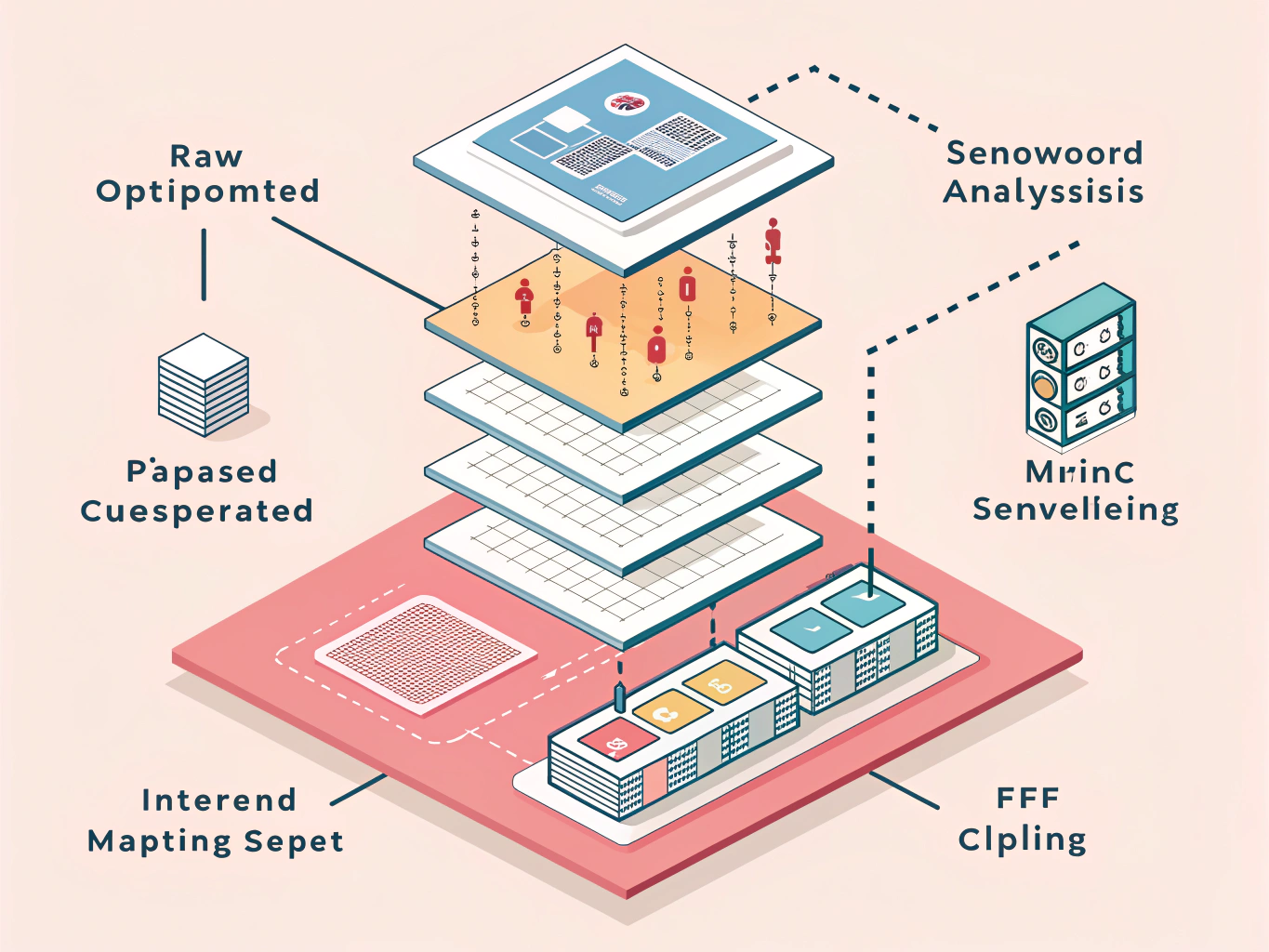
Here's the critical difference between traditional SEO and AI-powered optimization: search engines no longer read your content the way humans do. They don't scan linearly from top to bottom. Instead, AI systems break content into smaller usable pieces through a process called parsing, extracting components like headers, metadata, and body text to analyze independently.
This parsing happens because machine learning models identify patterns across millions of data points simultaneously. Traditional keyword matching was straightforward: include "content optimization tools" and you're relevant. AI systems work differently. They use advanced natural language processing to interpret context and user intent, understanding that someone searching "best tools for SEO" actually wants solutions that save time, not just keyword density metrics.
Natural language processing (NLP) is where semantic analysis happens. The system grasps relationships between concepts, recognizes synonyms, and understands what users actually need. A query about "improving search rankings" connects to content about "visibility" and "discoverability" without exact keyword matches.
Real-time scoring accelerates this process. Modern AI tools provide immediate feedback as you write, scoring your content against search intent, readability, and competitive benchmarks. You're not waiting weeks to see if changes worked; you get actionable signals instantly.
Structured data amplifies everything. Page titles, descriptions, and H1 tags are important signals AI systems use to interpret purpose and scope. Schema markup tells search engines exactly what your content represents, eliminating ambiguity.
The result: content that ranks because it genuinely answers what people are searching for, not because it contains the right keywords in the right density. That's why 2025 demands a dual strategy. You still need SEO fundamentals, but AI-powered optimization ensures your content actually serves user intent.
Real Results: Productivity Gains and Ranking Improvements
The numbers tell a compelling story about why teams are shifting to AI-powered optimization right now.
Statistics from Mailmodo show that AI tools reduce keyword research time by 80%, transforming what once took days into hours. That's not just faster; that's fundamentally different workflow efficiency. Simultaneously, content optimization efficiency improves by 30% on average, meaning your team produces higher-quality output without burnout.
But speed means nothing without results. Here's where conversion rates matter: conversion data from Mailmodo reveals that AI-driven SEO strategies achieve a 14.6% conversion rate, compared to just 1.7% from traditional approaches. That's nearly a 9x improvement. For a company generating 10,000 monthly visitors, this difference translates to roughly 1,290 additional conversions monthly.
Content velocity has shifted dramatically too. User testimonials from Frase document teams confidently producing 3 to 4 optimized posts weekly with competitive knowledge integrated throughout. Without AI assistance, that output typically requires 2 to 3 times longer.
Agencies report even more dramatic changes: faster ranking boosts for their clients, consistent quality across campaigns, and reduced revision cycles. When your content optimization tool understands search intent, competitive positioning, and audience expectations simultaneously, the guesswork disappears.
The ROI calculation is straightforward. Less time on research and optimization, higher conversion rates, more publishable content per week, and faster ranking velocity. In 2025, teams choosing traditional SEO alone aren't just working harder; they're systematically losing ground to competitors using dual search strategies. The productivity gains aren't marginal improvements. They're the difference between sustainable growth and stagnation.
AI Visibility Tracking: Beyond Traditional Rankings
Here's the reality: your content ranking #1 on Google means nothing if it doesn't appear in ChatGPT responses. That's the 2025 visibility problem most companies still haven't solved.
Traditional SEO tools measure what they've always measured: search rankings. But AI visibility operates differently. When someone asks ChatGPT, Perplexity, or Google AI Overviews a question, your content either gets cited or it doesn't. This citation pattern becomes your new ranking metric, and analysis from Neil Patel confirms that AI visibility tools track LLM citations the same way traditional tools monitor search rankings.
The catch? Most marketers are still flying blind here. They don't know where their content appears across AI platforms, which queries trigger citations, or how competitors dominate AI responses.
Platforms like Semrush and Ahrefs have integrated AI visibility metrics into their dashboards, giving you a starting point. But if you need dedicated focus, specialized tools matter. ScrunchAI's platform coverage monitors brand appearances across ChatGPT, Claude, Perplexity, Google AI Overviews, Bing AI, and emerging AI search engines. This granular visibility reveals exactly where your content lands (or doesn't).
Here's what separates leaders from laggards: competitive intelligence across AI platforms. When you see that competitors appear in 40% of AI responses for your target keywords while you appear in 12%, you've found a critical optimization gap. This data drives real strategy, not guesswork.
The difference between traditional rankings and AI citations is profound. A ranking shows visibility to human searchers. An AI citation proves your content is authoritative enough for machines to recommend it. In 2025, you need both metrics working in parallel. Start tracking AI visibility now, before your competitors make it table stakes.
Adoption Trends: What Marketers Are Actually Using
The numbers tell a stark story: adoption statistics from SEO.com show that 47% of marketers are implementing AI SEO tools to improve search efficiency, while 84% are actively using them to identify emerging trends. But here's what should concern you: professional adoption data reveals that 86.07% of SEO professionals have already integrated AI into their strategy.
That's not a future trend. That's your competitors, right now.
The acceleration is real and relentless. A year ago, AI SEO tools were considered nice-to-have. Today, they're becoming table stakes. The primary driver? Automation. 67% of SEOs cite automating repetitive tasks as the key benefit, which means they're freeing up time for strategic work while others remain stuck in manual processes.
Consider the SERP landscape shifting beneath your feet. SERP feature data from Mailmodo shows AI Overviews appeared in 30% of Google search results in January 2025. That's not marginal; that's mainstream. If you're not optimizing content with AI-powered insights, you're essentially ignoring how a third of search results now function.
Early adopters aren't just keeping pace; they're building compounding advantages. They're identifying keyword opportunities faster, understanding search intent deeper, and scaling content production without sacrificing quality. The gap between AI-powered teams and traditional-only teams widens monthly.
The question isn't whether AI tools work. It's whether you can afford to wait any longer to implement them.
Content Optimization Best Practices for AI and Traditional Search
The key to ranking in 2025 isn't choosing between AI optimization and traditional SEO; it's mastering both simultaneously. Here's how.
Structure Your Content for Parsing
Both Google and AI systems struggle with poorly formatted content. Use clear hierarchy: H2 and H3 headers that signal topic progression, bullet points for lists, and short paragraphs (2-3 sentences max). This isn't about aesthetics; it's about machine readability. AI platforms specifically prioritize content with visible structure because it reduces processing errors and improves citation accuracy, according to Frase's content optimization guidelines.
Go Deep on Answers
Comprehensive content consistently outperforms thin pages. Aim for 2000+ words when covering competitive topics, but only if every word serves your reader. Include definitions for technical terms, worked examples, and step-by-step processes. This depth helps AI systems extract accurate answers while satisfying searchers who want complete information.
Embed Data and Attribution
Statistics, research findings, and direct quotations do two things: they build credibility with human readers and make your content citation-worthy for AI systems. Research cited by Search Engine Land shows that including citations, quotations, and statistics boosted source visibility by over 40% in AI responses. Don't just reference data; quote it with attribution.
Implement Schema Markup
Schema markup translates your content's meaning into machine-readable language. Use Article schema for posts, FAQPage schema for Q&A content, and Product schema for reviews. Microsoft's schema recommendations emphasize that structured data helps both search engines and AI understand context, purpose, and relationships between concepts.
The practical result: content that ranks in traditional search, gets cited by AI systems, and actually serves your audience.
Choosing the Right Tool for Your Business
The right AI content optimization tool isn't about picking the most expensive or feature-rich option. It's about matching your actual workflow, budget, and growth stage.
Start with your reality. Solo creators and small teams typically thrive with Surfer SEO or NeuronWriter. Both offer intuitive interfaces, reasonable pricing, and won't require a learning curve that derails your productivity. If you're managing multiple client accounts, automation becomes non-negotiable; Rankability or AirOps handle this complexity without drowning you in manual processes.
Content-heavy operations benefit from Frase, which excels at the dual SEO and content optimization approach that 2025 demands. Enterprise teams scaling across departments should seriously evaluate MarketMuse for building genuine topical authority rather than chasing individual keywords.

Don't skip the trial phase. Budget constraints shouldn't force permanent decisions. Most platforms offer free versions or extended trials; use them to test workflows with your actual content and team. This beats relying on marketing claims or generic reviews.
According to Rankability's tool comparison framework, tool choice ultimately depends on team size, budget, and specific optimization needs with different methodologies. What works for a freelancer fails for an agency; what scales for enterprise doesn't fit startups.
The best tool is the one your team will actually use consistently. Prioritize integration with your existing stack, support quality, and whether the learning curve matches your timeline. Your content strategy deserves a tool that accelerates it, not complicates it.
FAQ: Common Questions About AI Content Optimization Tools
Let's address the elephant in the room: is Google actually okay with AI content?
Yes, but with conditions. Google doesn't ban AI-generated content outright. What matters is quality, accuracy, and whether your content meets E-E-A-T guidelines (expertise, experience, authoritativeness, trustworthiness). SEO.com's guidance on AI content confirms this. The key is human oversight and optimization.
Will AI tools replace my writers?
Not even close. Think of these tools as collaborative partners, not replacements. They handle research, outline generation, and first drafts; your team adds strategy, voice, and fact-checking. The best results come from this hybrid approach, not full automation.
How steep is the learning curve?
Most platforms take 1-2 weeks to master. You'll need time to understand prompt engineering and how to guide the AI toward your brand voice. It's learnable, not rocket science.
What's the price tag?
Options range significantly. Free tiers exist for basic features; mid-tier tools run $50-150/month; enterprise solutions hit $300+/month. Start with free trials to find your fit before committing.
When do I actually see ranking improvements?
Realistic timeline: 4-8 weeks of consistent, optimized content use. SEO isn't instantaneous. You need volume, quality, and time for Google to re-crawl and re-evaluate. Patience pays off here.
The bottom line: AI content optimization tools work when used strategically alongside human expertise. They're not shortcuts; they're accelerators for smarter, faster content production.
Author
FirstSearch.AI Team