Top AI SEO Agency Services You Need in 2026
Why AI SEO Agencies Are Essential in 2026
The search landscape fundamentally shifted. Your customers aren't just Googling anymore; they're asking ChatGPT, consulting Perplexity, and scrolling through AI Overviews. These platforms are increasingly becoming the go-to sources for answers, and if your brand isn't visible there, you're essentially invisible to a growing segment of your audience.
Here's what changed: traditional SEO optimized for rankings on a single platform. You built backlinks, targeted keywords, and climbed Google's results pages. That strategy still matters, but it's no longer sufficient. Today, visibility means appearing across multiple AI-powered search systems simultaneously, each with different indexing methods, ranking signals, and user expectations.
The numbers underscore the urgency. The global AI SEO software tool market is estimated to reach $4.97 billion by 2033 from $1.99 billion in 2024, according to SEO.com. That explosive growth reflects something critical: businesses are scrambling to adapt, and the ones moving fastest will capture the most visibility.

This is where AI SEO agencies become indispensable. They understand how these new platforms work, what content they prioritize, and how to position your brand across this fragmented ecosystem. They're not abandoning traditional SEO; they're extending it. They know the fundamentals still matter, but they also know what comes next.
The real risk isn't experimenting with AI SEO. It's waiting too long to start.
Understanding AI SEO: GEO, AEO, and Beyond
If you're hearing terms like GEO and AEO thrown around in SEO discussions, you're not alone in wondering what they actually mean. Here's the reality: AI SEO is the process of making content discoverable, extractable, and trusted across AI-powered search experiences, according to Search Engine Land. But that umbrella covers some distinct strategies worth understanding.
Generative Engine Optimization (GEO) focuses on getting your content featured in AI-generated summaries and overviews. When ChatGPT or Google's AI Overviews pull information to answer a user's question, GEO is what positions your brand there. It's about being the source the AI system selects as reliable and relevant.
Answer Engine Optimization (AEO) takes a step further by positioning your brand as the preferred answer within LLM responses. While GEO asks "Will my content appear?", AEO asks "Will my content be cited as the authoritative source?" These aren't just semantic differences; they require different content structures and optimization approaches.
The critical point: traditional SEO isn't dead. Concepts like GEO and AEO describe specific behaviors in how AI systems surface content, but they build on foundational SEO principles. Quality content, technical optimization, and authority still matter enormously.
Then there's Search Everywhere Optimization (SEvO), which ensures your visibility spans all search channels simultaneously: traditional search engines, AI overviews, voice search, and emerging platforms. Rather than optimizing for one channel, you're architecting a strategy that works across them all.
The bottom line: AI SEO blends machine learning and natural language processing with classic SEO foundations. You're not choosing between old and new approaches; you're integrating them. An effective AI SEO agency understands both worlds.
Core Services Offered by Top AI SEO Agencies
When you partner with an AI SEO agency, you're investing in services that go far beyond traditional keyword rankings. Here's what separates the best ones from the rest.
Technical SEO as the Foundation
Top agencies start by making your content machine-readable. This means optimizing site architecture, improving crawlability, and ensuring pages load quickly for both users and AI systems. It's foundational work that doesn't grab headlines but determines whether AI engines can even access your content properly.
Schema Markup and Structured Data
This is where things get specific. Schema markup provides AI engines with a roadmap to understand customer Q&As, product specs, and expertise. An AI SEO agency implements the right schema for your industry, whether that's product reviews, FAQs, or local business information. Without it, you're asking AI systems to guess what your content means.
Entity Mapping and Brand Recognition
AI doesn't just read keywords; it recognizes entities. Entity mapping helps AI systems understand and trust your brand information across the web. This involves claiming your business information, building entity relationships, and ensuring consistency across platforms. It's the difference between appearing as a vague result versus a recognized authority.
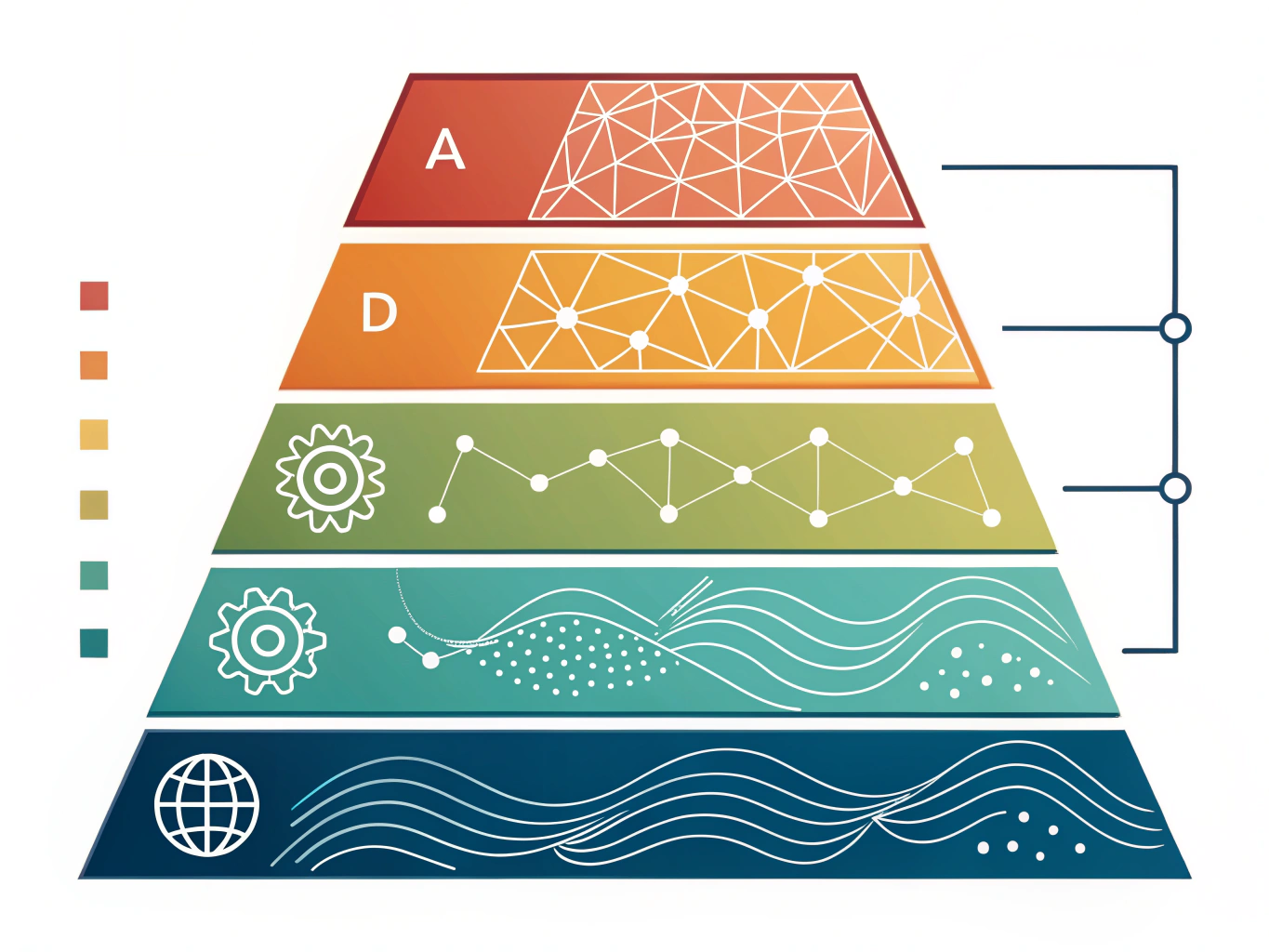
Content Optimization for AI Consumption
Writing for AI is different from writing for traditional search. Agencies optimize for semantic relevance, answer clarity, and contextual depth. This means structuring content to directly answer questions AI agents ask, using natural language patterns that match how people actually search.
Real-Time Monitoring Across Platforms
AI agents now account for roughly 33% of organic search activity and that share is climbing. Top agencies track your visibility not just in Google, but across multiple AI platforms. They monitor performance metrics specific to AI visibility and adjust strategy based on real data.
Automation That Actually Matters
AI-powered tools automate time-consuming tasks like keyword research, content optimization, and link building, freeing your team to focus on strategy and creativity rather than manual busywork.
The Rise of Specialized AI SEO Agencies
The digital marketing world is experiencing a clear divide: traditional agencies that bolted AI onto existing service offerings versus specialized firms built from the ground up around AI-driven SEO. This distinction matters far more than most businesses realize.
Specialized AI SEO agencies emerged precisely because traditional firms couldn't pivot fast enough. While conventional agencies still measure success by traffic metrics and link counts, the new generation focuses on business outcomes. They're obsessed with helping brands appear in AI Overviews, ChatGPT responses, and other AI-powered discovery tools where your traditional rankings mean nothing.
What separates the leaders is proprietary technology. The best agencies invest heavily in custom tools and automation that analyze how AI systems index and rank content. They're not just applying off-the-shelf software; they're building competitive advantages through real-world testing and iteration. This means faster optimization cycles and better results than agencies relying on standard SEO playbooks.
The credibility gap is real too. Top-tier AI SEO agencies back claims with case studies, not promises. They show exactly how their strategies moved the needle on revenue, leads, or conversions. According to Ranko Media, execution quality, earned authority, and real business impact matter more than traffic charts or link counts. This shift from vanity metrics to measurable outcomes defines the modern agency.
Perhaps most importantly, the strongest agencies blend AI capabilities with human strategy. Algorithms identify opportunities; human experts interpret context, audience intent, and brand voice. This hybrid approach beats pure automation every time. When evaluating an AI SEO partner, look for teams that combine technical sophistication with strategic thinking and proven business results, not just traffic increases.
How AI Tools Transform SEO Execution
Modern AI SEO agencies operate through a coordinated suite of tools that automate the repetitive work while amplifying human strategy.
Start with keyword research. Traditional methods meant spending weeks analyzing search volume, competition, and intent. AI tools now process millions of data points in minutes, identifying high-opportunity keywords your competitors haven't noticed yet. Machine learning algorithms go deeper, analyzing user intent patterns and predicting which search trends will gain traction before they spike. This means you're not just chasing current demand; you're positioning for future queries.
Content optimization works differently now too. AI systems scan your pages against search intent, competitor content, and ranking factors, then deliver specific recommendations: add this section, strengthen this angle, optimize this heading. These tools consider both human readers and search algorithms simultaneously, eliminating the false choice between audience experience and technical performance.
Technical audits have shifted from manual crawls to intelligent automation. Alli AI automates technical and on-page SEO optimization for agencies and teams at scale, identifying issues and automatically prioritizing them by impact. Instead of a 200-item audit that overwhelms clients, you get a focused list of high-leverage fixes that move the needle.
Real-time analytics complete the cycle. AI algorithms provide real-time analytics and performance metrics, enabling data-driven optimizations on the fly. Rather than waiting for monthly reports, you're making decisions based on live data, adjusting strategies as performance patterns emerge.
The real power emerges when these tools integrate. Keyword insights feed content strategy. Content performance informs technical priorities. Competitive analysis shapes everything. This interconnected workflow creates efficiency that would require a massive team to replicate manually, making sophisticated SEO accessible to agencies of any size.
Human expertise still matters, but it's now directed toward strategy and creativity rather than spreadsheet work.
Choosing the Right AI SEO Agency for Your Business
Selecting an AI SEO agency requires more scrutiny than traditional SEO hiring. Too many agencies are simply slapping "AI" onto their existing services without fundamental changes to methodology.
Start by demanding proof. Ask for case studies with specific metrics: traffic increases, ranking improvements, conversion lifts. Vague testimonials signal shallow expertise. A credible agency will show you exactly which AI techniques drove results and explain why those tactics worked for your industry.
Test their knowledge depth. Can they articulate the difference between optimizing for traditional search rankings versus AI visibility across ChatGPT, Perplexity, and similar platforms? If they can't explain how AI SEO complements traditional SEO by optimizing for visibility in both classic SERPs and AI-powered environments, they're not equipped to handle modern search.
Check whether they've invested in proprietary tools or simply resell commodity software. Proprietary tools often indicate genuine specialization; reliance on generic platforms suggests they're following a template rather than solving your specific problems.
Ask about their research process. Do they actually study your industry, competitors, and audience behavior, or do they apply the same playbook to every client? The best agencies adapt strategy based on your niche's unique characteristics.
Watch for red flags: promises of guaranteed rankings, vague timelines, refusal to discuss their methodology, or pressure to sign long contracts immediately. Legitimate agencies welcome questions and explain their reasoning.
Pricing typically ranges from $6,000 to $20,000 monthly depending on scope, though this varies by agency size and specialization. Don't assume higher price means better results; instead, evaluate whether the investment aligns with your business goals and their demonstrated expertise.
Finally, prioritize strategic thinking over tool implementation. The agency's value lies in knowing which AI techniques matter for your business, not just knowing how to use tools. Your success depends on their judgment, not their software.
Real Results: What AI SEO Agencies Can Achieve
The numbers tell a compelling story. Companies implementing AI-driven SEO strategies report organic traffic increases of up to 45%, with e-commerce sites seeing conversion rate improvements around 38%. More tellingly, 83% of SEO professionals at large organizations report improved performance after adopting AI tools. These aren't outliers; they're becoming the baseline expectation.
But here's what matters more than the statistics: what those gains actually mean for your business. When an AI SEO agency optimizes your strategy, your team stops drowning in repetitive tasks. Instead of manually analyzing keyword clusters or auditing hundreds of pages, your people focus on creative strategy, content direction, and competitive positioning. That shift alone changes how your organization approaches SEO.

That said, realistic expectations matter. Results depend heavily on your starting point, industry complexity, and implementation quality. A comprehensive AI-powered strategy typically shows measurable improvements within three to six months, with gains compounding as the system learns and adapts. A struggling site might see faster relative gains; an already-optimized one requires more nuanced work.
The real value isn't just the traffic spike. It's sustainable growth built on a foundation that adapts as search behavior and algorithms evolve. That's what separates genuine progress from temporary wins.
The Future of AI SEO: What's Coming in 2026 and Beyond
The SEO world is shifting faster than most realize. AI agents now account for roughly 33% of organic search activity and that share is climbing, fundamentally changing how visibility works. This isn't a minor update; it's a structural change in how people find information.
By 2027, expect optimization disciplines like Generative Engine Optimization (GEO) and Answer Engine Optimization (AEO) to mature beyond their current experimental phase. These aren't replacements for traditional SEO; they're extensions of it. The agencies winning right now are treating them as parallel strategies that coexist with conventional ranking tactics.
Multilingual content generation and AI chatbots will become standard practice rather than competitive advantages. AI SEO forecasts predict widespread integration including AI chatbots for customer service and multilingual content generation by 2027. This means your content strategy needs to account for automated responses, conversational queries, and audiences expecting instant answers across multiple languages.
Here's what matters most: the line between traditional SEO and AI SEO will continue blurring. You won't choose one or the other; you'll manage both simultaneously. Keywords still matter. Site speed still matters. User experience still matters. But now you're also optimizing for how AI agents interpret your content, how chatbots surface your answers, and how generative platforms cite your information.
Top AI SEO agencies understand this hybrid reality. They're not abandoning proven fundamentals; they're layering AI-native strategies on top of them. The agencies that stay ahead of these trends deliver measurable results because they recognize that 2026 isn't about choosing between old and new. It's about mastering both.
Common Mistakes Businesses Make with AI SEO
Many businesses rush into AI SEO without understanding what they're actually buying. Here are the pitfalls that derail even well-intentioned efforts.
Over-automating content creation is the biggest mistake. AI can generate hundreds of pages quickly, but generic, formulaic content tanks engagement and rankings. Search engines reward depth and originality; machines alone can't deliver that consistently.
Abandoning SEO fundamentals for shiny AI tools is equally dangerous. Keyword research, site structure, mobile optimization, and link quality still matter enormously. AI amplifies good strategy; it doesn't replace it. You'll waste resources chasing algorithmic trends while your foundation crumbles.
Expecting overnight results sets you up for disappointment. AI accelerates optimization, but rankings take time to shift. According to research, 56% of marketers are already using generative AI for SEO, yet many abandon their efforts after weeks because they misunderstood the timeline.
Hiring based on buzzwords is costly. Agencies that lead with "AI-powered" and "machine learning" without discussing your specific goals or showing case studies are selling hype, not strategy. Ask for concrete results: traffic increases, keyword rankings, conversion improvements.
The reality: AI is a powerful tool, not a replacement for human judgment. The best AI SEO agencies combine automation's efficiency with strategic thinking and creative optimization. They use AI to analyze data faster, identify opportunities, and scale efforts; then apply human expertise to execute meaningfully.
Success comes from balancing both.
Getting Started with an AI SEO Agency
The transition to AI-powered SEO doesn't require a complete overhaul overnight. Instead, structure your partnership strategically.
Begin with a comprehensive audit. A quality AI SEO agency will assess your current visibility across search, identify content gaps, and benchmark performance against competitors. This foundation clarifies what's working and what needs immediate attention.
Next, establish measurable goals before engagement begins. Are you targeting organic traffic growth, improved rankings for high-intent keywords, or better conversion rates? Clear KPIs prevent misalignment and make success tangible. According to research, 82% of enterprise SEO specialists plan to invest more in AI, signaling that this shift is no longer optional for competitive industries.
Consider starting with a pilot program. A three-to-six-month engagement lets you evaluate the agency's approach, communication style, and actual results before committing long-term. This reduces risk and builds confidence in the partnership.
Establish regular reporting cadences. Monthly strategy reviews and transparent dashboards keep both parties aligned as priorities evolve. AI search continues shifting rapidly, so your optimization strategy must adapt accordingly.
The reality is simple: competitors are already moving. Businesses leveraging AI gain competitive advantages from higher visibility and engagement to improved productivity and potential revenue growth. Waiting another year means falling further behind in search visibility.
Your next step is straightforward. Reach out to an AI SEO agency for an initial consultation this week. The cost of inaction exceeds the investment in adaptation.
FirstSearch
FirstSearch.AI Team