Transition Words for SEO: The Complete 2026 Guide
What Are Transition Words and Why Do They Matter for SEO?
Transition words are the connectors that link ideas together, showing relationships between sentences and paragraphs. They're the "hereafters," "therefores," and "in additions" that guide readers smoothly from one thought to the next. But here's what most content creators get wrong: they treat transition words as optional polish rather than structural necessity.
The reality is urgent. While transition words aren't a direct ranking factor, Google rewards content that's easy to read and understand. When your content flows logically with clear connectors between ideas, users stay longer, scroll deeper, and engage more meaningfully. Those engagement signals matter to search algorithms.

Consider the difference: "The algorithm changed. Rankings shifted." versus "Because the algorithm changed, rankings shifted." The second version shows causality. It answers the unspoken "why" that readers unconsciously seek.
According to research from Yoast, transition words enhance readability by clarifying relationships between phrases and paragraphs, making text flow smoothly. This isn't about sounding fancy. It's about being understood.
Most content strategies overlook this gap entirely. They optimize for keywords and backlinks but ignore the connective tissue that determines whether readers actually absorb the message. That's the opening you need to exploit. Strategic use of transition words separates content that ranks from content that converts.
How Transition Words Impact Your SEO Rankings
Transition words don't directly rank your content, but they create a cascade of user experience signals that Google takes seriously. Here's how the mechanism works.
When readers encounter well-organized content with clear transitions, they stay longer. The more readable your content is, the more engaging people are likely to find it, which means visitors may spend more time on your website, a metric search engines take into consideration when determining rankings. This increased time-on-page signals that your content actually answers what people searched for, not just that it exists.
Bounce rate drops when transitions guide readers smoothly from one idea to the next. Instead of hitting a wall of text and leaving confused, visitors follow your logic. That behavioral signal matters because it indicates content quality to Google's ranking algorithm.
Readability itself has become a quality indicator. If content is easy to read with ample headings, subheadings, lists, and transition words, search engines are much more likely to reward you as your content demonstrates higher quality. This isn't speculation; it's how modern SEO evaluation works.
Beyond metrics, transition words demonstrate expertise. Phrases like "this research suggests" or "conversely" show you're thinking critically, not just listing facts. Well-organized content that connects ideas logically signals authority to both users and search engines.
The takeaway: transition words are an indirect ranking factor working through user experience. They keep people on your page, reduce friction, and signal that your content deserves visibility. That's why they belong in your content optimization strategy alongside keyword research and technical SEO fundamentals.
The 30% Rule: Yoast SEO and Transition Word Benchmarks
Yoast SEO's 30% benchmark is one of the most misunderstood metrics in content optimization. Here's what it actually means: Yoast recommends including transition words in at least 30% of your sentences, which translates to roughly 1 in every 3 sentences.
The math is straightforward. If your article has 30 sentences, aim for transition words in approximately 9 of them. This isn't arbitrary. The percentage exists to strike a balance: enough transitions to guide readers through your logic without creating the stilted, over-connective prose that screams "SEO content."
When you run your article through Yoast SEO, the plugin displays a traffic light system. Green means you've hit the 30% sweet spot. Orange signals you're close but need adjustment. Red indicates you're either under-utilizing transitions or, occasionally, overdoing them.
Here's the critical part: this is a readability guideline, not a ranking algorithm. Google doesn't penalize you for having 28% instead of 30%. What matters is that transition words improve content flow and user experience, which Google does value. When used appropriately, they help readers understand how ideas connect, reducing bounce rates and increasing time on page.
Other SEO tools like NEURONwriter evaluate transition word usage similarly, though they may set slightly different thresholds. The underlying principle remains consistent: strategic transitions enhance readability.
Think of the 30% rule as a guardrail, not a finish line. Some topics naturally require more transitions; others fewer. Your goal is ensuring your content flows logically, and the percentage benchmark helps you stay honest about whether you're actually guiding readers or just hoping they follow along.
10 Types of Transition Words Every Content Creator Should Know
Understanding the different categories of transition words gives you a framework for strengthening your content's flow and SEO performance. Here are the ten types you need in your writing toolkit.
Addition transitions expand your ideas by introducing supporting information. Use words like "and," "furthermore," "in addition," "also," "what's more," and "next" when you're building on a point rather than changing direction.
Contrast transitions highlight differences or unexpected shifts. Words such as "however," "but," "yet," "conversely," "on the other hand," and "instead" signal that you're presenting opposing information. These create narrative tension that keeps readers engaged.
Cause and effect transitions show the relationship between events and outcomes. Terms like "therefore," "thus," "so," "as a result," "because," "consequently," and "given that" establish logical connections that help search engines understand your content's structure.
Time transitions establish chronological order and sequence. Words including "first," "then," "meanwhile," "later," "finally," and "while" help readers follow your narrative timeline.
Illustration transitions introduce examples and evidence. "For example," "such as," "specifically," and "to illustrate" signal that concrete proof follows. This is where your credibility builds.
Emphasis transitions highlight critical points. Use "importantly," "notably," "significantly," and "in fact" when you want readers to pay special attention to a statement.
Comparison transitions show similarities between concepts. Words like "similarly," "likewise," "in the same way," and "both" help readers draw parallels between ideas.
Conclusion transitions wrap up your arguments. "In conclusion," "ultimately," "in summary," and "as a result" signal that you're moving toward closure.
Clarification transitions rephrase and simplify complex ideas. Try "in other words," "that is," "put simply," and "to clarify" when you need to restate something for absolute clarity.
Spatial transitions describe location and position within your content. Words such as "above," "below," "beside," "in front of," and "throughout" orient readers within your text.
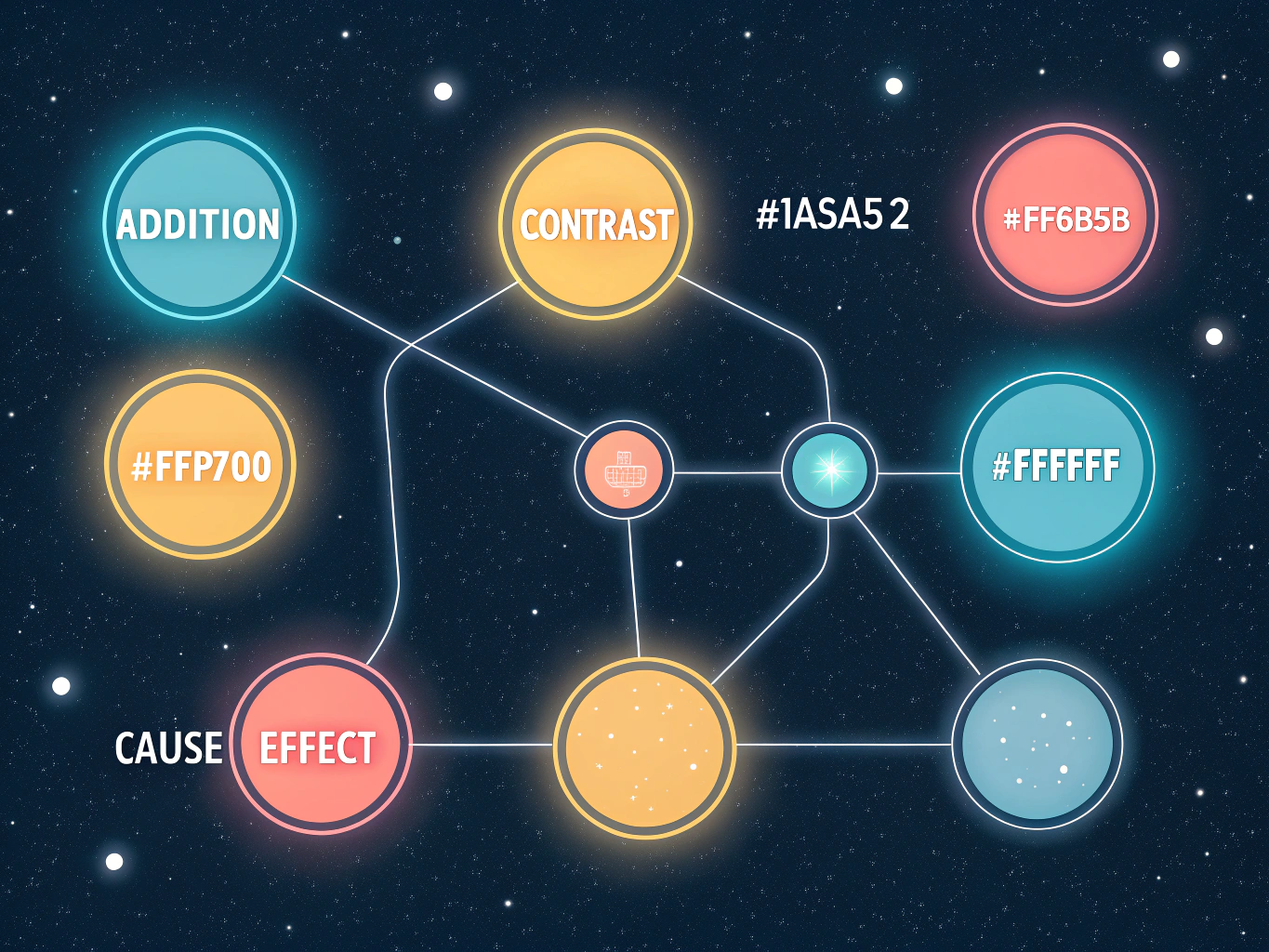
The key is matching each transition to your specific message. Transition words should reflect the actual logic of the relationship you're emphasizing, since each carries different meanings and nuances. Strategic placement of these categories throughout your content improves readability, helps search engines parse your content structure, and keeps your audience moving through your argument without friction.
Real Examples: Before and After Transition Words
Without transition words, even solid content reads like a disconnected list of statements:
Without transitions: "SEO requires keyword research. You need quality backlinks. Content length matters. User experience impacts rankings. Mobile optimization is critical."
Each sentence stands alone. Readers work harder to understand how these ideas connect. The argument feels fragmented.
With transitions: "SEO requires keyword research. Additionally, you need quality backlinks. Beyond that, content length matters. However, user experience impacts rankings even more significantly. Finally, mobile optimization is critical."
Suddenly, the relationship between ideas becomes clear. Readers follow your logic without friction.
Here's a real-world example from the SaaS industry:
Without transitions: "Our platform reduces manual reporting by 40%. Teams spend less time on data entry. Analysts focus on strategic insights instead. Revenue attribution becomes more accurate."
With transitions: "Our platform reduces manual reporting by 40%. As a result, teams spend less time on data entry. Consequently, analysts focus on strategic insights instead. This means revenue attribution becomes more accurate."
The second version tells a story. It shows cause and effect. Readers understand why each point matters.
Text without transition words is harder to read because the relationships between ideas aren't immediately clear, while adding transition words throughout content improves readability significantly. This matters for SEO because Google's algorithms favor content that satisfies user intent. When readers stay engaged longer and scroll deeper into your content, engagement metrics improve. Better engagement signals to search engines that your content delivers value.
The pattern holds across industries: e-commerce, healthcare, finance, B2B. Transitions aren't optional polish. They're structural elements that make arguments land harder and rank better.
Common Mistakes Writers Make with Transition Words
Most writers fall into predictable traps with transition words, and the good news is they're all fixable.
The Overuse Problem
Cramming a transition into every sentence creates bloated, unnatural prose. "However, this approach has merit. Furthermore, it saves time. Moreover, it improves efficiency." See how exhausting that reads? While transitions improve readability, excessive use can make writing seem forced; use them strategically rather than inserting them in every sentence. The fix: use transitions only when the logical relationship between ideas isn't obvious. Sometimes a period works better than "Additionally."
Wrong Transition, Wrong Message
Each transition word has a different meaning, so it's important to choose one that's appropriate for the context; using an incorrect transition might confuse your reader. Using "therefore" when you mean "however" undermines your argument's credibility. Before selecting any transition, ask yourself: what relationship am I actually showing? Cause-and-effect? Contrast? Addition? Match the word to the logic, not the opposite.
Tone Mismatch
Choosing a transition word that doesn't fit your tone can make your writing feel too formal or too casual. "Thus" belongs in academic writing; "basically" belongs in conversational content. Your transition should feel like a natural extension of your voice, not a jarring shift.
Placement Matters
Awkwardly placed transitions disrupt flow. "This approach, however, has drawbacks" reads better than "However, this approach has drawbacks" in many contexts. Position your transition where it creates momentum, not where it interrupts the sentence's natural rhythm.
The solution: write first, then add transitions where clarity genuinely needs them. Your best writing won't feel like it's trying too hard.
How to Naturally Incorporate Transition Words Into Your Content Strategy
The best time to weave transition words into your content is during the drafting process, not as an afterthought. When you're writing naturally and thinking through your argument, transitions emerge organically. You're already connecting ideas in your head; putting them on the page is just making that process visible.
That said, don't obsess over perfection on the first pass. Write your draft, then return to it with fresh eyes during editing. This is when you'll catch awkward placements, repetitive transitions, or spots where readers might lose the thread. Read your work aloud at this stage. You'll immediately hear where transitions feel forced versus where they guide readers smoothly through your logic.
Build a personal transition toolkit tailored to your voice. Not every writer needs to sound the same. If you naturally lean toward conversational writing, "here's the thing" works better than "furthermore." If your audience expects formal analysis, "in contrast" serves you better than "but here's the deal." The key is matching transitions to both your tone and your readers' expectations.
Different content types require different transition densities too. A technical guide needs more frequent signposting than a narrative blog post. A listicle benefits from clear structural transitions between points. An opinion piece might use fewer transitions but make them count more.
Tools like Yoast can identify readability gaps and flag sections lacking adequate transitions. Use these insights, but don't let them override your judgment. You're aiming for a balance between optimization and authenticity.
Remember, transition words reduce bounce rates by guiding readers through your content smoothly, encouraging them to stick around longer. That's your real win. Transitions aren't about hitting an arbitrary keyword count; they're about making your ideas feel inevitable, connected, and worth following to the end.
Transition Words for Different Content Types and Audiences
Here's the reality: your transition word strategy should shift based on what you're writing and who's reading it.
Blog posts thrive on conversational transitions. Phrases like "here's the thing," "consider this," and "by the way" feel natural to casual readers and keep them engaged. You're building rapport, so accessible language wins.
Technical documentation demands precision. Words like "consequently," "therefore," and "as a result" establish clear logical relationships between complex ideas. Your audience needs to follow exact sequences, so ambiguity kills comprehension.
E-commerce product pages require scannable, benefit-focused transitions. Short connectors like "plus," "also," and "best of all" guide readers through features while maintaining urgency. You're not explaining concepts; you're stacking reasons to buy.
Email marketing operates on brevity and action. Transitions here are often implicit or minimal. "Now," "next," and "ready?" push subscribers toward CTAs without friction. Every word competes for attention in crowded inboxes.
Academic writing expects formality. Sophisticated transitions like "furthermore," "notwithstanding," and "in contrast" signal credibility and nuance to educated audiences. Your tone reflects your subject matter's complexity.
Social media demands punchy simplicity. "But," "and," "so" work best. Your audience scrolls rapidly, so ornate transitions lose them instantly.
The key variable is audience expertise. Beginners need accessible, explanatory transitions that hold their hand. Professionals expect efficient, precise connectors that assume baseline knowledge. Casual readers want personality in their transitions.
Don't apply the same transition vocabulary across all content types. Match your transitions to your medium and your reader's expectations. That alignment is what actually moves rankings and engagement.
Tools and Resources to Master Transition Words in 2026
The right tools can transform how you approach transition words, but they work best when paired with human judgment.
Yoast SEO remains the industry standard for readability feedback. The plugin analyzes your text and flags the percentage of sentences containing transition words, giving you immediate visibility into whether your content flows naturally or feels choppy. It's especially useful for identifying paragraphs that need connective tissue.
Grammarly takes a different approach by suggesting fresh transitions in real time. Rather than just flagging weak connections, it proposes alternatives that match your tone and context. This is particularly valuable when you're rewriting sections and need quick, contextually appropriate suggestions.
NEURONwriter and similar AI-powered platforms analyze your entire content strategy, including transition word density relative to your competitors. This competitive lens helps you understand whether your transitions align with what top-ranking pages actually use. As we move toward 2026, search engines are placing increasing emphasis on user experience and readability, making this data-driven approach more relevant than ever.
Here's the critical point: these tools should guide your decisions, not make them for you. Over-reliance on automation can produce awkward, formulaic writing that readers immediately sense. Your editorial instinct matters more than any readability score.
The winning formula combines tool insights with manual review. Run your draft through Yoast or Grammarly, note their suggestions, then read your content aloud. Does it flow? Does each transition feel earned, or forced? Does it match your brand voice?
AI writing assistants are improving at generating natural transitions, but they still occasionally miss the mark on nuance. A quick human pass catches these moments and preserves authenticity. For comprehensive content audits, consider reviewing your entire body of work to identify patterns in transition usage across your site. This holistic view reveals opportunities that single-piece tools might miss.
Key Takeaways: Your Transition Words Action Plan for 2026
Transition words aren't a silver bullet, but they're closer than most SEO tactics get. You've now seen how these connective phrases improve readability, reduce bounce rates, and signal content structure to search engines. The data is clear: they work.
Here's your action plan for 2026:
Audit your existing content. Pull your top 20 performing pages and score them on transition word density. Aim for roughly 30% of sentences containing transitions, but prioritize natural placement over hitting a specific number. Choppy writing that forces transitions will backfire.
Implement transitions in all new content from day one. Make it a checkbox in your editorial process, not an afterthought. Train your team on the difference between effective connectors and obvious filler.
Measure what matters. Track bounce rate changes, average time on page, and scroll depth before and after optimization. These metrics reveal whether your transitions are actually keeping readers engaged or just cluttering your copy.
Test and refine ruthlessly. Some audience segments respond better to certain transition patterns. Monitor your data, identify what resonates, and double down on it.

Start today. Your rankings will thank you.
FirstSearch
FirstSearch.AI Team