Ultimate Guide to AI SEO Tools in 2026
Why AI SEO Tools Matter Now More Than Ever
The search landscape you've known for two decades just split in two. Google still dominates with 90% market share, but that's no longer the complete picture. ChatGPT alone gets over 5 billion monthly visits, making it the fourth most visited website globally. Perplexity, Gemini, and other AI search engines are pulling billions more queries away from traditional search results every month.
This isn't hype. It's a structural shift in how people find information.
Your competitors are already optimizing for both. They're not choosing between traditional SEO and AI visibility; they're building strategies that win in both ecosystems. The companies ignoring this dual-channel reality are leaving traffic and revenue on the table.
The numbers prove the urgency. The AI SEO tools market will grow from $1.2 billion in 2024 to $4.5 billion by 2033, with a compound annual growth rate of 15.2%. That explosive growth reflects a hard reality: marketers who want measurable ROI need AI SEO tools now, not in three years when adoption becomes universal.
What makes this moment different from previous SEO shifts is the speed of change and the simultaneous optimization requirements. You can't just add AI visibility as an afterthought. Your content strategy, keyword research, technical infrastructure, and analytics need to account for how AI engines discover, evaluate, and rank information differently than Google does.
The tools exist. The ROI data is clear. The question isn't whether to invest in AI SEO tools. It's how quickly you can implement them before your slower-moving competitors catch up.
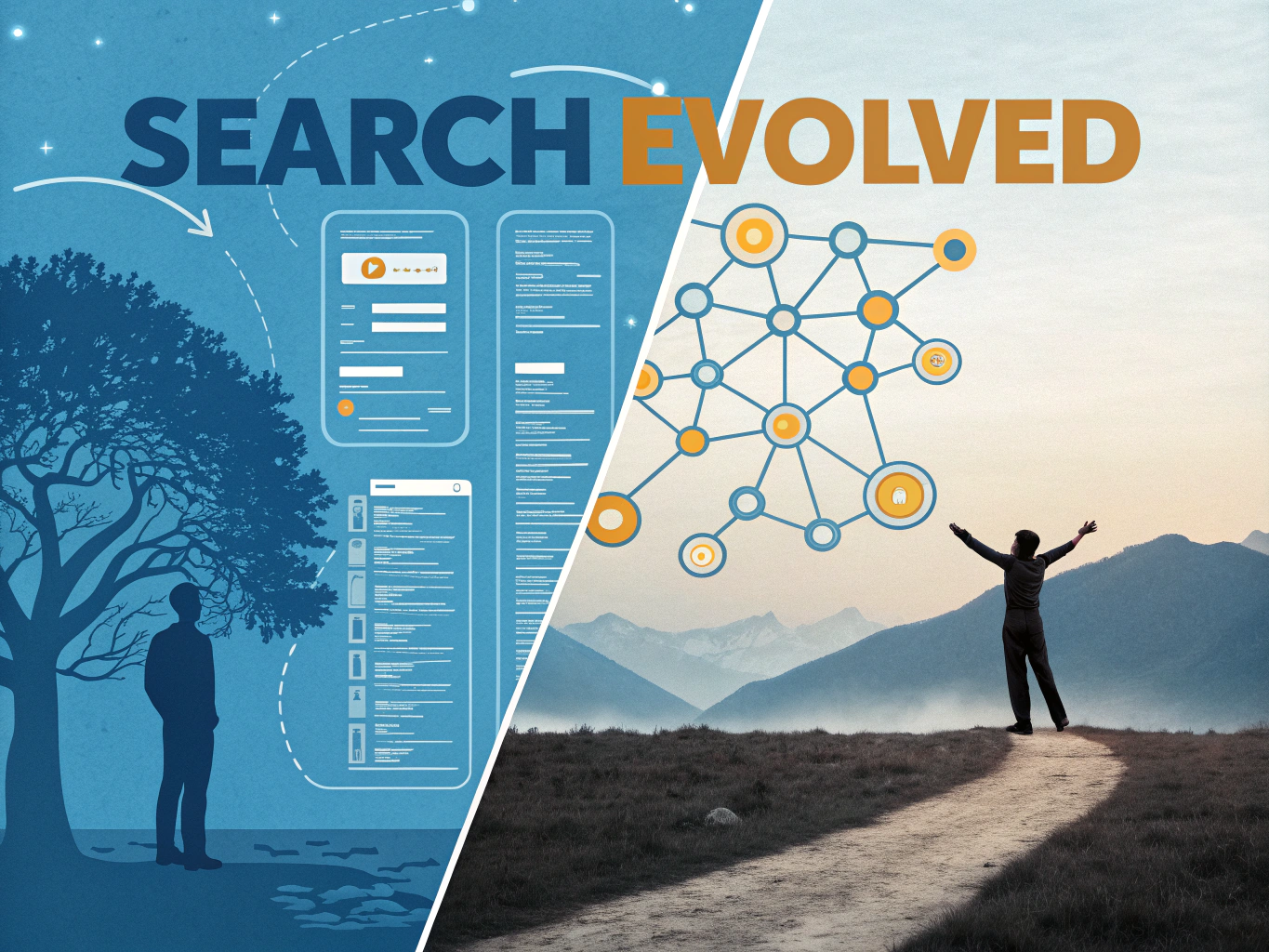
SEO vs. AI Search: Understanding the New Battleground
The traditional SEO playbook you've relied on for years is still relevant, but it's no longer sufficient. Here's the critical distinction: Google SEO optimizes for ranking position in blue link results, while AI search optimization focuses on being cited and recommended within AI-generated answers. These are fundamentally different challenges requiring different approaches.
When you ask ChatGPT or Perplexity a question, these platforms don't crawl the entire internet fresh. Instead, Perplexity.ai matches Google's top 10 domains in over 91% of cases, meaning they're pulling from Google's existing winners. But here's where it gets interesting: AI engines prioritize different content characteristics than Google does. They favor comprehensiveness, cited sources, original research, and demonstrable expertise. A page ranking fifth on Google might become a top citation in an AI answer if it's more thorough or trustworthy.
This has spawned two emerging disciplines. Generative Engine Optimization (GEO) refers to the broader strategy of optimizing for AI visibility, while Answer Engine Optimization (AEO) focuses specifically on getting cited in AI-generated responses. These aren't replacements for SEO; they're expansions of it.
The mistake many marketers make is treating this as an either/or decision. It's not. Experts note that in 2026, brand visibility in AI search will hinge on trust, earned media, and being cited as a credible source. The brands winning at both are those optimizing simultaneously.
Your content needs to rank well enough on Google to get into those top results that AI engines scan. But it also needs to be the kind of content AI systems actually want to cite: well-researched, clearly structured, original, and authoritative. This means your traditional SEO efforts create the foundation, while your GEO strategy ensures you're visible and valuable within AI-generated answers.
The battleground isn't SEO versus AI search. It's mastering both.
The Top AI SEO Tools Landscape in 2026
The AI SEO tool market has fragmented into specialized categories, and that's actually good news. Rather than forcing one platform to do everything poorly, smart teams now pick 2-3 focused tools that excel at specific jobs.
Keyword Research and Competitive Intelligence remains dominated by enterprise players. Semrush and Ahrefs offer broad suites with AI-assisted keyword clustering, intent analysis, and competitor tracking. They're powerful but come with a learning curve and price tags that start around $120-200 monthly. For teams under 10 people, the feature abundance often creates decision paralysis rather than speed.
Content Optimization tools have found their niche. Surfer SEO and Frase use AI to analyze top-ranking pages and suggest structural improvements, keyword placement, and content gaps. These typically run $99-150 monthly and integrate directly into your writing workflow. They're not replacements for skilled writers, but they eliminate guesswork about what Google's actually rewarding in your target queries.
Technical SEO Audits still lean on traditional crawlers like Screaming Frog, but AI now handles triage and prioritization. The newest additions use machine learning to identify which technical issues actually impact rankings versus those that are theoretical problems. This filtering matters when you're managing enterprise sites with thousands of issues.
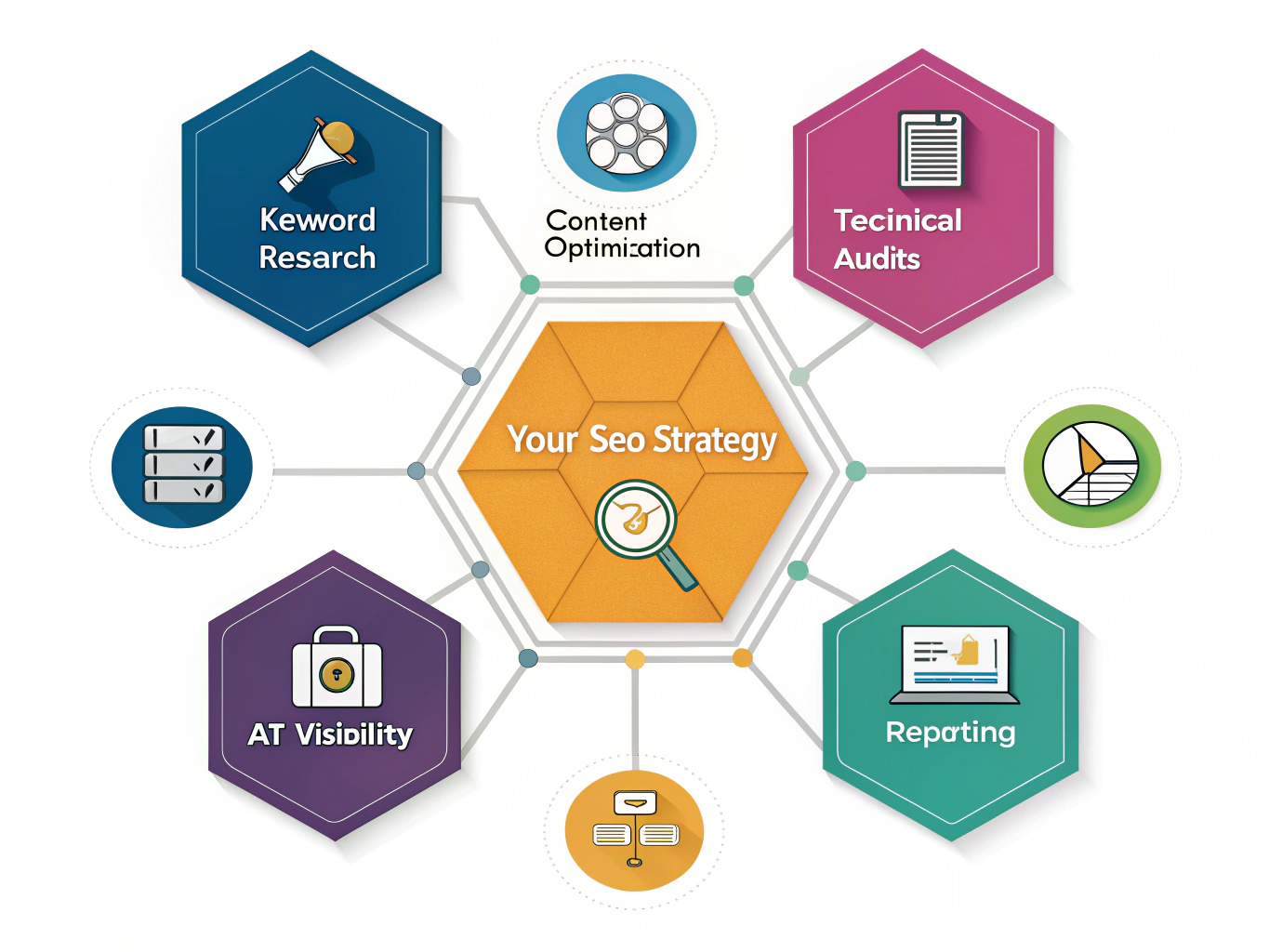
AI Visibility Tracking represents the real 2026 shift. Tools like RankScale and Scrunch AI focus exclusively on tracking where your content appears in AI-generated results, separate from traditional rankings. These emerging platforms typically cost $50-200 monthly and fill a gap that traditional SEO tools ignore.
The honest truth: no single platform wins across all categories. Semrush offers breadth; Surfer excels at content workflow; specialized AI visibility tools solve a problem traditional SEO software doesn't. Your stack should reflect your actual bottleneck. A content-heavy agency might prioritize Surfer plus Semrush. A technical-heavy operation might combine Screaming Frog with Semrush's audit features.
Budget $300-500 monthly for a solid three-tool stack. More than that, and you're likely paying for duplicate capabilities.
Best AI SEO Tools for Content Creation and Optimization
The content creation tools available today fall into two camps: those that speed up your workflow, and those that actually move the needle on rankings.
Semrush Copilot automates content audits and optimization across multiple sites, which matters if you're managing more than a handful of properties. You feed it your content, it flags optimization gaps, and suggests improvements based on your target keywords. Agencies lean on this because manual audits don't scale.
Surfer SEO takes a different approach. Its Content Editor works in real-time while you write, pulling live SERP data to guide your keyword placement, heading structure, and content length. Marketers consistently report 30% organic traffic increases after implementing Surfer's recommendations, though the results depend heavily on starting point and competitive landscape. The tool doesn't write for you; it coaches you through optimization as you go.
Frase introduces something genuinely useful: dual optimization. Platforms like Frase enable optimization for both Google rankings and AI citation simultaneously. This matters more each quarter as AI search grows. You're not just optimizing for traditional rankings anymore; you're structuring content so AI systems cite you as a source. That's a real competitive advantage.
For teams handling high-volume keyword research and outline generation, Koala AI and SEOpital handle the grunt work. They cluster keywords intelligently and generate structural outlines that save hours of planning. Neither produces publication-ready content, but they eliminate the blank page problem.
Here's what separates the winners from the disappointing experiments: human review is non-negotiable. AI-generated content that ships without editing won't perform. It needs your voice, your expertise, your fact-checking. The best teams use these tools as force multipliers, not replacements.
Start with what your workflow needs most. If you're drowning in optimization tasks, Semrush or Surfer. If you need volume with structure, Koala. The wrong tool choice wastes money; the right one genuinely saves time without compromising quality.
AI Visibility Tracking: Measuring What Matters in 2026
Here's the thing: if you're still measuring SEO success purely by Google rankings, you're flying blind in 2026. Your content might rank beautifully on the SERP while completely missing from AI-generated answers where your customers actually get information.
This is where AI visibility tracking becomes non-negotiable. Brand visibility in AI search will hinge on trust, earned media, and being cited as a credible source, which means you need metrics designed specifically for this new reality.
Enter four metrics that actually matter:
AI Presence Rate measures how often your brand appears in AI-generated answers across ChatGPT, Perplexity, Gemini, and Claude. High presence means your content is relevant enough for AI systems to surface it. Citation Authority tracks whether you're merely mentioned or positioned as the primary authoritative source. There's a massive difference. Share of AI Conversation reveals your slice of the total AI-generated content discussing your industry or topic. And Prompt Effectiveness evaluates how well your content answers natural language queries that people actually type into AI tools.
Tools like Semrush AI Visibility Toolkit, RankScale, Scrunch AI, and Profound have made tracking these metrics accessible without requiring a data science team. They automate monitoring across multiple AI platforms and surface actionable patterns.
Setting this up properly means tracking your top 50-100 keywords across all major AI search platforms, not just Google. It means establishing baseline metrics now so you can measure improvement over time. Early movers gain a genuine competitive advantage before this becomes table stakes.
The principle remains unchanged from traditional SEO: you can't improve what you don't measure. The metrics have just evolved. Tools make implementation straightforward. What separates winners from everyone else is actually using this data to inform content strategy, not just collecting dashboards for meetings.
The ROI Reality Check: What Actually Works vs. Hype
Let's be honest: the AI SEO tools market is experiencing a credibility crisis.
Enterprise companies that invested heavily in AI SEO solutions during 2024-2025 are now asking harder questions. Practitioners observe that the ROI simply wasn't there for many implementations. Data shows that 60% of businesses haven't seen any measurable impact to their website traffic from AI-assisted search yet. That's not a feature limitation; that's a fundamental gap between marketing promises and business results.
The problem isn't that AI SEO tools are useless. It's that there's more perceived value than actual value in many offerings right now. Too many platforms try to do everything: keyword research, content generation, technical audits, rank tracking, competitor analysis. The result? They do most things adequately and nothing exceptionally well.
Here's what separates tools that deliver from those collecting dust in your martech stack: they solve specific workflow problems with measurable outcomes. A tool that reduces content production time by 30% while maintaining quality has clear ROI. One that promises to "automate your entire SEO strategy" deserves skepticism.
Decision makers are demanding proof before renewals. They're asking for concrete metrics: traffic increases, conversion improvements, time saved by team members, cost per qualified lead. Vanity metrics like "AI-generated suggestions" no longer cut it.
The winners in 2026 are specialists, not generalists. A focused tool that excels at one critical task outperforms a bloated platform trying to handle ten. Whether it's technical SEO audits, content optimization, or backlink analysis, depth beats breadth.
Before investing in any AI SEO tool, ask yourself: What specific problem does this solve? How will we measure success? What happens when the vendor hype fades? If you can't answer those questions clearly, you're not ready to buy. And honestly, that skepticism is exactly what you should bring to the table.
Optimizing for AI Search: Content Requirements That Actually Work
AI search platforms have fundamentally changed what "good content" means. While traditional SEO rewards keyword density and meta optimization, AI systems evaluate content on depth, clarity, and verifiability.
Here's what actually moves the needle:
Go Deep on Fundamentals
Research shows that AI platforms prioritize comprehensive content, typically 2000+ words, because it signals thorough coverage. This isn't about padding; it's about answering every logical follow-up question your reader might ask. When you explain a concept, define it immediately. When you make a claim, back it with data. AI systems parse this distinction and reward completeness.
Structure for Machine Understanding
AI doesn't just read your words; it maps your content architecture. Use clear header hierarchies (H2s for main topics, H3s for subtopics), bullet points for lists, and dedicated Q&A sections. This formatting helps AI systems extract, understand, and cite specific passages. Studies indicate that roughly 92% of AI Mode answers show sidebars with about 7 links, suggesting the algorithm actively searches for well-organized, authoritative sources.
Data Builds Credibility
Include original research, statistics, and case studies. Don't just claim something works; show the numbers. AI systems detect the difference between opinion and evidence, and they favor the latter. This directly impacts whether your content gets cited.
E-E-A-T Still Dominates
Experience, Expertise, Authoritativeness, and Trustworthiness matter more now, not less. AI platforms use sophisticated credibility detection. Include author bios with relevant credentials, cite your sources, and maintain consistent accuracy. One factual error can tank your authority score across multiple topics.
The counterintuitive truth: optimizing for AI search actually makes your content better for humans. You're forced to be thorough, structured, and honest. That's a win regardless of which algorithm ranks you.
Building Your AI SEO Tool Stack: Strategic Selection by Business Size
The right AI SEO tool stack isn't about collecting every shiny platform available. It's about matching your actual resources, team size, and business goals to tools that deliver measurable returns without creating administrative chaos.
Solo marketers and freelancers should start with a single comprehensive platform like SEMrush or Ahrefs. These handle keyword research, competitor analysis, content optimization, and rank tracking in one place. Budget roughly $100-200 monthly. Once you're comfortable (after 4-6 weeks), layer in a content-focused tool like Jasper or Copy.ai for faster draft generation. Total stack: two tools, under $300/month, manageable workflow.
Small businesses (5-15 people) benefit from splitting responsibilities. Keep your primary research tool (SEMrush, Ahrefs, or the more affordable Semrush Essentials tier), add a dedicated content optimization tool (MarketMuse or Surfer), and integrate a workflow platform like Zapier to connect everything. Research shows SMBs should prioritize affordability, speed, and content creation integration. Budget: $300-600 monthly. Implementation takes 2-4 weeks; expect meaningful data after 4-6 weeks and ranking improvements within 3-6 months.
Agencies managing multiple clients need enterprise-grade tools with white-label capabilities, client reporting automation, and robust API integrations. Invest in a primary platform (Moz Pro, Conductor, or SE Ranking for agencies) plus specialized tools for content, technical audits, and rank tracking. Budget: $800-2,000+ monthly depending on client volume. The setup complexity is worth it; your ROI comes from scaling client deliverables without proportionally scaling labor.
Enterprise organizations require compliance features, SSO integration, audit trails, and dedicated support. Tools like Conductor or Siteimprove aren't cheap, but they integrate seamlessly into existing workflows and satisfy security requirements. Budget accordingly (often $5,000+ monthly), and expect 6-12 months to optimize implementation.
The critical mistake: buying four tools simultaneously and drowning in dashboards. Start with one core platform, master it completely, then add tools that fill specific gaps in your workflow. Each addition should solve a real problem, not just offer a slightly different interface.
AI SEO Tools in 2026: Key Takeaways and Future Outlook
Here's the reality: AI SEO tools in 2026 are non-negotiable, but they're not a substitute for strategy. They amplify what you already know about your audience and your market. The tools that win are the ones that handle the repetitive work so your team can focus on the thinking.
The biggest shift we're seeing is away from automation theater toward genuine human-centered AI use. 2026 will shift towards the human, with focus on real connection and authentic content over AI-generated slop. That means less reliance on bulk-generated content and more emphasis on using AI to refine, test, and optimize what you've already created. The data backs this up: when implemented correctly, AI-driven SEO can boost organic traffic by 45% and conversion rates by 38% for e-commerce websites. But "implemented correctly" is the operative phrase.
Here's what matters now: measuring AI visibility alongside traditional rankings. Your tool should show you how AI systems are discovering and surfacing your content, not just where you rank on Google. This gives you a complete picture of your actual reach.
Start small. Pick two or three core tools that solve your biggest bottlenecks, whether that's keyword research, content optimization, or technical audits. Expand strategically as you understand what actually moves your metrics. Right-sizing investment to the channel based on data, not hype, is the smart approach.
Content quality and authenticity remain your foundation. No tool changes that. What's changed is your ability to scale quality faster and smarter.
Ready to build your AI SEO stack? Start by auditing where you're losing time and money right now, then find the tool that fixes that specific problem first.
FAQ: Common Questions About AI SEO Tools
Do I really need AI SEO tools to stay competitive?
Not necessarily. You need a solid SEO strategy first. That said, 83% of SEOs from organizations with over 200 employees reported improvement in SEO performance after integrating AI, so if you're managing multiple projects or competing in saturated niches, they're increasingly valuable. They're accelerators, not shortcuts.
Will AI tools get my site penalized?
Quality AI tools won't. Low-quality AI-generated content will. Google penalizes thin, unhelpful content regardless of whether humans or machines wrote it. Use AI to amplify your expertise, not replace it, and you're fine.
How long until I see results?
Realistically, three to six months with proper implementation. SEO doesn't work on a sprint schedule. If someone promises faster results, they're selling something else.
Can AI tools replace my SEO specialist?
No. 47% of marketers are implementing AI SEO tools to improve search efficiency, and 84% use them to identify emerging trends, but tools are only as good as the strategy behind them. Strong SEO specialists use AI to handle repetitive work, freeing them to focus on strategy, competitor analysis, and creative problem-solving.
Which tool is best for my business?
There isn't a universal answer. The best tool matches your workflow, budget constraints, and specific pain points. A solo consultant needs different capabilities than an enterprise team. Test a few options before committing long-term.
Author
FirstSearch.AI Team